
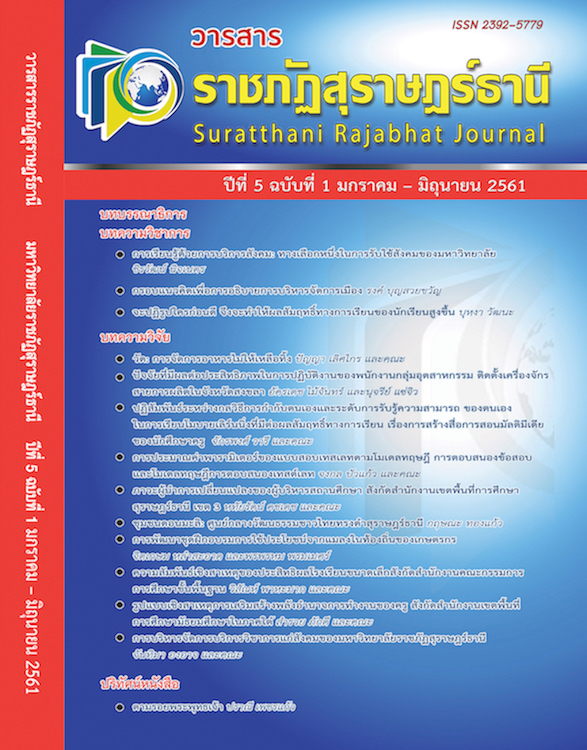
ปฏิสัมพันธ์ระหว่างกลวิธีการกำกับตนเองและระดับการรับรู้ความสามารถของตนเองในการเรียนโมบายเลิร์นนิ่งที่มีต่อผลสัมฤทธิ์ทางการเรียน เรื่องการสร้างสื่อการสอนมัลติมีเดียของนักศึกษาครู
Article Sidebar
เผยแพร่แล้ว:
พ.ค. 20, 2018
Main Article Content
บทคัดย่อ
งานวิจัยนี้มีวัตถุประสงค์เพื่อศึกษาปฏิสัมพันธ์ระหว่างกลวิธีการกำกับตนเองและระดับการรับรู้ความสามารถของตนเองในการเรียนโมบายเลิร์นนิ่ง ที่มีต่อผลสัมฤทธิ์ทางการเรียนเรื่องการสร้างสื่อการสอนมัลติมีเดียของนักศึกษาครู กลุ่มตัวอย่าง คือ นักศึกษาครู ที่ลงทะเบียนเรียนรายวิชา 1032502 การสร้างสื่อการเรียนการสอน จากมหาวิทยาลัยราชภัฏสุรินทร์ ชั้นปีที่ 3 จำนวนทั้งสิ้น 211 คน สถิติที่ใช้ในการวิเคราะห์ข้อมูลประกอบด้วย ค่าเฉลี่ยเลขคณิต ส่วนเบี่ยงเบนมาตรฐาน และสถิติทดสอบสมมติฐาน การวิเคราะห์ ความแปรปรวนแบบสองทาง (Two Way ANOVA)
ผลการวิจัยพบว่า
- 1. การศึกษาปฏิสัมพันธ์ร่วมกันระหว่างรูปแบบการกำกับตนเองและระดับ การรับรู้ความสามารถของตนเองที่ส่งผลต่อทักษะการสร้างสื่อการสอนมัลติมีเดียของนักศึกษาครู พบว่า รูปแบบการกำกับตนเองและระดับการรับรู้ความสามารถของตนเอง มีปฏิสัมพันธ์ร่วมกันต่อทักษะการสร้างสื่อการสอนมัลติมีเดีย อย่างมีนัยสำคัญที่ระดับ .05
- กลุ่มผู้เรียนที่มีระดับการรับรู้ความสามารถของตนเองสูงที่มีรูปแบบ การกำกับตนเองด้านสิ่งแวดล้อม มีคะแนนเฉลี่ยของระดับประสิทธิภาพในการสร้างสื่อการสอนมัลติมีเดียทั้ง 7 ด้าน มีคะแนนเฉลี่ยเท่ากับ 23.06 (ร้อยละ 79.51) ซึ่งสูงกว่าผู้เรียนที่มีรูปแบบการกำกับตนเองด้านภายในบุคคลมีคะแนนเฉลี่ยเท่ากับ 22.27 (ร้อยละ 76.79) และด้านพฤติกรรมมีคะแนนเฉลี่ยเท่ากับ 21.21 (ร้อยละ 73.13)
- กลุ่มผู้เรียนที่มีรูปแบบการกำกับตนเองด้านพฤติกรรมที่มีการรับรู้ความสามารถของตนเองระดับปานกลาง มีคะแนนเฉลี่ยของประสิทธิภาพในการสร้างสื่อการสอนมัลติมีเดียทั้ง 7 ด้าน มีคะแนนเฉลี่ยเท่ากับ 21.72 (ร้อยละ 74.89) ซึ่งสูงกว่าผู้เรียน ที่มีระดับการรับรู้ความสามารถของตนเองสูงมีคะแนนเฉลี่ยเท่ากับ 21.21 (ร้อยละ 73.13) และกลุ่มผู้เรียน ที่มีรูปแบบการกำกับตนเองด้านพฤติกรรมที่มีการรับรู้ความสามารถ ของตนเองต่ำมีคะแนนเฉลี่ยเท่ากับ 20.20 (ร้อยละ 69.65)
Article Details
ประเภทบทความ
บทความวิจัย
เอกสารอ้างอิง
Bandura, A. (1962). Social learning through imitation. In M . R. Jones (Ed.), Nebraska Symposium on Motivation. Lincoln: University of Nebraska Press.
_______. (1986). Social Foundations of Thought and Action : A Social Cognitive Theory. Englewood Cliffs, New Jersey : Prentice-Hall.
Bent B. Andresen and Katja van den Brink (2013) Multimedia in Education Curriculum, UNESCO Institute for Information Technologies in Education, Russian Federation.
Boekaerts, M. (1997). Self-Regulated Learning: A New Concept Embraced By Researchers, Policy Makers, Educators, Teachers, and Students. Learning and Instruction. 7(2) : 161-186.
Furht, B. (2008). Multimedia Production. (B. Furht, Ed.) Encyclopedia of Multimedia, Springer US, pp 589-591.
______. (2008). Elements of Multimedia in Education (B. Furht, Ed.) Encyclopedia of Multimedia, Springer US, pp 202-203.
Hofer, B., Yu, S. & Pintrich, P. (1998). Teaching College students to be self-regulated learners. En D.H. Schunk y B.J. Zimmerman (Eds.), Self-regulated learning: from teaching to self- Reflective practice (pp. 57-85). New York: Guilford.
Meenakshi.(2013). Importance of ICT in Education (Research scholar) P.G. Department of Education, University of Jammu.
Murphy, C. A., Coover, D., & Owen, S. V. (1989). Development and validation of the computer self-efficacy scale. Educational and Psychological measurement, 49(4), 893-899.
Pintrich, P. R., & De Groot, E. V. (1990). Motivational and self-regulated leaning components of classroom academic performance. Journal of Educational Psychology, 82, 33-40.
Schunk, D. H. (1981). Modeling and attributional effects on children’s achievement: A self-efficacy analysis. Journal of Educational Psychology, 73, 93-105.
Teng Y., Yu H. (2014). Combination and Application of Multimedia Materials in the Teaching of Psychology. In: Zhong S. (eds) Proceedings of the 2012 International Conference on Cybernetics and Informatics. Lecture Notes in Electrical Engineering, vol 163. Springer, New York, NY.
Timothy, T., Chee, T. S., Beng, L. C., Sing, C. C., Ling, K. J. H., Li, C. W., & Mun, C. H. (2010). The self-directed learning with technology scale (SDLTS) for young students: An initial development and validation. Computers & Education, 55(4), 1764-1771.
Zimmerman, Barry J. ; & Martinez-Pons, M. (1988). Construct Validation of a Strategy Model of Student Self-Regulated Learning. Journal of Educational Psychology. 80(3) : 284-290.
Zimmerman, Barry J. (1989). A Social Cognitive View of Self-Regulated Academic Learning. Journal of Educational Psychology. 81(3) : 329-339.
_______. (1986). Social Foundations of Thought and Action : A Social Cognitive Theory. Englewood Cliffs, New Jersey : Prentice-Hall.
Bent B. Andresen and Katja van den Brink (2013) Multimedia in Education Curriculum, UNESCO Institute for Information Technologies in Education, Russian Federation.
Boekaerts, M. (1997). Self-Regulated Learning: A New Concept Embraced By Researchers, Policy Makers, Educators, Teachers, and Students. Learning and Instruction. 7(2) : 161-186.
Furht, B. (2008). Multimedia Production. (B. Furht, Ed.) Encyclopedia of Multimedia, Springer US, pp 589-591.
______. (2008). Elements of Multimedia in Education (B. Furht, Ed.) Encyclopedia of Multimedia, Springer US, pp 202-203.
Hofer, B., Yu, S. & Pintrich, P. (1998). Teaching College students to be self-regulated learners. En D.H. Schunk y B.J. Zimmerman (Eds.), Self-regulated learning: from teaching to self- Reflective practice (pp. 57-85). New York: Guilford.
Meenakshi.(2013). Importance of ICT in Education (Research scholar) P.G. Department of Education, University of Jammu.
Murphy, C. A., Coover, D., & Owen, S. V. (1989). Development and validation of the computer self-efficacy scale. Educational and Psychological measurement, 49(4), 893-899.
Pintrich, P. R., & De Groot, E. V. (1990). Motivational and self-regulated leaning components of classroom academic performance. Journal of Educational Psychology, 82, 33-40.
Schunk, D. H. (1981). Modeling and attributional effects on children’s achievement: A self-efficacy analysis. Journal of Educational Psychology, 73, 93-105.
Teng Y., Yu H. (2014). Combination and Application of Multimedia Materials in the Teaching of Psychology. In: Zhong S. (eds) Proceedings of the 2012 International Conference on Cybernetics and Informatics. Lecture Notes in Electrical Engineering, vol 163. Springer, New York, NY.
Timothy, T., Chee, T. S., Beng, L. C., Sing, C. C., Ling, K. J. H., Li, C. W., & Mun, C. H. (2010). The self-directed learning with technology scale (SDLTS) for young students: An initial development and validation. Computers & Education, 55(4), 1764-1771.
Zimmerman, Barry J. ; & Martinez-Pons, M. (1988). Construct Validation of a Strategy Model of Student Self-Regulated Learning. Journal of Educational Psychology. 80(3) : 284-290.
Zimmerman, Barry J. (1989). A Social Cognitive View of Self-Regulated Academic Learning. Journal of Educational Psychology. 81(3) : 329-339.
