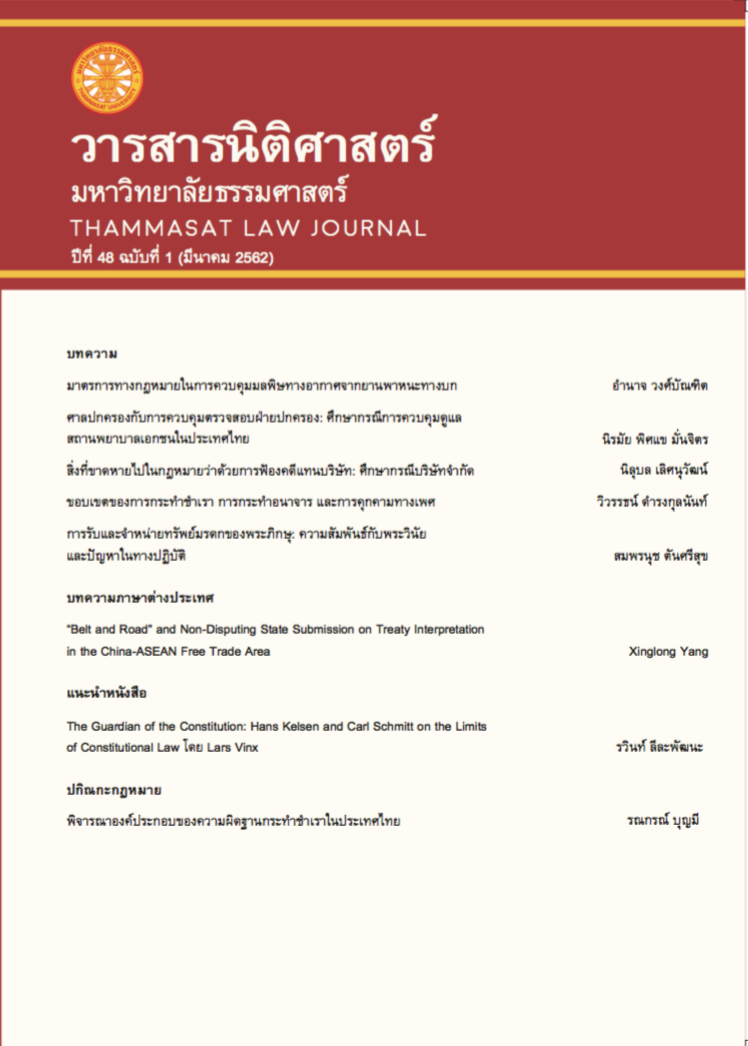
การรับและจำหน่ายทรัพย์มรดกของพระภิกษุ: ความสัมพันธ์กับพระวินัยและปัญหาในทางปฏิบัติ
คำสำคัญ:
กฎหมายมรดก, พระภิกษุ, พระสงฆ์, วัด, ทรัพย์มรดกบทคัดย่อ
บทความนี้มีวัตถุประสงค์เพื่อที่จะศึกษาวิเคราะห์การรับและจำหน่ายทรัพย์มรดกของพระภิกษุโดยเฉพาะที่เกี่ยวข้องกับมาตรา 1622-1623 แห่งประมวลกฎหมายแพ่งและพาณิชย์ของไทยซึ่งรับรองความสามารถของพระภิกษุในการเป็นทายาทโดยพินัยกรรม-จำหน่ายทรัพย์สิน และการตกทอดของมรดกไปยังสงฆ์เมื่อพระภิกษุนั้นมรณภาพใน 2 ประเด็น ได้แก่ ความสัมพันธ์ของข้อกฎหมายกับพุทธบัญญัติในพระวินัย และปัญหาความไม่เหมาะสมจากการตีความกฎหมายที่ปรากฏในคำพิพากษาศาลฎีกา ผลการศึกษาพบว่า ข้อกฎหมายดังกล่าวเพียงแต่เปิดช่องให้เจ้ามรดกถวายทรัพย์สินของตนแก่พระภิกษุที่ตนเลื่อมใสศรัทธาและพิจารณาแล้วว่าเหมาะสมที่จะเป็นปฏิคาหก โดยคาดหวังว่าพระภิกษุนั้นเมื่อรับมาแล้วจะได้นำไปใช้ให้เป็นประโยชน์ ในทางปฏิบัติ พระภิกษุสามารถเป็นเจ้าของทรัพย์สินได้และทำนิติกรรมจำหน่ายทรัพย์สินผ่านเอกสารสิทธิโดยไม่ต้องอาบัตินิสสัคคิยปาจิตตีย์แม้จะขัดพระวินัยซึ่งห้ามไม่ให้พระภิกษุรับ ใช้จ่ายเงิน และแลกเปลี่ยนสิ่งของ กล่าวคือ พระสงฆ์สามารถดำเนินการต่างๆ กับทรัพย์มรดกได้ ได้แก่ การให้คืนกลับไปยังทายาทอื่น เปิดโอกาสให้เจ้าหนี้ของเจ้ามรดกฟ้องตามมูลหนี้เดิม ตลอดจนสละแก่สงฆ์หรือบริจาคเพื่อสาธารณประโยชน์อื่น การศึกษาคำพิพากษาศาลฎีกาที่เกี่ยวข้องทำให้เห็นว่ามูลคดีเกิดขึ้นจาก (1) ความไม่สำรวมในพระธรรมวินัยของพระภิกษุและวัด และ (2) ความไม่สุจริตของเอกชนคู่ความ ซึ่งมีสาเหตุสำคัญคือการยอมรับผลตามกฎหมายของนิติกรรมที่พระภิกษุทำทั้งที่ตามพระวินัยเป็นอาบัตินิสสัคคิยปาจิตตีย์ จากการศึกษาวิเคราะห์ข้างต้น ผู้เขียนจึงไม่เห็นด้วยกับการแก้กฎหมายซึ่งจำกัดสิทธิไม่ให้พระภิกษุรับและจำหน่ายทรัพย์มรดก การรับและจำหน่ายทรัพย์สินดังกล่าวย่อมไม่เป็นอาบัติหากพระภิกษุจัดการทรัพย์สินตามสถานะของท่าน ในการช่วยแก้ปัญหานิติกรรมที่ไม่เหมาะสมของพระภิกษุ ควรทบทวนแก้ไขให้มีแนวปฏิบัติในการจัดการทรัพย์สินของพระภิกษุและพระสงฆ์ให้สอดคล้องกับพุทธบัญญัติ นอกจากนี้ สำนักงานพระพุทธศาสนาแห่งชาติควรเป็นไวยาวัจกรของคณะสงฆ์ไทย มีอำนาจหน้าที่ในการดูแลนิติกรรมต่างๆ เกี่ยวกับทรัพย์สินที่พระภิกษุหรือพระสงฆ์ถือครองและเป็นผู้ดำเนินคดีในศาลแทนกรณีที่มีการโต้แย้งกรรมสิทธิ์ในทรัพย์สิน
ดาวน์โหลด
เผยแพร่แล้ว
ฉบับ
ประเภทบทความ
สัญญาอนุญาต
ผลงานที่ตีพิมพ์ในวารสารนิติศาสตร์เป็นลิขสิทธิ์ของวารสารนิติศาสตร์ มหาวิทยาลัยธรรมศาสตร์ และวารสารนิติศาสตร์ มหาวิทยาลัยธรรมศาสตร์ สงวนสิทธิในการเผยแพร่ผลงานที่ตีพิมพ์ในแบบรูปเล่มและทางสื่ออิเล็กทรอนิกส์อื่นใด
บทความหรือข้อความคิดเห็นใด ๆ ที่ปรากฏในวารสารนิติศาสตร์เป็นความรับผิดชอบของผู้เขียนโดยเฉพาะ คณะนิติศาสตร์ มหาวิทยาลัยธรรมศาสตร์ และบรรณาธิการไม่จําเป็นต้องเห็นด้วยหรือร่วมรับผิดชอบใด ๆ

