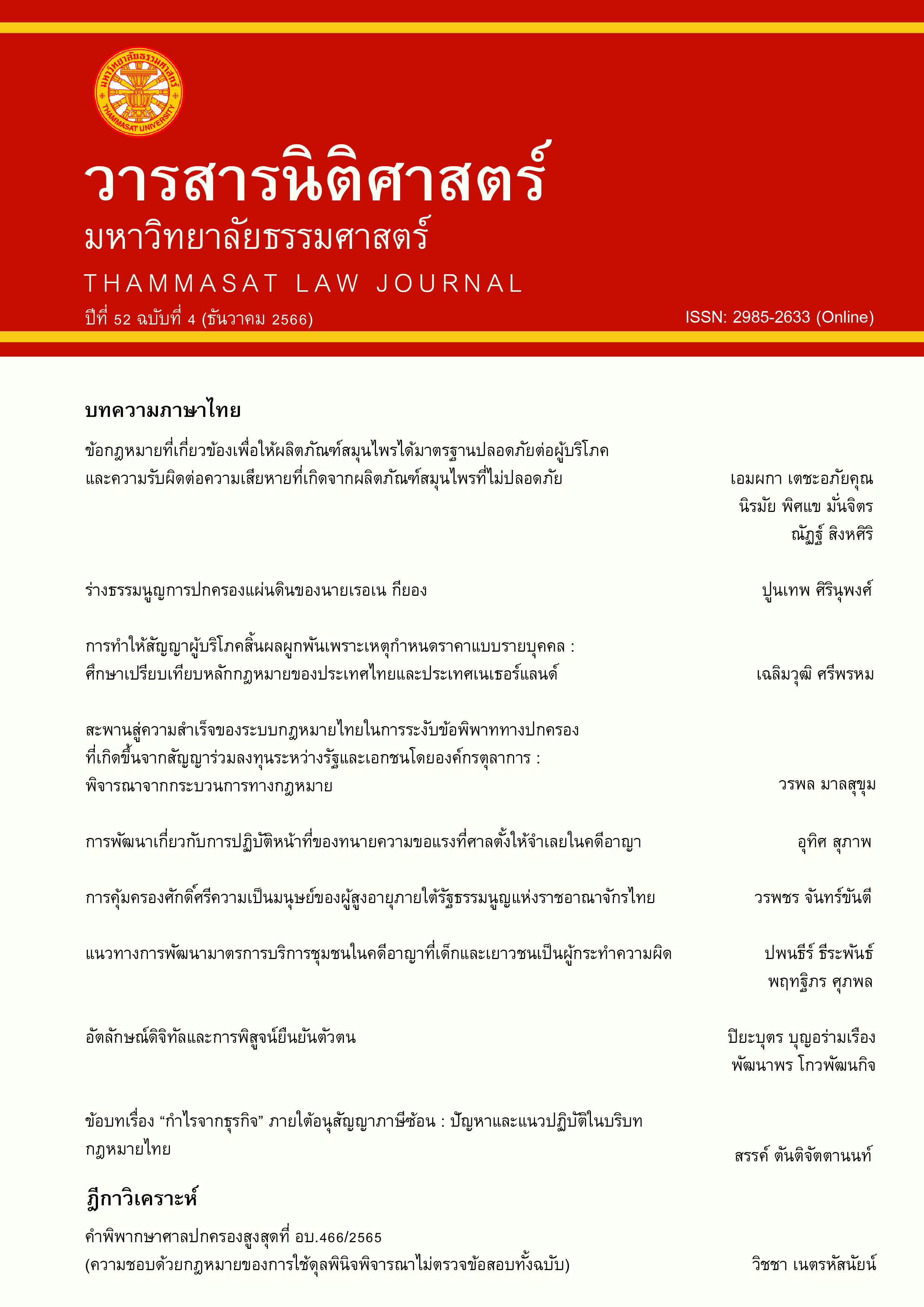
แนวทางการพัฒนามาตรการบริการชุมชนในคดีอาญาที่เด็กและเยาวชนเป็นผู้กระทำความผิด
คำสำคัญ:
การพัฒนา, เด็กและเยาวชน, มาตรการบริการชุมชน, คดีอาญาที่เด็กและเยาวชนเป็นผู้กระทำความผิดบทคัดย่อ
บทความนี้มีวัตถุประสงค์ คือ 1) เพื่อศึกษาแนวคิดทฤษฎีที่เกี่ยวข้อง รวมทั้งศึกษาเปรียบเทียบหลักเกณฑ์ทางกฎหมายเกี่ยวกับการบริการชุมชนของประเทศไทยและต่างประเทศ 2) เพื่อวิเคราะห์ปัญหาเกี่ยวกับการบริการชุมชนในคดีอาญาที่เด็กและเยาวชนเป็นผู้กระทำความผิดในประเทศไทย และ 3) เพื่อหาข้อเสนอแนะในการพัฒนามาตรการบริการชุมชนในคดีอาญาที่เด็กและเยาวชนเป็นผู้กระทำความผิด ข้อมูลที่ใช้ในงานวิจัยมาจากการวิจัยเอกสารและการสัมภาษณ์เชิงลึก ซึ่งมีผู้ให้ข้อมูลสำคัญ 2 กลุ่ม คือ กลุ่มเจ้าหน้าที่ของรัฐในกระบวนการยุติธรรมทางอาญาสำหรับเด็กและเยาวชน และกลุ่มเด็กและเยาวชนผู้ปฏิบัติตามคำสั่งเกี่ยวกับการบริการชุมชนในคดีอาญา โดยข้อมูลเชิงคุณภาพที่ได้จากการศึกษาและวิเคราะห์เอกสารต่าง ๆ รวมทั้งได้จากการสัมภาษณ์เชิงลึกถูกนำมาวิเคราะห์สาระให้เห็นความเชื่อมโยงและความสัมพันธ์กันในแง่ต่าง ๆ โดยการวิเคราะห์จะออกมาในลักษณะของการพรรณนา
ผลการวิจัยพบว่ากฎหมายที่กำหนดหลักเกณฑ์ของการบริการชุมชนสำหรับเด็กและเยาวชนในประเทศไทยนั้นมีหลายฉบับ แต่ที่มักจะนำมาบังคับใช้ในทางปฏิบัติ ได้แก่ ประมวลกฎหมายอาญา และพระราชบัญญัติศาลเยาวชนและครอบครัวและวิธีพิจารณาคดีเยาวชนและครอบครัว พ.ศ. 2553 โดยกฎหมายดังกล่าวมีวัตถุประสงค์ในการใช้มาตรการบริการชุมชนที่แตกต่างกัน ภายใต้เงื่อนไขของกฎหมายข้างต้น การบริการชุมชนโดยเด็กและเยาวชนผู้กระทำความผิดในประเทศไทยยังประสบปัญหาอยู่บางประการ ได้แก่ การกำหนดนโยบายและการบังคับใช้กฎหมาย การกำหนดระยะเวลา การกำหนดอายุและความผิดที่เป็นเงื่อนไขของมาตรการบริการชุมชน การกำหนดกิจกรรมและหน่วยงานผู้รับผิดชอบในการดูแลการบริการชุมชน และการพิจารณาใช้การบริการชุมชนในกรณีที่เด็กหรือเยาวชนกระทำความผิดซ้ำ
ดังนั้น เพื่อเป็นการพัฒนามาตรการบริการชุมชนของเด็กและเยาวชนในประเทศไทยและช่วยเพิ่มประสิทธิภาพของกระบวนการยุติธรรมทางอาญาสำหรับเด็กและเยาวชน งานวิจัยชิ้นนี้เสนอให้มีการแก้ไขเพิ่มเติมพระราชบัญญัติศาลเยาวชนและครอบครัวฯ มาตรา 87 โดยกำหนดกรอบระยะเวลาขั้นสูงของการบริการชุมชนของเด็กและเยาวชนเป็น ไม่เกิน 300 ชั่วโมง ไม่จำกัดฐานความผิดที่จะเป็นเงื่อนไขในการใช้มาตรการบริการชุมชน และให้นำมาใช้กับเด็กหรือเยาวชนที่ได้กระทำความผิดซ้ำได้อีกด้วย นอกจากนี้ยังได้เสนอให้มีการแก้ไขเพิ่มเติมประมวลกฎหมายอาญาและพระราชบัญญัติศาลเยาวชนและครอบครัวฯ โดยกำหนดให้ศาลหรือสถานพินิจและคุ้มครองเด็กและเยาวชนสามารถใช้การบริการชุมชนกับทั้งเด็กและเยาวชนได้
นอกจากนี้ในประเด็นของการกำหนดนโยบายและการบังคับใช้กฎหมายของหน่วยงานที่เกี่ยวข้อง เช่น ศาลและสถานพินิจและคุ้มครองเด็กและเยาวชน ผู้บริหารของหน่วยงานข้างต้นควรกำหนดนโยบายสำหรับการใช้การบริการชุมชนกับเด็กและเยาวชนผู้กระทำความผิด และผู้มีอำนาจหน้าที่ควรนำมาตรการบริการชุมชนมาใช้ทั้งที่อยู่ในรูปมาตรการเดี่ยวหรือเป็นเงื่อนไขประกอบการคุมประพฤติ โดยการกำหนดรูปแบบของกิจกรรมบริการชุมชนจะต้องมีความเชื่อมโยงระหว่าง 3 ฝ่าย ได้แก่ ฝ่ายเด็กหรือเยาวชนผู้กระทำความผิด ฝ่ายผู้เสียหาย และฝ่ายชุมชน ภายใต้การดูแลของเจ้าหน้าที่ของรัฐและองค์กรปกครองท้องถิ่น
เอกสารอ้างอิง
กรมคุมประพฤติ กระทรวงยุติธรรม, รวมความรู้และกฎหมายที่เกี่ยวข้องส าหรับพนักงานคุมประพฤติ (พุ่มทอง 2552).
กิตติพงษ์ กิตยารักษ์, ยุทธศาสตร์การปฏิรูปกระบวนการยุติธรรมทางอาญาไทย, (สำนักงานกองทุนสนับสนุนการวิจัย 2544).
คณิต ณ นคร, กฎหมายอาญาภาคทั่วไป (พิมพ์ครั้งที่ 2, วิญญูชน 2547).
จิราวัฒน์ แช่มชัยพร, ‘การคุ้มครองสิทธิเด็กโดยหลักผลประโยชน์สูงสุดของเด็กตามมาตรา 3(1) แห่งอนุสัญญาว่าด้วยสิทธิเด็ก ค.ศ. 1989’ (วิทยานิพนธ์ นิติศาสตรมหาบัณฑิต มหาวิทยาลัยธรรมศาสตร์ 2551).
จุฑารัตน์ เอื้ออำนวย, หนังสือที่ระลึกในการเปิดสำนักงานคุมประพฤติจังหวัดศรีสะเกษ (ศรีสมบัติการพิมพ์ 2534).
ปพนธีร์ ธีระพันธ์, ‘ที่มาและปัญหาทางกฎหมายเกี่ยวกับการกระทำความผิดของเด็กและเยาวชนในประเทศสหรัฐอเมริกา’ (2560) 30(1) วารสารปาริชาต 35.
ปพนธีร์ ธีระพันธ์, แนวคิดที่ปรากฏอยู่ในกระบวนการยุติธรรมทางอาญาสำหรับเด็กและเยาวชนในประเทศไทย (นิติธรรม 2561).
ปพนธีร์ ธีระพันธ์, แนวคิดที่ปรากฏอยู่ในกระบวนการยุติธรรมทางอาญาส าหรับเด็กและเยาวชนในประเทศไทย (พิมพ์ครั้งที่ 2, โรงพิมพ์ห้างหุ้นส่วนสามัญ ดิจิตอล พริ้นท์ 2563).
ประเทือง ธนิยผล, กฎหมายเกี่ยวกับการกระทำผิดของเด็กและเยาวชนและวิธีพิจารณาคดีเยาวชนและครอบครัว (พิมพ์ครั้งที่ 4, สำนักพิมพ์มหาวิทยาลัยรามคำแหง 2561).
ประธาน วัฒนวาณิชย์, กฎหมายเกี่ยวกับความผิดของเด็กและกระบวนการยุติธรรมสำหรับเด็กและเยาวชน (ประกายพรึก 2530).
ประเสริฐ เมฆมณี, หลักทัณฑวิทยา (บพิธการพิมพ์จำกัด 2523).
วัชรินทร์ ปัจเจกวิญญูสกุล, ‘มาตรฐานการปฏิบัติต่อเด็กที่ถูกกล่าวหาว่ากระทำความผิดตามอนุสัญญาว่าด้วยสิทธิเด็ก’ (2537) 41(5) ดุลพาห 19.
มาตาลักษณ์ เสรเมธากุล, ‘หลักการคุ้มครองสิทธิเด็กภายใต้แนวคิดเกี่ยวกับประโยชน์สูงสุดของเด็ก’ (รายงานผลการวิจัยเสนอต่อคณะนิติศาสตร์ มหาวิทยาลัยธรรมศาสตร์ 2562).
ลัดตะนา อินทพล, ‘การหันเหเด็กและเยาวชนที่กระทำความผิดออกจากกระบวนการยุติธรรมทางอาญา ศึกษาเปรียบเทียบกฎหมายไทย – ลาว’ (วิทยานิพนธ์นิติศาสตรมหาบัณฑิต มหาวิทยาลัยธรรมศาสตร์ 2553).
เสมอแข เสนเนียม, ‘มาตรการปฏิบัติต่อผู้กระทำความผิดโดยอาศัยการบริการสังคม’ (วิทยานิพนธ์นิติศาสตรมหาบัณฑิต จุฬาลงกรณ์มหาวิทยาลัย 2536).
เสริน ปุณณะหิตานนท์, การกระทำผิดในสังคม สังคมวิทยาอาชญากรรมและพฤติกรรมเบี่ยงเบน (เดอะบิสซิเนสเพรส 2523).
อนุสรณ์ ศรีเมนต์, ‘กฎหมายศาลเยาวชนและครอบครัวสามารถแก้ไขความประพฤติที่เสียหายของเด็กหรือเยาวชนได้จริงหรือ’ (2559) 9(2) วารสารศาลยุติธรรม 47.
อรศรี อธิกิจ, ‘มาตรการบริการสังคมกับโทษในคดีอาญา’ (วิทยานิพนธ์นิติศาสตรมหาบัณฑิต จุฬาลงกรณ์มหาวิทยาลัย 2552).
Heinz Messmer, and Hans-Uwe Otto, Restorative Justice on Trial: Pitfalls and Potentials of Victim-Offender Mediation-International Research Perspectives (Kluwer Academic Publishers 1992).
John Reyl L Mosquito, Handling Child in Conflict with the Law (RA 9344): Roles of the Barangay and SK (Central Book Supply, Inc 2009).
Marshall Croddy et al, Giving Back Introducing Community Service Learning: Improving Mandated Community Service for Juvenile Offenders (Constitutional Rights Foundation 2006).
May Hazel M. Tagupa, Child in Conflict with the Law (Central Book Supply, Inc. 2017).
Stephen Schafer, Restitution to Victims of Crime (Stevens & Sons 1960).
United Nations, Handbook on Restorative Justice Programmes (United Nations Publication 2006).
Warren Young, Community Service Orders: The Development and Use of a New Penal Measure (Macmillan Company Limited 1979).
ดาวน์โหลด
เผยแพร่แล้ว
ฉบับ
ประเภทบทความ
สัญญาอนุญาต
ลิขสิทธิ์ (c) 2023 วารสารนิติศาสตร์ มหาวิทยาลัยธรรมศาสตร์

อนุญาตภายใต้เงื่อนไข Creative Commons Attribution-NonCommercial-NoDerivatives 4.0 International License.
ผลงานที่ตีพิมพ์ในวารสารนิติศาสตร์เป็นลิขสิทธิ์ของวารสารนิติศาสตร์ มหาวิทยาลัยธรรมศาสตร์ และวารสารนิติศาสตร์ มหาวิทยาลัยธรรมศาสตร์ สงวนสิทธิในการเผยแพร่ผลงานที่ตีพิมพ์ในแบบรูปเล่มและทางสื่ออิเล็กทรอนิกส์อื่นใด
บทความหรือข้อความคิดเห็นใด ๆ ที่ปรากฏในวารสารนิติศาสตร์เป็นความรับผิดชอบของผู้เขียนโดยเฉพาะ คณะนิติศาสตร์ มหาวิทยาลัยธรรมศาสตร์ และบรรณาธิการไม่จําเป็นต้องเห็นด้วยหรือร่วมรับผิดชอบใด ๆ

