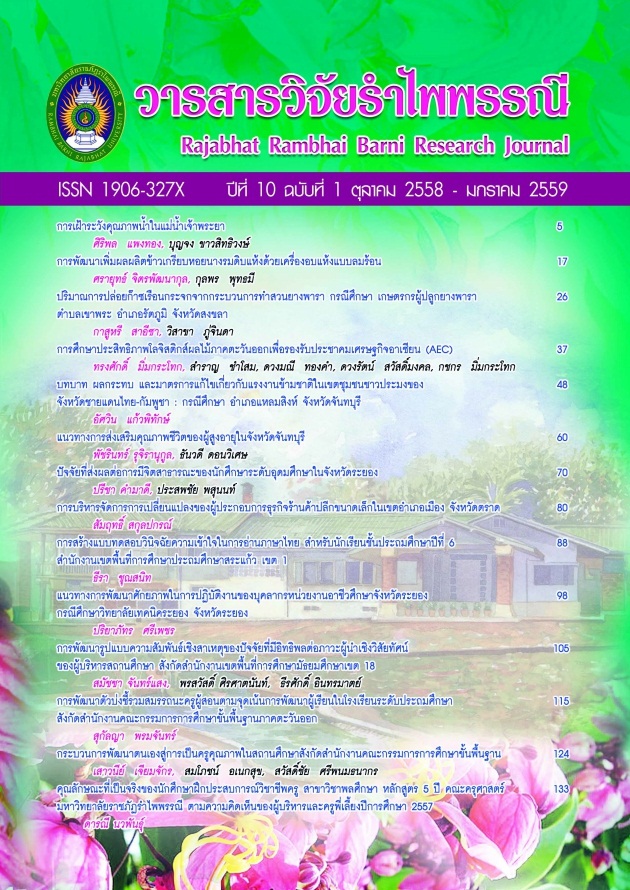
การพัฒนาตัวบ่งชี้รวมสมรรถนะครูผู้สอนตามจุดเน้นการพัฒนาผู้เรียน ในโรงเรียนระดับประถมศึกษา สังกัดสำนักงานคณะกรรมการการศึกษาขั้นพื้นฐาน ภาคตะวันออก
Article Sidebar
Main Article Content
บทคัดย่อ
การวิจัยครั้งนี้มีวัตถุประสงค์เพื่อพัฒนาตัวบ่งชี้สมรรถนะครูผู้สอนตามจุดเน้นการพัฒนาผู้เรียนในโรงเรียนระดับประถมศึกษา สังกัดสำนักงานคณะกรรมการการศึกษาขั้นพื้นฐานภาคตะวันออก ตรวจสอบคุณภาพของตัวบ่งชี้สมรรถนะครูผู้สอนที่ผู้วิจัยพัฒนาขึ้นกับข้อมูลเชิงประจักษ์ และวิเคราะห์ความตรงเชิงประจักษ์และความไวของตัวบ่งชี้เมื่อนำ ตัวบ่งชี้ไปใช้
กลุ่มตัวอย่างในการวิจัยเป็นครูผู้สอนในโรงเรียนสังกัดสำนักงานคณะกรรมการการศึกษาขั้นพื้นฐานภาคตะวันออก จำนวน 660 คน ได้มาโดยการสุ่มแบบหลายขั้นตอน เครื่องมือที่ใช้ในการวิจัยเป็นแบบสอบถามมาตรส่วนประมาณค่า 5 ระดับ การวิเคราะห์ข้อมูลใช้การคำนวณค่าสถิติพื้นฐานและวิเคราะห์องค์ประกอบเชิงยืนยันอันดับที่สามด้วยโปรแกรม LISREL
ผลการวิจัยปรากฏดังนี้
- ตัวบ่งชี้สมรรถนะครูผู้สอนตามจุดเน้นการพัฒนาผู้เรียน ในโรงเรียนระดับประถมศึกษา สังกัดสำนักงานคณะกรรมการการศึกษาขั้นพื้นฐาน ภาคตะวันออก มีตัวบ่งชี้ที่เป็นองค์ประกอบหลัก 2 องค์ประกอบ ตัวบ่งชี้ ที่เป็นองค์ประกอบย่อย 11 องค์ประกอบ และตัวบ่งชี้เดี่ยว 64 ตัวบ่งชี้ มีความครอบคลุมสมรรถนะของครูผู้สอนเกี่ยวกับความสามารถ และความรู้เฉพาะสายงานที่จำเป็นในการปฏิบัติหน้าที่ครูผู้สอน ซึ่งจำเป็นต้องผสมผสานองค์ประกอบทั้งหมดนี้เข้าด้วยกัน
- ผลการวิเคราะห์โมเดลสมรรถนะครูผู้สอนตามจุดเน้นการพัฒนาผู้เรียน พบว่า โมเดลมีความสอดคล้องกับข้อมูลเชิงประจักษ์ โดยมีค่าสถิติบ่งชี้คือ c2 = 72, = 1791,c2/d =1.67, GFI= .97 ,AGFI= .95, CFI = .99, RMSEA=.03, RMR=.02 ด้านสมรรถนะหลักมีค่าน้ำหนักองค์ประกอบสูงสุด และด้านสมรรถนะประจำสายงาน มีค่าน้ำหนักองค์ประกอบรองลงมา ตัวบ่งชี้ที่มีน้ำหนักองค์ประกอบสูงสุด ได้แก่ มีทักษะในการดูแลช่วยเหลือนักเรียน มีความสามารถในการรวบรวม จำแนก และจัดกลุ่มของสภาพปัญหาของผู้เรียน หมั่นหาความรู้เพิ่มเติมอยู่เสมอ ตัวบ่งชี้ที่มีน้ำหนักองค์ประกอบต่ำสุด ได้แก่ มีความรู้ในการวิจัยเพื่อพัฒนาผู้เรียน
- ผลการวิเคราะห์ความตรงเชิงประจักษ์และความไวของตัวบ่งชี้เมื่อนำตัวบ่งชี้สมรรถนะครูผู้สอน ตามจุดเน้นการพัฒนาผู้เรียนในโรงเรียนระดับประถมศึกษาสังกัดสำนักงานคณะกรรมการการศึกษาขั้นพื้นฐานภาคตะวันออกไปใช้กับกลุ่มรู้ชัดว่ามีสมรรถนะสูงจำนวน 30 คน และกลุ่มที่มีสมรรถนะต่ำ จำนวน 30 คน
3.1 ความตรงเชิงประจักษ์: ผลการประเมินตนเองของครูผู้สอนกับผลการใช้ตัวบ่งชี้ที่พัฒนาขึ้นทดสอบกับกลุ่มรู้ชัด มีความสัมพันธ์กันอย่างมีนัยสำคัญทางสถิติ ( <.05) แสดงว่า ตัวบ่งชี้มีความตรงเชิงประจักษ์ ที่สามารถตรวจสอบสมรรถนะครูผู้สอนที่เป็นจริงจากตัวครูผู้สอนเองได้ตรงกับการประเมินสมรรถนะของกลุ่มรู้ชัด
3.2 ความไว: ผลการวิเคราะห์ความไวในการจำแนกความแตกต่างของสมรรถนะครูผู้สอนตามจุดเน้นการพัฒนาผู้เรียน พบว่า ตัวบ่งชี้ทุกองค์ประกอบมีความไวในการจำแนกความแตกต่างของสมรรถนะครูผู้สอนตามจุดเน้นการพัฒนาผู้เรียนได้ในระดับสูง
Article Details
เอกสารอ้างอิง
http://www.nstda.or.th/ nac2013/download/presentation/Set4/ SSH-Auditorium-01-03/07.pdf. (2014).
2. ปาริชาติ สันติเลขวงษ์. (2556). การศึกษาสมรรถนะหลักของครูตามเกณฑ์ตัวบ่งชี้สมรรถนะครูไทย สำนักงานคณะกรรมการการศึกษาขั้นพื้นฐานของกลุ่มโรงเรียนบางละมุง 1 สังกัดสำนักงานเขตพื้นที่การศึกษาประถมศึกษาชลบุรี เขต 3. วิทยานิพนธ์ปริญญาการศึกษามหาบัณฑิต มหาวิทยาลัยบูรพา.
3. พศิน แตงจวง. (2554). รูปแบบการพัฒนาสมรรถนะบุคลากรทางการศึกษา. กรุงเทพฯ: ดวงกมลพับลิชชิ่ง.
4. พิณสุดา สิริรังธศรี. (2557). การยกระดับคุณภาพครูไทย ในศตวรรษที่ 21. ใน เอกสารประกอบการประชุมทางวิชาการ “อภิวัฒน์การเรียนรู้ สู่จุดเปลี่ยนประเทศไทย”. สำนักงานส่งเสริมสังคมแห่งการเรียนรู้และคุณภาพเยาวชน. พิมพ์ครั้งที่ 1. กรุงเทพฯ: มาตาการพิมพ์. หน้า 6.
5. วรรณ์ชัย จองแก. (2554). การปฏิบัติตามสมรรถนะประจำสายงานของครูโรงเรียนวังเหนือวิทยา อำเภอวังเหนือ จังหวัดลำปาง. วิทยานิพนธ์ศึกษาศาตรมหาบัณฑิต มหาวิทยาลัยเชียงใหม่.
6. วิทยากร เชียงกูล. ยุทธศาสตร์การพัฒนาคุณภาพการศึกษา. [Online]. Available: http://witayakornclub .wordpress.com/. (2556).
7. ศิริชัย กาญจนวาสี. (2550). ทฤษฎีการประเมิน.กรุงเทพฯ: จุฬาลงกรณมหาวิทยาลัย.
8. สำนักงานคณะกรรมการการศึกษาขั้นพื้นฐาน. (2553). คู่มือการประเมินสมรรถนะครู. กรุงเทพฯ: สกศ.
9. สุธาสินี บุญญาพิทักษ์. (2545). การพัฒนาหลัก สูตรครูนักวิจัยในชั้นเรียนสำหรับนักศึกษาวิชาชีพครู. ปริญญานิพนธ์การศึกษาดุษฎีบัณฑิต มหาวิทยาลัยศรีนครินทรวิโรฒ.
10. สุรศักดิ์ ปาเฮ. การพัฒนาครูในศตวรรษที่ 21. [Online]. Available : http://www.addkutec3.com/wp-content/uploads/ 2015/06/upgrade-teacher.pdf. (2015).
11. Wendy L. Hurley, Craig R. Denegar and Jay Hertel. (2011). Research methods: A framework for evidencebased clinical practice. Baltimore, MD: Lippincott Williams & Wilkins.
