
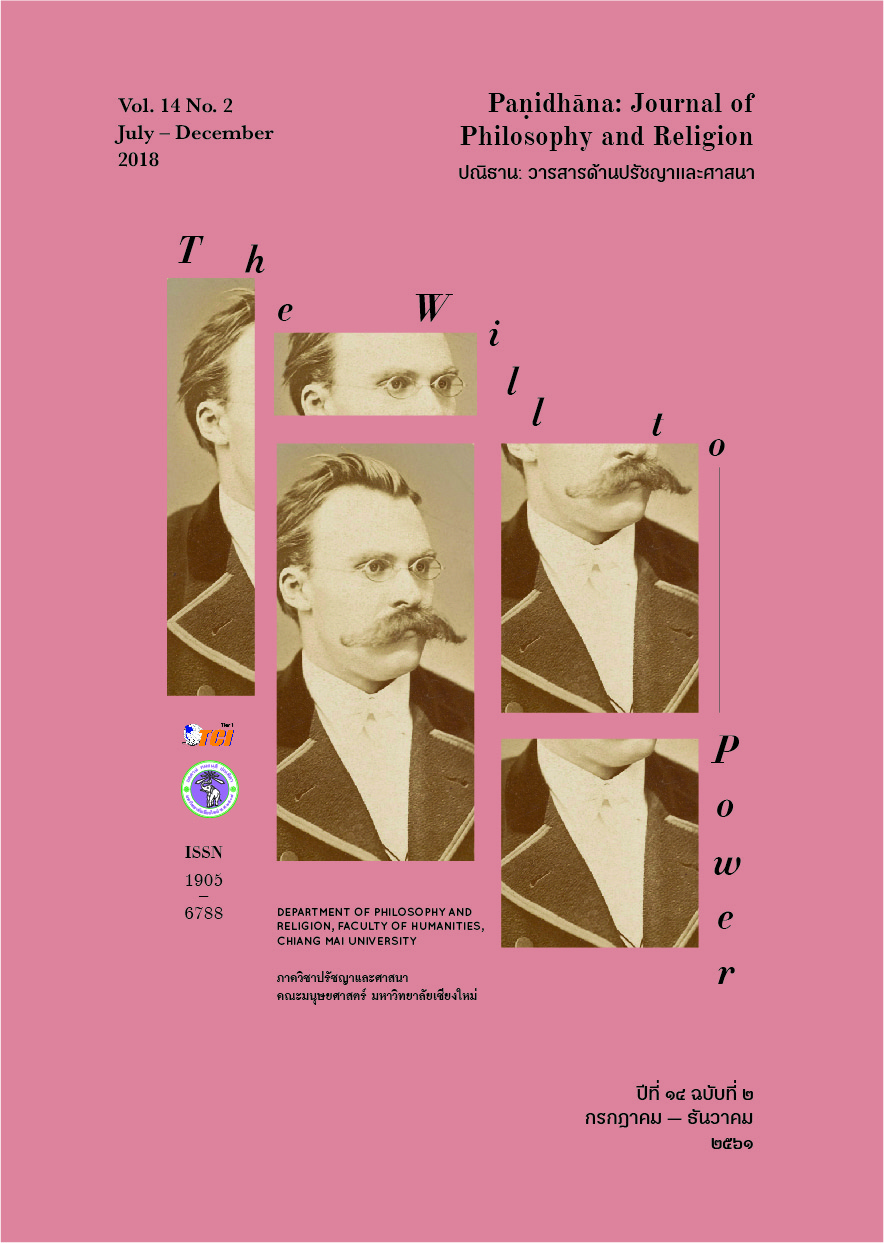
แนวคิดเรื่อง “อำนาจ” ของ เฟรดริช วิลเฮลม นิตเช่
คำสำคัญ:
อำนาจ, มนุษย์, อภิมนุษย์, นิตเช่บทคัดย่อ
บทความนี้มีจุดประสงค์เพื่อศึกษาแนวคิดเกี่ยวกับอำนาจในทางปรัชญาและวิเคราะห์แนวคิดเรื่อง “อำนาจ” ของ เฟรดริช วิลเฮลม นิตเช่ (Friedrich Wilhelm Nietzsche: 1844 – 1900) กรอบในการศึกษาคือ ความหมาย ลักษณะ ประเภท และการใช้อำนาจ บทความนี้ศึกษาจากผลงานเขียนของนิตเช่โดยการวิเคราะห์ 3 เรื่องได้แก่โศกนาฏกรรมกรีก ดังนั้นพูดซาราธุสตรา และเจตจำนงสู่อำนาจ นอกจากนั้นยังมีหนังสือที่กล่าวถึงแนวคิดเรื่องอำนาจต่างๆ นำมาวิเคราะห์ร่วมกัน แล้วนำเสนอในรูปแบบของการพรรณนาวิเคราะห์ จากการศึกษาแนวคิดเรื่องอำนาจในปัจจุบันเรามักให้ความหมายว่าเป็นสิ่งที่ บังคับ ครอบงำ และกระทำด้วยกำลัง ไม่ว่าจะเป็นทางกายภาพ หรือ มโนภาพ แต่ในกรอบแนวคิดของนิตเช่พบว่า อำนาจในแนวคิดของนิตเช่มีลักษณะสองสิ่ง คือ อำนาจควบคุม กับ อำนาจครอบงำ
การควบคุมนั้นหมายถึงการควบคุมตนเอง โดยนิตเช่เชื่อว่ามีพลังอยู่สองแบบในตัวมนุษย์ พลังแรกคือไดโอนิเชียนกับอพอลโลเนียน เมื่อสองสิ่งในตัวเราถูกควบคุมได้จะสามารถครอบงำผู้อื่นและทำให้ตนเองอยู่เหนือผู้คนได้ การครอบงำโดยความรู้ที่ตนเองมีเหนือผู้อื่นเป็นการนำพาไปสู่ความเป็นผู้เหนือมนุษย์ การใช้อำนาจในแนวคิดของนิตเช่เป็นอำนาจที่เรียกว่าอำนาจเหนือ การใช้อำนาจของเขามาในรูปแบบของการครอบงำ การควบคุมตนเอง การพยา ยามทำให้ผู้อื่นทำตามด้วยการเห็นชอบและไม่ได้บังคับแต่อย่างใด การใช้อำนาจเพื่อไปสู่อำนาจที่สูงขึ้นด้วยการพาตนเองไปสู่อภิมนุษย์ซึ่งเป็นผู้มีอำนาจเหนือ จนถึงจุดสูงสุดของนิตเช่ที่เรียกว่า “นิจวัฏ”
เอกสารอ้างอิง
Benjamin Jowett. (1980). Symposium. United Kingdom: Cambridge University Press
F. W. Nietzsche. (1872). The Birth of Tragedy. Toronto: Random House, Inc.
——————. (1886). Beyond Good and Evil. Toronto: Random House, Inc.
——————. (1906). The Will to Power. Toronto: Random House, Inc.
——————. (1883). Thus Spake Zarathustra. Toronto: Random House, Inc.
Max Weber. (1978). Economy and Society: An Outline of Interpretive Sociology,Vol. I-II. California: University of California
Ratana Tosakul. (2005). The concept of power. Bangkok: National Research Council of Thailand (NRCT).
Somkiat Wantana. (2014). Theory of Power. Bangkok: Political Science Association of Kasetsart University.
Walter Kaufmann, (1968). Nietzsche: Philosopher, Psychologist, Antichrist. New York: Vintage Books.
ดาวน์โหลด
เผยแพร่แล้ว
รูปแบบการอ้างอิง
ฉบับ
ประเภทบทความ
สัญญาอนุญาต
เนื้อหาของบทความที่ได้รับการตีพิมพ์ในวารสารปณิธานถือเป็นลิขสิทธิ์ของวารสารปณิธาน ห้ามเผยแพร่ ตัดต่อ แก้ไข หรือนำไปใช้ก่อนได้รับอนุญาต
ผู้สนใจสามารถติดต่อขอเผยแพร่เนื้อหาในวารสารปณิธานได้ที่ panidhana-human@cmu.ac.th