
The Impact of EU Artificial Intelligence Act on Public Interest for Sports: Challenges and Opportunities of European Sports
Article Sidebar
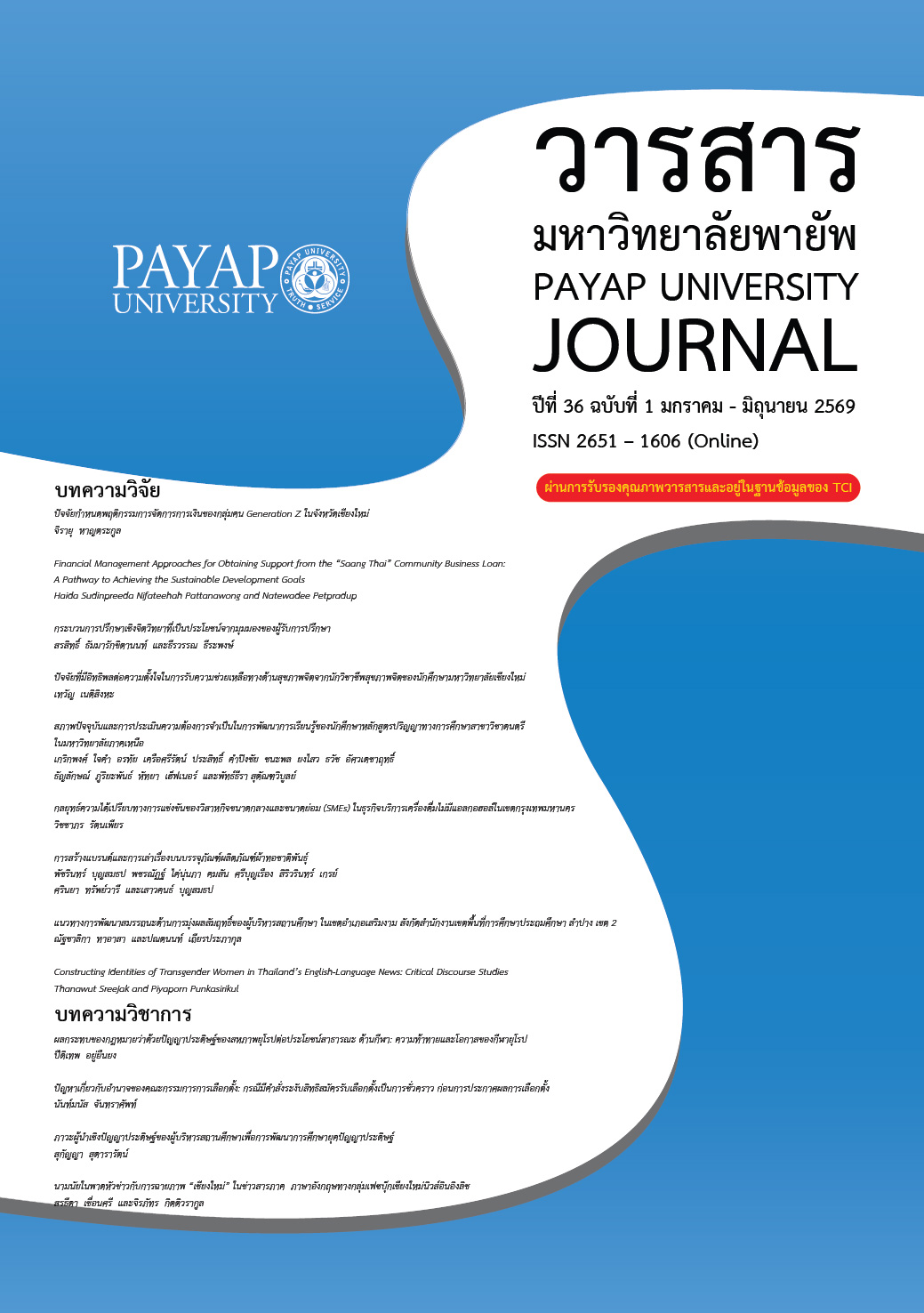
Main Article Content
Abstract
The EU Artificial Intelligence Act (EU AI Act) has established a comprehensive framework for prescribing rules to classify artificial intelligence (AI) systems based on risk levels and to prevent unacceptable or inappropriate AI-related risks. The Act applies to the sport industry in the EU. This means the policymakers, regulators, and stakeholders of sports in the EU must comply with all applicable aspects of the Act. However, there are common legal challenges in adapting to the Act, including requiring sports organisations to disclose information based on the associated risk level and to avoid making false or misleading statements about the capabilities of AI. This article discusses and puts forward challenges and opportunities of AI implementation within rules established by clubs and legal entities in European Sports to ensure fair and trustable competition, from advantages to concerns about AI in sports, drawing on lessons from the EU. The EU AI Act’s public interest concerns encompass a set of forbidden AI practices beyond safety and security requirements, including objectives like balance AI innovation with economy, integrity, and society. While AI governance under the EU AI Act presents both challenges and opportunities for sports harmed by the inappropriate AI conduct, the analysis of this paper also applies to clubs, legal entities, and all relevant stakeholders in European sports, especially those with complying with the EU AI Act in sports.
Downloads
Article Details
References
Capgemini Research Institute. (2025). Beyond the game: The new era of AI-powered sports engagement (Research brief). https://www.capgemini.com/insights/research-library/tech-in-sports-2025/
Carrio Sampedro, A. (2024). Artificial intelligence in sports: A revolutionary technology that must be handled with care. Movimento, 30, 1-18. https://doi.org/10.22456/1982-8918.143278
Chidambaram, S., Maheswaran, Y., Patel, K., Sounderajah, V., Hashimoto, D. A., Seastedt, K. P., McGregor, A. H., Markar, S. R., & Darzi, A. (2022). Using Artificial Intelligence-Enhanced Sensing and Wearable Technology in Sports Medicine and Performance Optimisation. Sensors (Basel, Switzerland), 22(18), 1-11. https://doi.org/10.3390/s22186920
Consumer protection in age of artificial intelligence. (2025, 27 October). https://unctad.org/meeting/consumer-protection-age-artificial-intelligence-launch-unctads-technical-note-and-checklist
European Commission. (2025a). Artificial intelligence in the sport sector: A paper from the SHARE 2.0 initiative. Publications Office of the European Union. https://op.europa.eu/en/publication-detail/-/publication/3f44deb6-8937-11f0-9af8-01aa75ed71a1/language-en
European Commission. (2025b, October 23). AI Act. https://digital-strategy.ec.europa.eu/en/policies/regulatory-framework-ai
European Parliament. (2023, June 8). EU AI Act: first regulation on artificial intelligence. https://www.europarl.europa.eu/topics/en/article/20230601STO93804/eu-ai-act-first-regulation-on-artificial-intelligence
Gasser, U. (2023). An EU landmark for ai governance. Science, 380(6651), 1203. https://doi.org/10.1126/science.adj1627
Glebova, E., Madsen, D. Ø., Mihaľová, P., Géczi, G., Mittelman, A., & Jorgič, B. (2024). Artificial intelligence development and dissemination impact on the sports industry labor market. Frontiers in Sports and Active Living, 6, 1-11. https://doi.org/10.3389/fspor.2024.1363892
Karimi, J., Pashaie, S., & Golmohammadi, H. (2025). Artificial intelligence (AI) and the future of sports marketing: Exploring new challenges and opportunities. Journal of Advanced Sport Technology, 8(4), 65–79. https://doi.org/10.22098/jast.2025.15830.1374
Kesarwani, Y. (2025). The intersection of data privacy and abuse of dominance in digital markets: The role of AI. International Journal of Law, 11(2), 53–58. https://www.lawjournals.org/archives/2025/vol11issue2/PartA/11-2-10
Kim, J.-H., Kim, J., Kang, H., & Youn, B.-Y. (2025). Ethical implications of artificial intelligence in sport: A systematic scoping review. Journal of Sport and Health Science, 14, 1-11. https://doi.org/10.1016/j.jshs.2025.101047
Li, Q., Philipsen, N., & Cauffman, C. (2023). AI-enabled price discrimination as an abuse of dominance: A law and economics analysis. China-EU Law Journal, 9, 51–72. https://doi.org/10.1007/s12689-023-00099-z
Li, W., Liu, M., Liu, J., Zhang, B., Yu, T., Guo, Y., & Dai, Q. (2025). A review of artificial intelligence for sports: Technologies and applications. Intelligent Sports and Health, 1(3), 113–126. https://doi.org/10.1016/j.ish.2025.05.001
Lu, L., Yang, S., & Li, Q. (2024). The interaction of digital economy, artificial intelligence and sports industry development --based on China PVAR analysis of provincial panel data. Heliyon, 10(4), 1-15. https://doi.org/10.1016/j.heliyon.2024.e25688
Mateus, N., Abade, E., Coutinho, D., Gómez, M. Á., Peñas, C. L., & Sampaio, J. (2024). Empowering the Sports Scientist with Artificial Intelligence in Training, Performance, and Health Management. Sensors, 25(1), 1-12. https://doi.org/10.3390/s25010139
Musat, C. L., Mereuta, C., Nechita, A., Tutunaru, D., Voipan, A. E., Voipan, D., Mereuta, E., Gurau, T. V., Gurău, G., & Nechita, L. C. (2024). Diagnostic applications of AI in sports: A comprehensive review of injury risk prediction methods. Diagnostics, 14(22), 1-23. https://doi.org/10.3390/diagnostics14222516
Mushtaq, S. A., & Hafeez, M. M. (2024). An analysis of the abuse of dominance using artificial intelligence (AI) enabled price discrimination from a law and economics perspective. Pakistan Social Sciences Review, 8(3), 1-18. https://ojs.pssr.org.pk/journal/article/view/776
Nemitz, P. (2018). Constitutional democracy and technology in the age of artificial intelligence. Philosophical Transactions of the Royal Society A, 376(2133), 20180089. https://doi.org/10.1098/RSTA.2018.0089
Orlando, A. (2022). AI for sport in the EU legal framework. In P. Bouquet. A. Molinari & D. Petri (Eds.). 2022 IEEE International Workshop on Sport, Technology and Research (STAR) (pp. 100–105). IEEE. https://doi.org/10.1109/STAR53492.2022.9860029
Popa, M. G., Costin, D. E., Sandu, V. A., Pasarin, L. D., Diaconescu, D. L., & Popescu, M. C. (2024). Artificial intelligence in the sports sector. Annals – Economy Series, Constantin Brancusi University, Faculty of Economics, 3, 109–116. https://www.utgjiu.ro/revista/ec/pdf/2024-03/11_Popa.pdf
Regulation (EU) 2024/1689 of the European Parliament and of the Council of 13 June 2024 laying down harmonised rules on artificial intelligence (Artificial Intelligence Act). (2024). Official Journal of the European Union, 1–144. https://eurlex.europa.eu/legal-content/EN/TXT/PDF/?uri=OJ:L_202401689
Reis, F. J. J., Alaiti, R. K., Vallio, C. S., & Hespanhol, L. (2024). Artificial intelligence and Machine Learning approaches in sports: Concepts, applications, challenges, and future perspectives. Brazilian Journal of Physical Therapy, 28(3), Article 101083. https://doi.org/10.1016/j.bjpt.2024.101083
Rodrigues, A. C. N., Pereira, A. S., Mendes, R. M. S., Araújo, A. G., Couceiro, M. S., & Figueiredo, A. J. (2020). Using artificial intelligence for pattern recognition in a sports context. Sensors, 20(11), 1-18. https://doi.org/10.3390/s20113040
Westerbeek, H. (2025). Algorithmic fandom: How generative AI is reshaping sports marketing, fan engagement, and the integrity of sport. Frontiers in Sports and Active Living, 7, 1-7. https://doi.org/10.3389/fspor.2025.1597444
World Economic Forum. (2025). Artificial intelligence in media, entertainment and sport. Author. https://reports.weforum.org/docs/WEF_Artificial_Intelligence_in_Media_Entertainment_and_Sport_2025.pdf
Zhou, D., Keogh, J. W. L., Ma, Y., Tong, R. K. Y., Khan, A. R., & Jennings, N. R. (2025). Artificial intelligence in sport: A narrative review of applications, challenges and future trends. Journal of Sports Sciences, 1–16. https://doi.org/10.1080/02640414.2025.2518694
