
HOT SPRING PROTOTYPE: ALTERNATIVE HEALTH TOURISM ATTRACTIONS, KHLONG CHANGUAN HOT SPRINGS, SURAT THANI PROVINCE
Article Sidebar
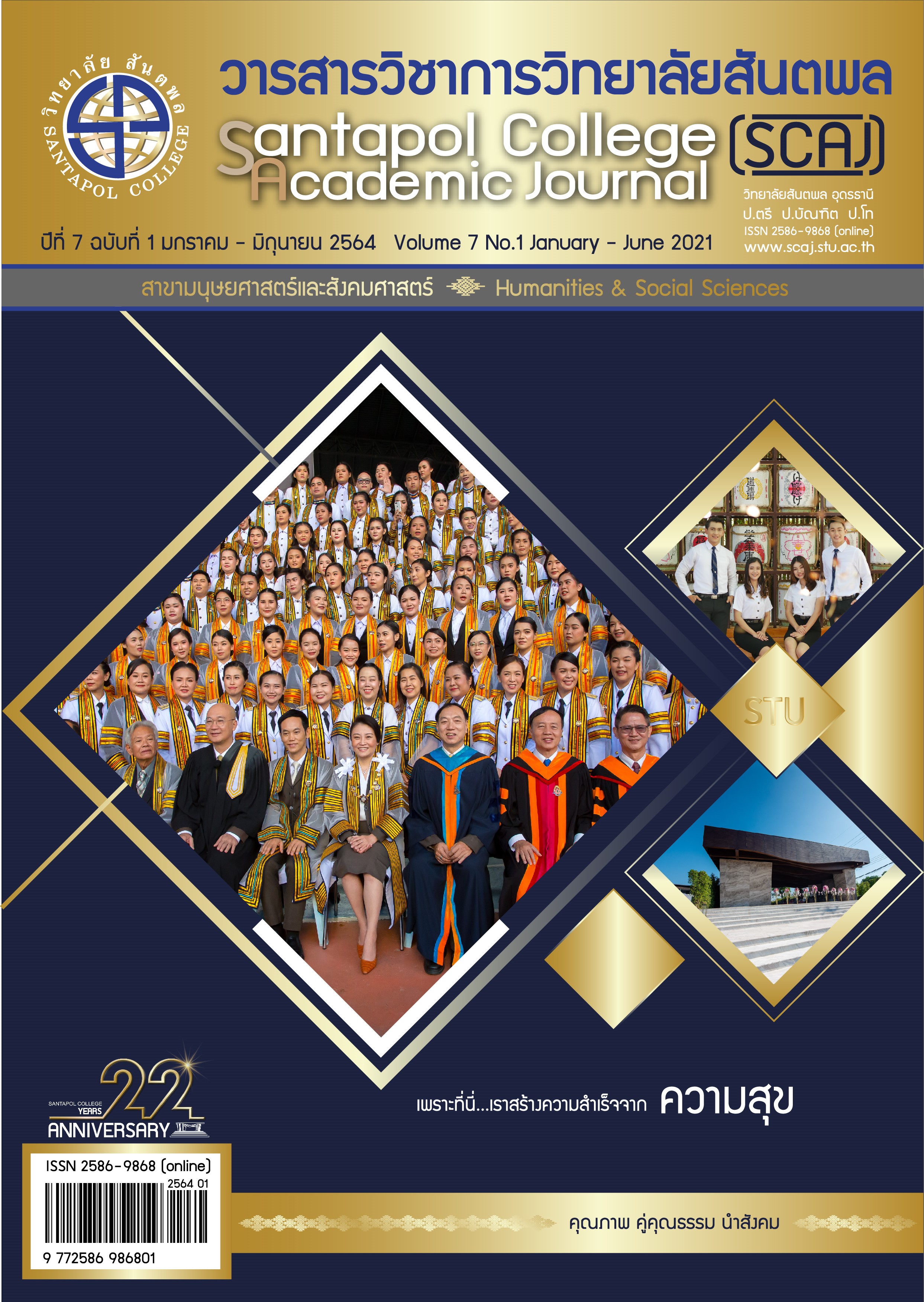
Main Article Content
Abstract
Health tourism is one of the most popular types of tourism. In Thailand, there are many natural tourist attractions, including mountains, rivers, seas and forests scattered in each region. Currently, more health tourism has been promoted. Especially, the hot spring tourism attractions that are amazing, therefore, conducive to development into a health tourism attraction such as Khlong Changuan Hot Springs, Surat Thani Province. This hot spring is fully-equipped to be developed as a model of the hot spring as a health tourism attraction because it has passed the evaluation criteria for the quality standards of health tourism attractions, which can be classified as a natural hot spring source with a natural hot spring health tourism attraction and able to manage the utilization of the area for sustainability in the future by adopting existing raw materials and natural resources to improve and develop even further through the community management. This is to encourage everyone in the community to recognize and love their homeland and also can cultivate the youth to have a public mind for community management by themselves with knowledge base from academic services of departments and educational institutions.
Article Details

This work is licensed under a Creative Commons Attribution-NonCommercial-NoDerivatives 4.0 International License.
เนื้อหาและข้อมูลในบทความที่ลงตีพิมพ์ในวารสารวิชาการวิทยาลัยสันตพล ถือว่าเป็นข้อคิดเห็นและความรับผิดชอบของผู้เขียนบทความโดยตรง ซึ่งกองบรรณาธิการวารสารไม่จำเป็นต้องเห็นด้วยหรือรับผิดชอบใดๆ
References
กระทรวงการท่องเที่ยวและกีฬา. (2563). คู่มือการประเมินมาตรฐานคุณภาพแหล่งท่องเที่ยวเชิงสุขภาพ ประเภทน้ำพุร้อนธรรมชาติ. สำนักพัฒนาแหล่งท่องเที่ยว กรมการท่องเที่ยว. พิมพ์ครั้งที่ 2.
กระทรวงการท่องเที่ยวและกีฬา. (2557). คู่มือการตรวจประเมินมาตรฐานคุณภาพแหล่งท่องเที่ยวเชิงสุขภาพ ประเภทน้ำพุร้อนธรรมชาติ. สืบค้นเมื่อ 25 กันยายน 2563, จาก http://park.dnp.go.th/file/น้ำพุร้อนธรรมชาติ.pdf
มัชฌิมา อุดมศิลป์. (2562). การศึกษาความเป็นไปได้ในการจัดการท่องเที่ยวเชิงเกษตรสุขภาพโดยชุมชนโพหัก จังหวัดราชบุรี. วารสารวิชาการวิทยาลัยสันตพล., 5(1), 40 - 50.
ราณี อิสิชัยกุล. (2552). รายงานการวิจัยฉบับสมบูรณ์ การส่งเสริมการท่องเที่ยวผู้สูงอายุจากทวีปยุโรปสู่ประเทศไทย. กรุงเทพฯ : สกว.
สโมสรน้ำพุร้อนไทย. (2563). แหล่งน้ำพุร้อนในประเทศไทย. สืบค้นเมื่อ 18 ธันวาคม 2563, จากhttp://www.thaispaassociation.com/uploads/file/K.Preecha_11_Sep.pdf
องค์การบริหารส่วนตำบลคลองฉนวน. (2559). แหล่งท่องเที่ยวน้ำพุร้อนคลองฉนวน. สืบค้นเมื่อ 18 ธันวาคม 2563, จาก http://www.klongchanuan.go.th/contactus
E-sichaikun, R. (2014). Niche Tourism Management. Nonthaburi: Sukhothai Thammathirat Open University.
Global Wellness Institute. (2014). The Global Wellness Tourism Economy 2013 & 2014.
Kara, D. (2016). The Assessment of Medical Tourism in the World and Strategy Recommendations. International Journal of Health Sciences and Research (IJHSR), 6(4), 470 - 479.
Kogiso, K. (2012). Thai Massage and health tourism in Thailand: tourism acculturation process of “Thai Massage”. International Journal of Sport and Health Science, 201209.
Palang, D., and Tippayawong, K. Y. (2019). Performance evaluation of tourism supply chain management: the case of Thailand. Business Process Management Journal.
Potjana Suansri. (2009). Local insight: Thai Community Based Tourism / Potjana Suansri and Peter Richards. Chiang Mai: Tourism Authority of Thailand.
Sankrusme, S. (2012). "Development Strategies on Taking Thailand’s Health Promotion Related Tourism Business into the Global Market". International Business Research 5(11): 83.
Yorulmaz, M. (2019). An overview of health tourism. Retrospect & prospect, 343.
