
สื่อใหม่เชิงปฏิสัมพันธ์ : ประสบการณ์ยูไดโมนิกส์ผ่านแอนิเมชัน เกม และวีอาร์ เพื่อส่งเสริมการท่องเที่ยวเชียงใหม่ (New media interactivity: Eudaimonic experiences through animation, games, and VR to promote Chiang Mai tourism)
Article Sidebar
Main Article Content
บทคัดย่อ
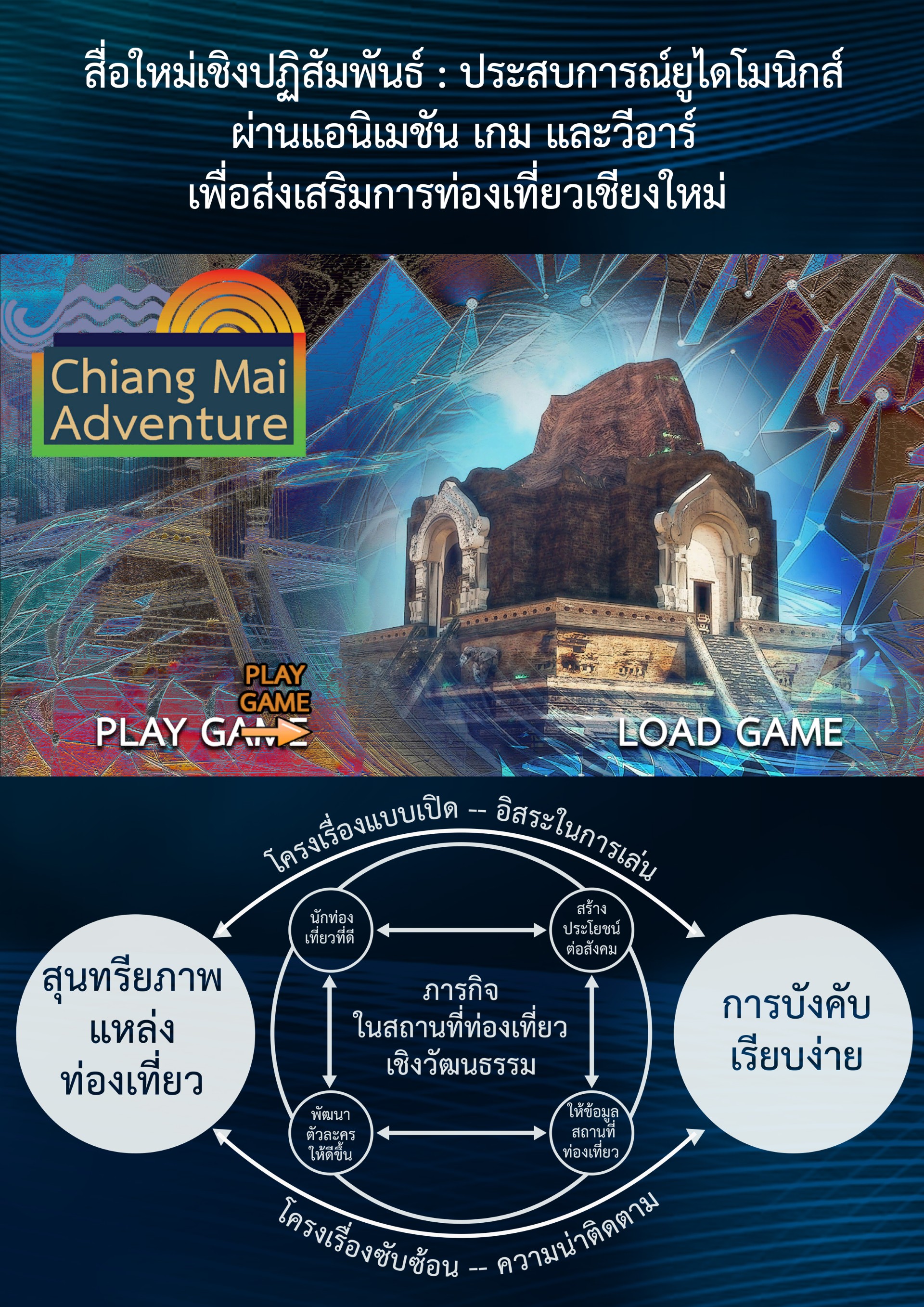
เกมคอมพิวเตอร์พัฒนาเป็นสื่อที่มีความสำคัญมากกว่าความบันเทิง โดยนำเสนอการดำเนินชีวิตอย่างมีคุณค่า เป็นความสุขแบบยูไดโมนิกส์ งานวิจัยเรื่องนี้มีวัตถุประสงค์เพื่อพัฒนาสื่อใหม่ ประกอบด้วย ภาพยนตร์แอนิเมชัน เกมคอมพิวเตอร์ และวีอาร์ที่สร้างประสบการณ์ความสุขแบบยูไดโมนิกส์ สำหรับส่งเสริมการท่องเที่ยวเมืองเชียงใหม่ ใช้ระเบียบวิธีวิจัยแบบผสมผสาน ทั้งการวิจัยเชิงคุณภาพ เก็บข้อมูลจากการสัมภาษณ์ผู้ให้บริการด้านการท่องเที่ยว การสำรวจข้อคิดเห็นของนักท่องเที่ยวจากสื่อออนไลน์ การสังเกตอากัปกิริยาของผู้เล่นเกมในห้องนิทรรศการ และการวิจัยเชิงปริมาณ เก็บข้อมูลจากแบบประเมินความพึงพอใจทางออนไลน์ ในการวิจัยครั้งนี้ได้สร้างเกมคอมพิวเตอร์แนวผจญภัย และเกมความเป็นจริงเสมือนที่เล่นกับคอมพิวเตอร์และอุปกรณ์วีอาร์ ซึ่งเกมทั้งสองจัดแสดงในรูปแบบนิทรรศการและเปิดให้ดาวน์โหลดฟรีผ่านเว็บไซต์ ผลการวิจัยพบว่า การนำเสนอภาพแหล่งท่องเที่ยวที่สวยงาม การให้ข้อมูลแหล่งท่องเที่ยว และกิจกรรมเสมือนจริงที่ให้ผู้เล่นทำความดี สร้างให้เกิดประสบการณ์ความสุขแบบยูไดโมนิกส์กับผู้เล่น ผลการประเมินความพึงพอใจแบบออนไลน์ของผู้เล่นเกม จำนวน 53 คน ในด้านคุณภาพของผลงาน ด้านเนื้อหาการนำเสนอ และด้านประโยชน์ในการส่งเสริมการท่องเที่ยว พบว่า ทั้ง 3 ด้านมีระดับความพึงพอใจมากที่สุด การวิจัยครั้งนี้จึงเป็นแนวทางในการออกแบบสื่อใหม่สำหรับส่งเสริมการท่องเที่ยว การนำเสนอเกมความเป็นจริงเสมือนในรูปแบบนิทรรศการ ทำให้เกิดการเล่นเกมและได้เห็นเพื่อนเล่นเกมเป็นการสร้างประสบการณ์ความสุขแบบยูไดโมนิกส์ เกิดภาพความทรงจำระยะยาวในการได้มาท่องเที่ยวที่เชียงใหม่
Computer games have evolved beyond mere entertainment to become a medium capable of fostering eudaimonia experiences—forms of happiness derived from living a meaningful and virtuous life. This research aimed to develop new interactive media, including animated films, computer games, and virtual reality (VR) experiences, designed to promote tourism in Chiang Mai. A mixed-methods approach was employed, incorporating both qualitative and quantitative research methods. Data collection included interviews with tourism service providers, analysis of tourists’ opinions from online media, observation of player behavior within the exhibition setting, and online satisfaction surveys. The research produced two main interactive games: an adventure-style computer game and a virtual reality game playable via computer and VR devices. Both were presented in an exhibition format and made available for free download through a dedicated website. The results revealed that presenting visually appealing tourist attractions, providing informative content, and offering virtual activities that encourage players to engage in positive actions collectively contributed to eudaimonic experiences among players. An online satisfaction assessment of 53 participants showed the highest levels of satisfaction across all evaluated dimensions, including the quality of the work, the presentation content, and the perceived benefits for tourism promotion. This study offers a model for designing new media to promote tourism. Presenting VR games within an exhibition setting enhances both participation and shared experiences—allowing visitors to enjoy playing and observing others—which fosters eudaimonic happiness and helps create long-lasting positive memories associated with visiting Chiang Mai.
Downloads
Article Details

อนุญาตภายใต้เงื่อนไข Creative Commons Attribution-NonCommercial-NoDerivatives 4.0 International License.
เอกสารอ้างอิง
Bakhsheshi, F. F., & Ghaziani, G. (2019). Tourism based games: A study of challenges and profits. In Proceedings of the 1st International Serious Games Symposium (ISGS) (pp. 30–37). Institute of Electrical and Electronics Engineers (IEEE). https://doi.org/10.1109/ISGS49501.2019.9047024
Bell, K. (2018). Game on! Gamification, gameful design, and the rise of the gamer educator. Johns Hopkins University Press.
Daneels, R., Bowman, N. D., Possler, D., & Mekler, E. D. (2021). The ‘eudaimonic experience’: A scoping review of the concept in digital games research. Media and Communication, 9(2), 178–190. https://doi.org/10.17645/mac.v9i2.3824
Nurrahmania, A., & Grahita, B. (2021). Analysis of tourism game effectiveness as promotional strategy. Advances in Social Science, Education and Humanities Research, 625, 295–301. https://doi.org/10.2991/assehr.k.211228.038
Okur, M., Kızıl, R., & Atamaz, E. (2024). The art of graphic design in video games: Beyond the visual. Amazonia Investiga, 13(78), 9–26. https://doi.org/10.34069/AI/2024.78.06.1
Park, S., & Ahn, D. (2022). Seeking pleasure or meaning? The different impacts of hedonic and eudaimonic tourism happiness on tourists’ life satisfaction. International Journal of Environmental Research and Public Health, 19(3), Article 1162. https://doi.org/10.3390/ijerph19031162
Possler, D., Bowman, N. D., & Daneels, R. (2023). Explaining the formation of eudaimonic gaming experiences: A theoretical overview and systemization based on interactivity and game elements. Frontiers in Communication, 8, Article 1215960. https://doi.org/10.3389/fcomm.2023.1215960
Possler, D., Daneels, R., & Bowman, N. D. (2024). Players just want to have fun? An exploratory survey on hedonic and eudaimonic game motives. Games and Culture, 19(5), 611–633. https://doi.org/10.1177/15554120231182498
Roman, M., Kosiński, R., Bhatta, K., Niedziółka, A., & Krasnodębski, A. (2022). Virtual and space tourism as new trends in travelling at the time of the COVID-19 pandemic. Sustainability, 14(2), Article 628.
Sullivan, G. M., & Artino, A. R., Jr. (2013). Analyzing and interpreting data from Likert-type scales. Journal of Graduate Medical Education, 5(4), 541–542. https://doi.org/10.4300/JGME-5-4-18
Wang, W., & Hang, H. (2021). Exploring the eudaimonic game experience through purchasing functional and nonfunctional items in MMORPGs. Psychology & Marketing, 38(10), 1847–1862. https://doi.org/10.1002/mar.21503
Wanitchakorn, T., & Muangasame, K. (2021). The identity change of rural–urban transformational tourism development in Chiang Mai heritage city: Local residents’ perspectives. International Journal of Tourism Cities, 7(4), 1008–1028. https://doi.org/10.1108/IJTC-08-2020-0169
