“ฟ้อนสราญ นางแมวขอฝน” นวัตกรรมด้านศิลปะการแสดงเพื่อยกระดับคุณภาพสังคมอย่างยั่งยืน (“Forn Saran Nang Maew Kor Fon”: Innovation in performing arts to raise the quality of society sustainably)
Article Sidebar
Main Article Content
Abstract
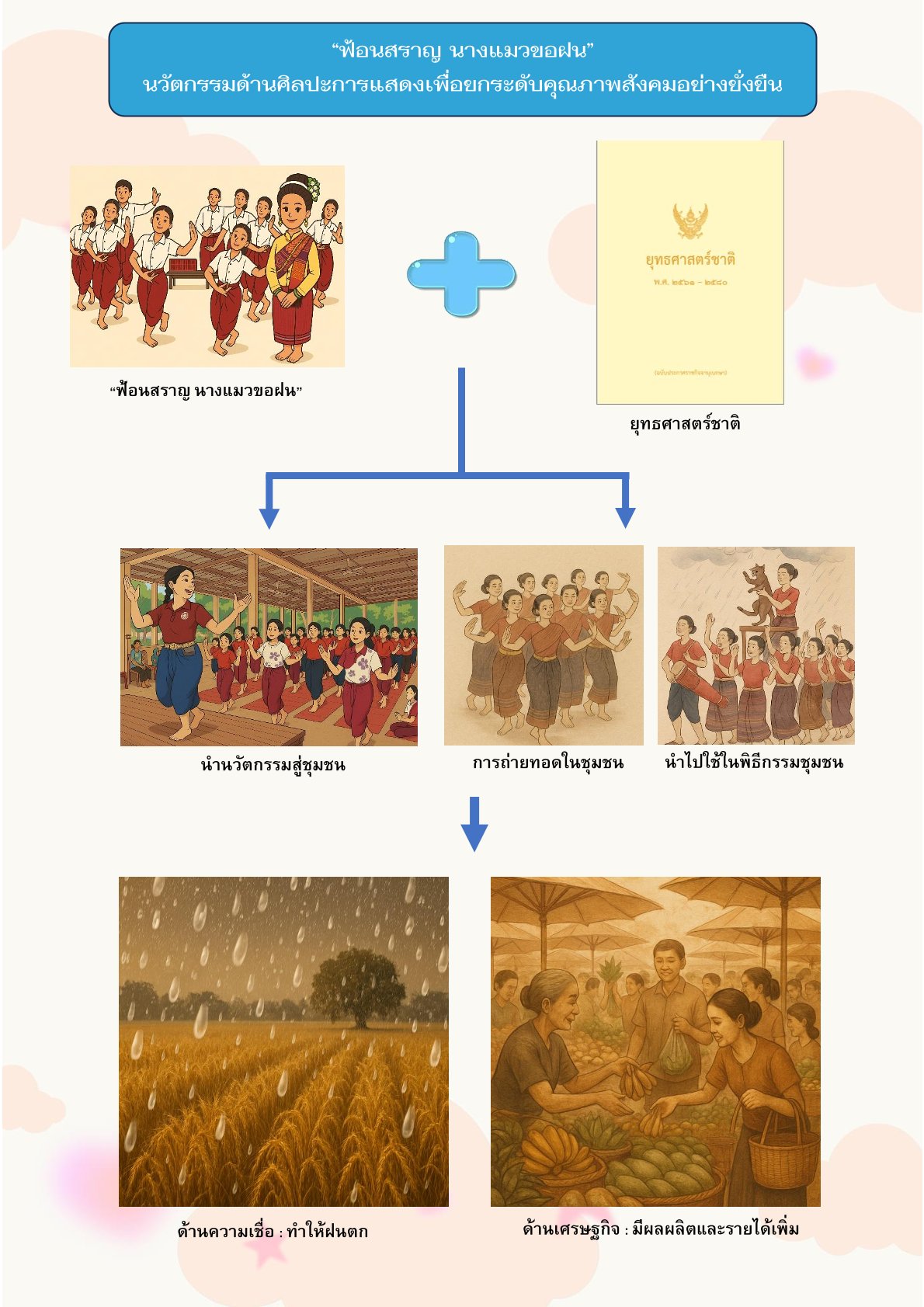
ศิลปะการแสดงของชุมชน แสดงให้เห็นถึงภูมิปัญญาและวัฒนธรรมที่เป็นอัตลักษณ์ของท้องถิ่น งานวิจัยเชิงสร้างสรรค์ด้านนาฏศิลป์เรื่องนี้เป็นการต่อยอดองค์ความรู้เดิมของงานวิจัย เรื่อง “การแสดงในพิธีกรรมภูมิปัญญาทางวัฒนธรรมที่สะท้อนบริบททางสังคม กรณีศึกษาพิธีกรรมแห่นางแมวบ้านนางั่ว ตำบลนางั่ว อำเภอเมือง จังหวัดเพชรบูรณ์” โดยมีวัตถุประสงค์เพื่อสร้างสรรค์นวัตกรรมด้านศิลปะการแสดงเพื่อยกระดับคุณภาพสังคมอย่างยั่งยืน ในพื้นที่ตำบลนางั่ว อำเภอเมือง จังหวัดเพชรบูรณ์ กลุ่มตัวอย่าง ได้แก่ ผู้ทรงคุณวุฒิทางด้านนาฏศิลป์และการละคร ผู้ทรงภูมิปัญญาด้านวัฒนธรรม พิธีกรรมการแสดงแห่นางแมว และนักแสดงที่มีทักษะด้านนาฏศิลป์ไทย เครื่องมือที่ใช้ในการวิจัย ประกอบด้วย แบบสำรวจ แบบสังเกต และแบบสัมภาษณ์ที่มีโครงสร้างและไม่มีโครงสร้าง แล้วนำเสนอข้อมูลแบบพรรณนาวิเคราะห์ ผลที่เกิดจากการสร้างสรรค์นวัตกรรม ชุด “ฟ้อนสราญ นางแมวขอฝน” พบว่ามีการสร้างสรรค์กระบวนท่ารำใหม่ โดยผสมผสานท่าฟ้อนเดิมที่ปรากฏในพิธีกรรมกับกระบวนท่ารำแบบมาตรฐาน ได้แก่ รำแม่บทเล็ก รำแม่บทใหญ่ และฟ้อนแม่บทอีสาน ตลอดจนการออกแบบเครื่องแต่งกายและสร้างสรรค์บทเพลงขึ้นใหม่เพื่อให้มีความแปลกใหม่แต่ยังคงรักษาวัฒนธรรมดั้งเดิมไว้ การแสดงชุดนี้จึงเป็นการผสมผสานที่แสดงออกทางด้านวัฒนธรรมกับพิธีกรรมได้อย่างมีเอกลักษณ์โดดเด่นเฉพาะตัว มีรูปแบบและองค์ประกอบของการแสดงที่ไม่ซับซ้อน จดจำง่าย เหมาะกับการถ่ายทอดองค์ความรู้จากรุ่นสู่รุ่น เพื่อสืบทอดพิธีกรรมที่เป็นภูมิปัญญาท้องถิ่นให้คงอยู่ในยุคที่สังคมมีการเปลี่ยนแปลง เป็นการส่งเสริมและสร้างมูลค่าเพิ่มเชิงวัฒนธรรมผ่านนวัตกรรมด้านศิลปะการแสดง อันส่งผลให้เกิดรายได้และยกระดับคุณภาพชีวิตให้กับชุมชนได้อย่างดี
The performing arts of local communities reflect indigenous wisdom and cultural identity. This creative research in Thai dance builds upon a previous study entitled “Performances in Rituals: Cultural Wisdom Reflecting Social Contexts – A Case Study of the Rain-Requesting Ritual of Nang Maew in Ban Na Ngua, Na Ngua Sub-district, Mueang District, Phetchabun Province.” The objective of this study is to develop an innovative performing arts piece that can sustainably raise the quality of society in Na Ngua sub-district, Mueang district, Phetchabun province. The sample group comprised dance and drama experts, cultural wisdom holders involved in the Hae Nang Maew (rain-requesting parade) ritual, and skilled Thai dance performers. Using a creative research methodology, data were collected through surveys, observations, and both structured and unstructured interviews with local practitioners. The findings showed that the newly developed performance, “Forn Saran Nang Maew Kor Fon” (joyful rain-requesting dance), features original dance movements created by combining traditional ritual gestures with standard Thai dance techniques—namely Mae Bot Lek, Mae Bot Yai, and Mae Bot Isan. New costumes and original musical compositions were also designed to introduce novelty while preserving traditional cultural values. This performance demonstrates a distinctive integration of ritual and cultural expression through simple, memorable elements that facilitate knowledge transmission across generations. The innovation not only helps preserve local ritual wisdom amid social change, but also adds cultural value and generates income, thereby contributing to sustainable community development.
Downloads
Article Details

This work is licensed under a Creative Commons Attribution-NonCommercial-NoDerivatives 4.0 International License.
References
Announcement on the National Strategy (2018–2037). (2018, October 13). Royal Thai Government Gazette. No. 135 Section 82 A. pp. 7–9. https://www.ratchakitcha.soc.go.th/DATA/PDF/2561/A/082/T_0001.PDF
Atayaphan, S., & Chansuwan, P. (2019). Choreographic invention Naga principle Sattha Naga (การประดิษฐ์สร้างนาฏยประดิษฐ์จากคติความเชื่อเรื่องนาค ศรัทธานาคะ). Chophayom Journal, 30(2), 185–194. https://so01.tci-thaijo.org/index.php/ejChophayom/article/view/216521
Aupatumnarakorn, B. (2016). Thai classical dance knowledge transfer process: Pakorn Ponpisut (กระบวนการถ่ายทอดความรู้นาฏศิลป์ไทย : ปกรณ์ พรพิสุทธิ์). VRU Research and Development Journal Humanities and Social Science, 11(2), 337–345. https://so06.tci-thaijo.org/index.php/vrurdihsjournal/article/view/65898
Chittasutthiyan, S. (2013). Understanding of aesthetics (ความเข้าใจในทฤษฎีสุนทรียะ). Journal of Liberal Arts, Ubon Ratchathani University, 9(2), 161–179. https://so03.tci-thaijo.org/index.php/jla_ubu/article/view/94488
Lajunnon, P., Chansaengsri, A., & Meepium, C. (2023). The ceremony performance and cultural intelligence reflecting the social context: A case study of the Nang Maew Ban Na Ngua procession, Na Ngua sub-district, Phetchabun province (Research report) (การแสดงในพิธีกรรมภูมิปัญญาทางวัฒนธรรมที่สะท้อนบริบททางสังคม กรณีศึกษาพิธีกรรมแห่นางแมวบ้านนางั่ว ตำบลนางั่ว อำเภอเมือง จังหวัดเพชรบูรณ์) (รายงานการวิจัย). Research and Development Institute, Phetchabun Rajabhat University.
Minton, S. C. (2007). Choreography: A basic approach using improvisation (3rd ed.). Human Kinetics.
Musika, K. (2015). A concept of Esarn choreography for Ponglang band (แนวความคิดการสร้างสรรค์นาฏยประดิษฐ์อีสานในวงโปงลาง) [Doctoral dissertation, Chulalongkorn University]. Chulalongkorn University Intellectual Repository. http://cuir.car.chula.ac.th/handle/123456789/49822
Ponsiri, Y. (2021). Choreography from carved portraits of Wat Phou Castle, Champasak province, Laos PDR (นาฏยประดิษฐ์จากภาพจำหลักรูปบุคคลปราสาทวัดพู แขวงจำปาสัก สปป. ลาว) [Doctoral dissertation, Khon Kaen University]. ThaiLIS Digital Collection. https://tdc.thailis.or.th/tdc/browse.php?option=show&browse_type=title&titleid=662453
Prompuay, T. (2014). Natya Shastra (คัมภีร์นาฏยศาสตร์) [Unpublished manuscript]. Faculty of Fine and Applied Arts, Ramkhamhaeng University.
Ruangjirayos, P. (2008). Conceptual choreography based upon ancient Khmer art objects (แนวคิดการสร้างสรรค์ระบําจากข้อมูลศิลปกรรมขอมโบราณ) [Master’s thesis, Chulalongkorn University]. Chula Digital Collections. https://digital.car.chula.ac.th/chulaetd/72490
The Office of the Constitutional Court. (2023). Constitution of the Kingdom of Thailand 2017 (amended 2021) (รัฐธรรมนูญแห่งราชอาณาจักรไทย พุทธศักราช 2560 (แก้ไขเพิ่มเติม พุทธศักราช 2564)) (3rd ed.). Active Print. https://elibrary.constitutionalcourt.or.th/research/download.php?ID=315
Vutipadit, P. (2007). A study of the music for Aryai Pleng village Nongtakhong district Amphor Pongnamron Chanthaburi province (การศึกษาดนตรีการเล่นอาไย หมู่บ้านแปลง ตำบลหนองตาคง อำเภอโป่งน้ำร้อน จังหวัดจันทบุรี) [Master’s thesis, Srinakharinwirot University]. ThaiLIS Digital Collection. https://tdc.thailis.or.th/tdc/browse.php?option=show&browse_type=title&titleid=219944
Yanyongkasemsuk, R. (2013). Symbolic interaction theory and the explanation of social phenomena from actor perspective (ทฤษฎีปฏิสัมพันธ์เชิงสัญลักษณ์กับการอธิบายปรากฏการณ์สังคมจากมุมมองตัวแสดง). Journal of Politics, Administration and Law, 5(2), 69–89. https://so03.tci-thaijo.org/index.php/polscilaw_journal/issue/view/15235
