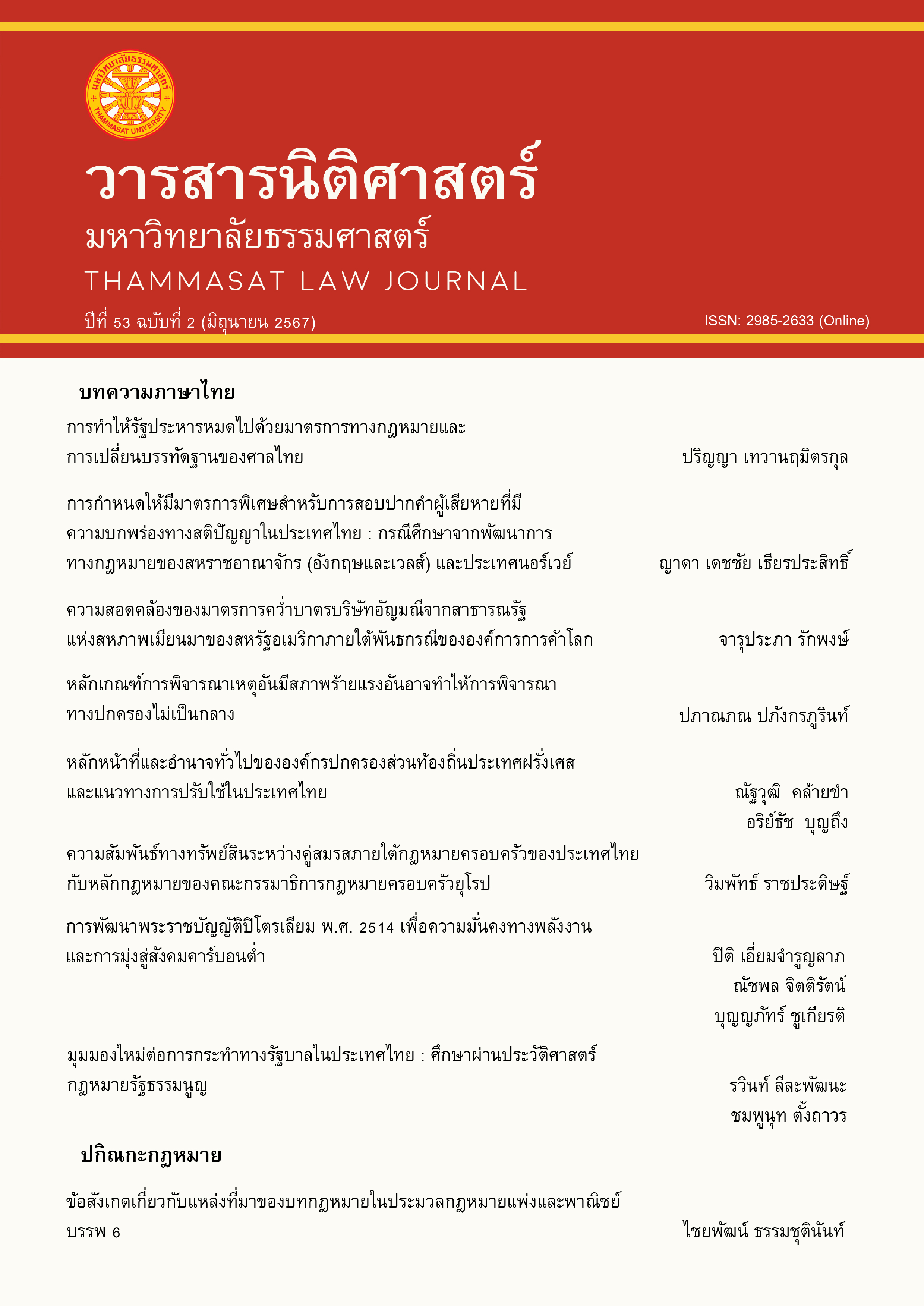
การพัฒนาพระราชบัญญัติปิโตรเลียม พ.ศ. 2514 เพื่อความมั่นคงทางพลังงานและการมุ่งสู่สังคมคาร์บอนต่ำ
คำสำคัญ:
การต่อระยเวลาการผลิตปิโตรเลียม, การกักเก็บคาร์บอน, บัญชีเพื่อการรื้อถอนสิ่งติดตั้ง, พระราชบัญญัติปิโตรเลียม พ.ศ. 2514บทคัดย่อ
เนื่องจากพระราชบัญญัติปิโตรเลียม พ.ศ. 2514 ยังมีข้อจำกัดในการสร้างความมั่นคงทางพลังงานของประเทศเพราะมีบทบัญญัติซึ่งจำกัดการต่อระยะเวลาการผลิตปิโตรเลียม รวมทั้งขาดบทบัญญัติเพื่อป้องกันการหยุดชะงักของการผลิตหากมีการเปลี่ยนตัวผู้ประกอบกิจการ ขาดบทบัญญัติเพื่อสนับสนุนให้ผู้ประกอบการปิโตรเลียมเข้าถึงพื้นที่เพื่อประกอบกิจการปิโตรเลียมได้โดยสะดวก ขาดบทบัญญัติเพื่อสร้างแรงจูงใจและส่งเสริมการลงทุนในการสำรวจและผลิตปิโตรเลียมเพราะความไม่ชัดเจนในการลดหย่อนค่าภาคหลวงในบางกรณี รวมทั้งยังขาดบทบัญญัติเพื่อช่วยให้การประกอบกิจการมีต้นทุนต่ำลงด้วยการใช้สิ่งติดตั้งของผู้ประกอบกิจการรายอื่น กับทั้งยังมีบทบัญญัติที่ขาดความชัดเจนในการเรียกเก็บค่าตอบแทนการเข้าถึงพื้นที่ จึงเป็นภาระแก่ผู้ประกอบกิจการปิโตรเลียมมากเกินสมควร นอกจากนี้ การที่กฎหมายกำหนดให้ผู้ประกอบกิจการปิโตรเลียมต้องวางหลักประกันการรื้อถอนสิ่งติดตั้งในช่วงท้ายของการประกอบกิจการโดยมิได้หักเป็นค่าใช้จ่ายเพื่อคำนวณภาระภาษีตามพระราชบัญญัติภาษีเงินได้ปิโตรเลียม พ.ศ. 2514 ได้ย่อมเป็นภาระแก่ผู้ประกอบการและมีความเสี่ยงที่ผู้ประกอบกิจการจะไม่วางหลักประกัน นอกจากนี้ ยังขาดฐานทางกฎหมายที่ชัดเจนในการออกมาตรการบังคับทางปกครอง และมีระวางโทษทางอาญาที่ไม่อาจป้องปรามการกระทำความผิดได้อย่างมีประสิทธิภาพ รวมถึงไม่มีบทบัญญัติสำหรับการกำกับดูแลการประกอบกิจการสำรวจเพื่อค้นหาแหล่งกักเก็บคาร์บอนและการอัดคาร์บอนลงในโครงสร้างกักเก็บทางธรณีวิทยา ดังนั้น เพื่อแก้ไขข้อจำกัดดังกล่าวคณะผู้วิจัยจึงได้จัดทำข้อเสนอในการแก้ไขเพิ่มเติมพระราชบัญญัติปิโตรเลียม พ.ศ. 2514 ขึ้นโดยมีสาระสำคัญตามประเด็นดังต่อไปนี้ ได้แก่ การสร้างความต่อเนื่องในการประกอบกิจการปิโตรเลียม การบูรณาการในการใช้อำนาจกำกับดูแลเพื่อให้เข้าถึงพื้นที่ในการประกอบกิจการปิโตรเลียม การส่งเสริมการลงทุนเพื่อสำรวจและผลิตปิโตรเลียม การจัดให้มีบัญชีเพื่อการรื้อถอนสิ่งติดตั้งเพื่อประกอบกิจการปิโตรเลียม การปรับปรุงและยกเลิกบทกำหนดโทษทางอาญา และการกำกับดูและการประกอบกิจการสำรวจเพื่อค้นหาแหล่งกักเก็บคาร์บอนและอัดคาร์บอนลงในแหล่งกักเก็บซึ่งเป็นโครงสร้างทางธรณีวิทยา
เอกสารอ้างอิง
Act 29 November 1996 No. 72 relating to petroleum activities.
Crown Royalty and Incentives Regulation 2001
Law no. 9.478 of August 6, 1997 (Regulation of the Petroleum Industry in Brazil).
Mineral and Petroleum Resources Royalty Act 2008.
Northern Territory of Australia Petroleum Act 1984
Norwegian Petroleum. No, ‘The Petroleum Tax System’ (Norwegian Ministry of Petroleum and Energy, June 2023) accessed 10 June 2023.
Petroleum (Exploration and Production) Act 2016 Act 919 (Ghana)
Petroleum Act 2015 (Tanzania)
Petroleum Industry Act 2021 (Nigeria).
Petroleum Mining Act 1966 (Malaysia).
Regulations to Act relating to petroleum activities.
ข้อบังคับสถาบันอนุญาโตตุลาการว่าด้วยอนุญาโตตุลาการ พ.ศ. 2558
ข้อบังคับสำนักงานศาลยุติธรรมว่าด้วยอนุญาโตตุลาการสถาบันอนุญาโตตุลาการ
ปิติ เอี่ยมจำรูญลาภ, 'การกำกับดูแลการประกอบกิจการดักจับใช้ประโยชน์ และกักเก็บคาร์บอนไดออกไซด์: วิเคราะห์ขอบเขตและบทบาทของพระราชบัญญัติปิโตรเลียม พ.ศ. 2514' (2566) 41(2) วารสารกฎหมาย จุฬาลงกรณ์มหาวิทยาลัย 1.
เปรมฤทัย วินัยแพทย์, สมบูรณ์ วัชระชัยสุรพล และวรัชญ์จิรา พรหมมาแพทย์, 'พัฒนาการของการสำรวจและผลิตปิโตรเลียมในประเทศไทย' (การประชุมวิชาการทางธรณีวิทยา 80 ปริญญา นุตาลัย: บทบาทของนักธรณีวิทยาไทยต่อการพัฒนาเศรษฐกิจและสังคม, ภาควิชาธรณีวิทยา คณะวิทยาศาสตร์ มหาวิทยาลัยเชียงใหม่, 29 พฤศจิกายน 2562).
อริยพร โพธิใส, 'โทษปรับเป็นพินัย: มาตรการใหม่แทนการลงโทษทางอาญา' (2564) 18(3) 125.
Jean Galbraith and others, 'Poverty Penalties as Human Rights Problems' (2023) 117(3) American Journal of International Law 397.
John C Coffee Jr, ‘Corporate Crime and Punishment: A Non-Chicago View of the Economics of Criminal Sanctions’ (1980) 17 American Criminal Law Review 419.
ดาวน์โหลด
เผยแพร่แล้ว
ฉบับ
ประเภทบทความ
สัญญาอนุญาต
ลิขสิทธิ์ (c) 2024 วารสารนิติศาสตร์ มหาวิทยาลัยธรรมศาสตร์

อนุญาตภายใต้เงื่อนไข Creative Commons Attribution-NonCommercial-NoDerivatives 4.0 International License.
ผลงานที่ตีพิมพ์ในวารสารนิติศาสตร์เป็นลิขสิทธิ์ของวารสารนิติศาสตร์ มหาวิทยาลัยธรรมศาสตร์ และวารสารนิติศาสตร์ มหาวิทยาลัยธรรมศาสตร์ สงวนสิทธิในการเผยแพร่ผลงานที่ตีพิมพ์ในแบบรูปเล่มและทางสื่ออิเล็กทรอนิกส์อื่นใด
บทความหรือข้อความคิดเห็นใด ๆ ที่ปรากฏในวารสารนิติศาสตร์เป็นความรับผิดชอบของผู้เขียนโดยเฉพาะ คณะนิติศาสตร์ มหาวิทยาลัยธรรมศาสตร์ และบรรณาธิการไม่จําเป็นต้องเห็นด้วยหรือร่วมรับผิดชอบใด ๆ

