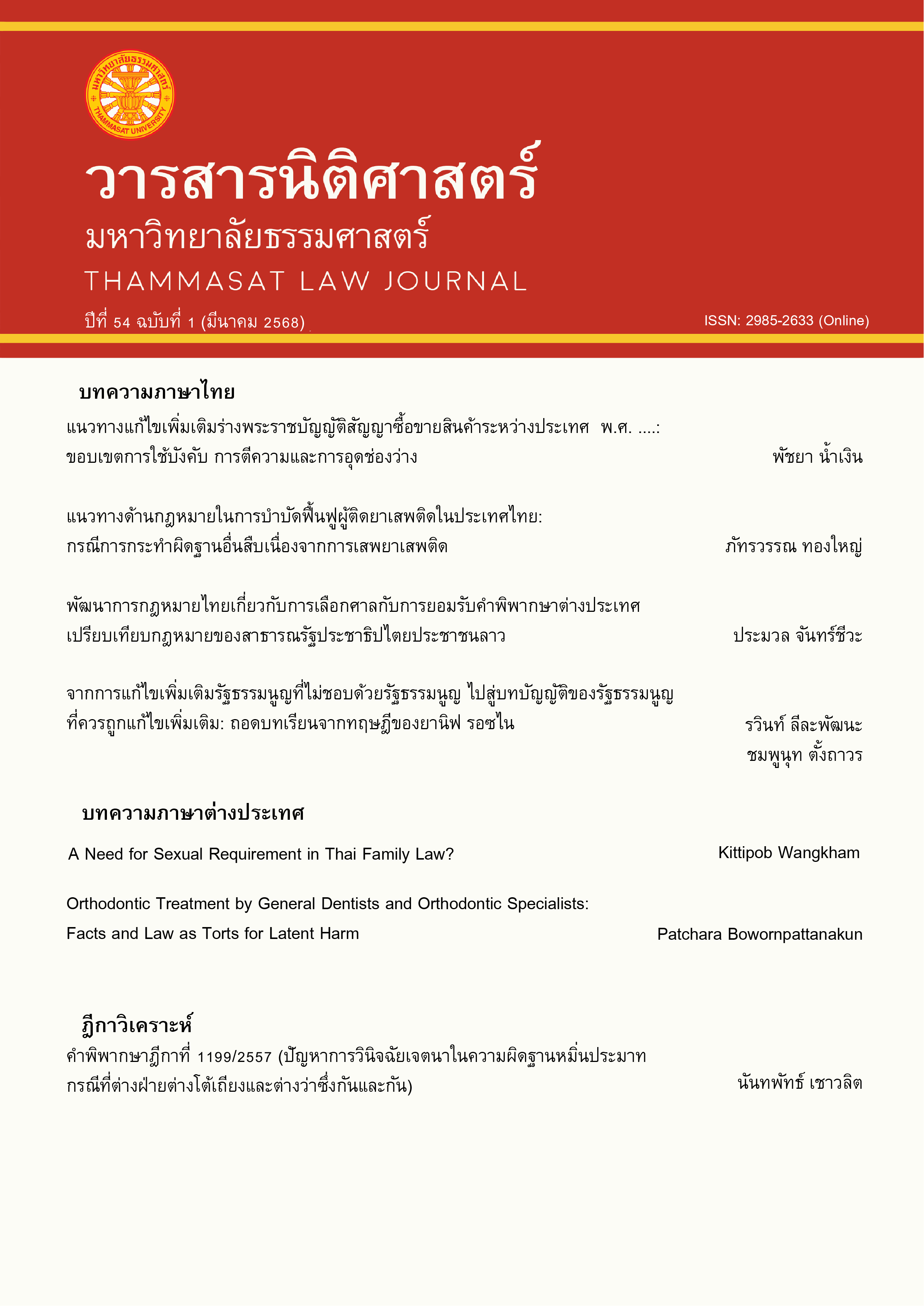
From Unconstitutional Constitutional Amendments to Constitutional Provisions that Should be Amended: Lessons from Yaniv Roznai's Theory
Keywords:
the legal-theoretical framework, the modified constitutional escalator, Yaniv Roznai, constituent power, the principle of constitutional, the principle of amendability of the constitutionAbstract
This article seeks to re-examine Yaniv Roznai’s famous theory of ‘unconstitutional constitutional amendments’ as a legal-theoretical framework for determining constitutional provisions that should be amended (‘the legal-theoretical framework’). Central to this framework is the idea of ‘modified constitutional escalator’ which suggests that the more a constitutional provision hinders the inclusive and equitable expression of constituent power by the people—regardless of social status or generation—the more it should be amended. Conversely, any change to a constitutional provision that aims to facilitate the ability of people from all parts of society and generations to express their primary constituent power should be regarded as a proper constitutional amendment. The authors argue that the effectiveness of the legal-theoretical framework is contingent on three assumptions: the assumption on constitutional perfection, the monist constituent power assumption, and the active citizenry assumption. In this article, we aim to assess the capacity and limitations pertaining to the legal-theoretical framework through the lens of three new democracies—Taiwan, Malaysia, and Thailand—that experienced, or are still experiencing, a culture of authoritarianism that challenges these assumptions. The Taiwanese experience represents the context in which the legal-theoretical framework effectively applies. However, it simultaneously challenges the monist constituent power assumption, which regards constituent power as a force that exists independently, without needing to be justified. The Malaysian case, in contrast, represents the context in which the application of the legal-rational framework would have an adverse effect on the framework itself. Finally, the Thai experience lies 'in-between' the Taiwanese and Malaysian contexts, as it is a setting in which the legal-theoretical framework can partially apply.
References
กฎหมายต่างประเทศ
บทบัญญัติเพิ่มเติมแห่งรัฐธรรมนูญแห่งสาธารณรัฐจีน:
https://law.moj.gov.tw/ENG/LawClass/LawAll.aspx?pcode=A0000002.
รัฐธรรมนูญแห่งสาธารณรัฐจีน:
https://law.moj.gov.tw/ENG/LawClass/LawAll.aspx?pcode=A0000001
รัฐธรรมนูญแห่งสหพันธรัฐมาเลเซีย:
https://www.jac.gov.my/spk/images/stories/10_akta/perlembagaan_persekutuan/federal_constitution.pdf
คำพิพากษา/คำวินิจฉัยของศาลไทย
คำวินิจฉัยศาลรัฐธรรมนูญที่ 15-18/2556
คำวินิจฉัยศาลรัฐธรรมนูญที่ 19/2564
คำพิพากษาของศาลต่างประเทศ
Décision 62-20 DC - 06 novembre 1962.
Judicial Yuan Interpretation no.31: https://cons.judicial.gov.tw/en/docdata.aspx?fid=100&id=310212.
Judicial Yuan Interpretation no.85: https://cons.judicial.gov.tw/en/docdata.aspx?fid=100&id=310266.
Judicial Yuan Interpretation no.261: https://cons.judicial.gov.tw/en/docdata.aspx?fid=100&id=310442
Judicial Yuan Interpretation no.499: https://cons.judicial.gov.tw/en/docdata.aspx?fid=100&id=310680 (translated by Ming- Sung Kuo and Hui-Wen Chen).
Menteri Dalam Negeri & Others v Titular Roman Catholic Archbishop of Kuala Lumpur [2013] 6 MLJ 468.
Titular Roman Catholic Archbishop of Kuala Lumpur v Menteri Dalam Negeri [2010] 2 MLJ 78.
Titular Roman Catholic Archbishop of Kuala Lumpur v Menteri Dalam Negeri & Ors [2014] 4 MLJ 765.
หนังสือภาษาไทย
ธงชัย วินิจจะกูล, โฉมหน้าราชาชาตินิยม (ฟ้าเดียวกัน 2559).
บวรศักดิ์ อุวรรณโณ, กฎหมายมหาชน เล่ม 2: การแบ่งแยกกฎหมายมหาชน-เอกชน และพัฒนาการกฎหมาย มหาชนในประเทศไทย (พิมพ์ครั้งที่ 5, สำนักพิมพ์แห่งจุฬาลงกรณ์มหาวิทยาลัย 2550).
________, เจตนารมณ์รัฐธรรมนูญ (สถาบันพระปกเกล้า 2544).
ปิยบุตร แสงกนกกุล, รัฐธรรมนูญ: ประวัติศาสตร์ข้อความคิด อำนาจสถาปนา และการเปลี่ยนผ่าน (ฟ้า เดียวกัน 2559).
รวินท์ ลีละพัฒนะ, ทฤษฎีการแก้ไขเพิ่มเติมรัฐธรรมนูญที่ไม่ชอบด้วยรัฐธรรมนูญของยานิฟ รอซไน กับ กรณีศึกษาในมาเลเซีย อินโดนีเซีย และไทย (สำนักพิมพ์แห่งจุฬาลงกรณ์มหาวิทยาลัย 2567).
วสุชน รักษ์ประชาไท, ขวาสุดขั้ว: ระบอบคนดีกับการเมืองยุคประชาธิปไตยกลับหลังหัน (สำนักพิมพ์มติชน
.
สายชล สัตยานุรักษ์, คึกฤทธิ์กับประดิษฐกรรมความเป็นไทย เล่ม 2 ยุคจอมพลสฤษดิ์ถึงทศวรรษที่ 2530 (สำนักพิมพ์มติชน 2550)ใ
งานวิจัยภาษาไทย
บวรรศักดิ์ อุวรรณโณ และชมพูนุท ตั้งถาวร, ‘สภาร่างรัฐธรรมนูญเปรียบเทียบ ประสบการณ์ต่างประเทศและ
ประเทศไทย’ (สถาบันพระปกเกล้า 2555).
รวินท์ ลีละพัฒนะ และ ชมพูนุท ตั้งถาวร, ‘มุมมองใหม่ต่อการกระทำทางรัฐบาลในประเทศไทย: ศึกษาผ่าน ประวัติศาสตร์กฎหมายรัฐธรรมนูญ’ (สถาบันพระปกเกล้า 2564).
บทความภาษาไทย
ดลวัฒน์ บัวประดิษฐ์, ‘จริยศาสตร์สำนักขงจื่อ: ระหว่างอัตตาณัติ กับ ความเป็นตัวเองที่เที่ยงแท้’ (2557) 14 วารสารศิลปศาสตร์ 85.
วรินทร สิริพงษ์ณภัทร, ‘การเสริมสร้างคุณลักษณะพลเมืองตื่นรู้ของผู้เรียนโดยการตั้งคำถามแบบโสเครติส’ (2566) 51 วารสารครุศาสตร์ 1.
รายงานการประชุม
รายงานการประชุมคณะกรรมาธิการยกร่างรัฐธรรมนูญ 2540 ครั้งที่ 17 วันที่ 22 เมษายน 2540.
รายงานการประชุมคณะกรรมาธิการยกร่างรัฐธรรมนูญ 2540 ครั้งที่ 18 วันที่ 23 เมษายน 2540
แหล่งอ้างอิงภาษาไทยอื่น
กล้า สมุทวณิช, ‘การแก้ไข การร่างใหม่ทั้งฉบับ : ทฤษฎีและประวัติศาสตร์การจัดทำรัฐธรรมนูญของไทย’ (สถาบันปรีดี พนมยงค์, 2 ธันวาคม 2565) <https://pridi.or.th/th/content/2022/12/1342> เข้าถึงเมื่อ 3 กันยายน 2567
________, ‘“มาจาก” หรือ “เป็นของ”: ร่องรอยแห่งการรับรองอำนาจสูงสุดในรัฐธรรมนูญไทย’ (สถาบัน ปรีดี พนมยงค์, 1 พฤศจิกายน 2565) <https://pridi.or.th/th/content/2022/11/1310> เข้าถึง เมื่อ 5 กันยายน 2567.
‘แก้รัฐธรรมนูญ: เทียบ 20 ฉบับ รัฐธรรมนูญ 2560 ชนะเลิศที่สุดแห่งการแก้ไขยาก’ (iLaw, 7 กุมภาพันธ์
<https://www.ilaw.or.th/articles/3973> เข้าถึงเมื่อ 5 กันยายน 2567.
เข็มทอง ต้นสกุลรุ่งเรือง, ‘โมงยามแห่งรัฐธรรมนูญจากประชาชน’ (The 101.World, 25 มีนามคม 2563) <https://www.the101.world/constitutional-moment/> เข้าถึงเมื่อวันที่ 3 มิถุนายน 2567.
‘นายกฯ ชี้ 250 ส.ว. ผ่านประชามติ 16 ล้านเสียง ถือเป็น “ประชาธิปไตย” – มติ ครม. เพิ่มวงเงินบริหารหนี้ 23,000 ล้าน” (Thai Publica, 26 กุมภาพันธ์ 2562)<https://thaipublica.org/2019/02/ncpo- cabinet-2562-9/> เข้าถึงเมื่อ 5 กันยายน 2567.
หนังสือภาษาอังกฤษ
Albert R, Constitutional Amendments: Making, Breaking, and Changing Constitutions (Oxford University Press 2019).
Baker C and Phongpaichit P, A History of Thailand (Cambridge University Press 2014).
Berstein S, The Republic of de Gaulle 1958-1969 (Peter Morris (tr), Cambridge University Press 1993).
Bui NS and Malagodi M (eds), Asian Comparative Constitutional Law, Volume 2: Constitutional Amendment (Hart 2024).
Chang H and Holt R, Language, Politics and Identity in Taiwan Naming China (Routledge 2015).
Chen L, An Introduction to Contemporary International Law: A Policy-Oriented Perspective (3rd end, Oxford University Press 2015).
Ely JH, Democracy and Distrust: A Theory of Judicial Review (Harvard University Press 1980).
Fernando JM, The Alliance Road to Independence (University of Malaya Press 2009).
Fuller LL, The Morality of Law (2nd edn, Yale University Press 1964).
Ginsburg T, Judicial Review in New Democracies: Constitutional Courts in Asian Cases (Cambridge University Press 2003).
Harding A, The Constitution of Malaysia: A Contextual Analysis (2nd edn, Hart 2022).
Hwang I, Personalized Politics: The Malaysian State Under Mahathir (ISEAS 2003).
Jacobsohn GJ, Constitutional Identity (Harvard University Press 2020).
Jacobsohn GJ and Roznai Y, Constitutional Revolution (Yale University Press 2020).
Kelsen H, Pure Theory of Law (Max Knight (tr), Lawbook Exchange 2005).
Kongkirati P, Thailand: Contestation, Polarization, and Democratic Regression (Cambridge University Press 2024).
Lee JCH, Islamization and Activism in Malaysia (ISEAS 2010).
Lehman Jr. D, Colonialism to Independence Southeast Asia (1511-2014) (Lulu Press 2014).
Roznai Y, Unconstitutional Constitutional Amendments: The Limits of Amendment Powers (Oxford University Press 2017).
________, The Concept of the Political (The University of Chicago Press 2007).
Somers W, The State of Taiwan: From International Law to Geopolitics (Brill 2023).
Streckfuss D, Truth on Trial in Thailand (Routledge 2011).
Suteu S, Eternity Clause in Democratic Constitutionalism (Oxford University Press 2021).
บทในหนังสือภาษาอังกฤษ
Bui NS, ‘The National Assembly of Vietnam’ in Po Jen Yap and Rehan Abeyratne, Routledge Handbook of Asian Parliaments (Routledge 2023).
Dixon R and Stone A, ‘Constitutional Amendment and Political Constitutionalism’ in David Dyzenhaus and Malcolm Thorburn (eds), Philosophical Foundations of Constitutional Law (Oxford University Press 2016).
Fernando JM, ‘Constitutionalism and the politics of constitution-making in Malaya, 1956- 1957’ in H. Kumarasingham (ed), Constitution-making in Asia: Decolonisation and State-Building in the Aftermath of the British Empire (Routledge 2016).
Ginsburg T, ‘Thailand’s Democratic Moment: The Constitution of 1997’ in Gabriel L Negretto (ed), Redrafting Constitutions in Democratic Regimes: Theoretical and Comparative Perspectives (Cambridge University Press 2020).
________, ‘Constitutional Trajectory in Malaysia: Constitutionalism without Consensus?’ in Michael W. Dowdle and Michael A. Wilkinson (eds), Constitutionalism beyond Liberalism (Cambridge University Press 2017).
Hewison K and Kitirianglarp K, ‘Thai-Style Democracy’ in Søren Ivarsson and Lotte Isager (eds), Saying the Unsayable: Monarchy and Democracy in Thailand (NIAS Press 2010).
Huang C, ‘Unpopular Sovereignty: Constitutional Identity through the lens of the Sunflower and Umbrella Movements’ in Brian Christopher Jones (ed), Law and Politics of the Taiwan Sunflower and Hong Kong Umbrella Movements (Routledge 2017).
Kumarasingham H, ‘A Foreign Commission for Domestic Needs: The Constitutional Founding of Malaysia’ in Kevin YL Tan and Bui Ngoc Son (eds), Constitutional Foundings in Southeast Asia (Hart 2019).
Law DS and Hsieh HY, ‘Judicial Review of Constitutional Amendments: Taiwan’ in David S. Law (ed), Constitutionalism in Context (Cambridge University Press 2022).
Leelapatana R, ‘Thailand’s 2017 Constitution: Constitutional Amendment in the Binary-Star Scenario’ in Bui Ngoc Bui and Mara Malagodi (eds), Asian Comparative Constitutional Law, Volume 2: Constitutional Amendment (Hart 2024).
________, ‘Thailand’s Competing Notions of Constituent Power: The Making of the 2017 Constitution in the Binary-Star Scenario’ in Bui Ngoc Son and Mara Malagodi (eds), Asian Comparative Constitutional Law, Volume I: Constitution-Making (Hart 2023).
Lin C, ‘The Birth of the Constitution of the Republic of China’ in Kevin YL Tan and Michael Ng, Constitutional Foundings in Northeast Asia (Hart 2022).
________, ‘Law and Politics of the Constitutional Amendment in Taiwan’ in Bui Ngoc Son and Mara Malagodi, Asian Comparative Constitutional Law, Volume 2: Constitutional Amendments (Hart 2024).
________, ‘We the Taiwanese People: A Constitution with Two Antagonistic Constitutional Identities’ in Richard Albert, Menaka Guruswamy, and Nishchal Basnyat, Founding Moments in Constitutionalism (Hart 2019).
Lo C, ‘Taiwan: External Influences mixed with traditional elements to form its unique legal system’ in Ann Black and Gary Bell (eds), Law and Legal Institutions of Asia: Traditions, adaptations, and innovations (Cambridge University Press 2011).
Mérieau E, ‘The 1932 Compromise Constitution: Matrix of Thailand’s Permanent Constitutional Instability’ in Kevin Tan and Bui Ngoc Son (eds), Constitutional Foundings in Southeast Asia (Hart 2019).
Mohamed Azam Mohamed Adil and Nisar Mohammad Ahmad, ‘The Status and Implementation of Islamic Law in Malaysia’ in Rossella Bottoni, Rinaldo Cristofori, and Silvio Ferrari (eds), Religious Rules, State Law, and Normative Pluralism – A Comparative Overview (Springer 2016).
Qing J, ‘The Supervisory System of Confucian Constitutionalism: Reflections on the Supervision of the State by the Academy’ in Daniel A. Bell and Ruiping Fan (eds), A Confucian Constitutional Order: How China's Ancient Past Can Shape Its Political Future (Princeton University Press 2013).
Roznai R, ‘Amendment Power, Constituent Power, and Popular Sovereignty: Linking Unamendability and Amendment Procedures’ in Richard Albert, Xenophon Contiades, and Alkmene Fotiadou (eds), The Foundations and Traditions of Constitutional Amendment (Hart 2017).
________, ‘Necrocracy or Democracy? Assessing Objections to Constitutional Unamendability’ in Richard Albert and Bertil Emrah Oder (eds), An Unamendable Constitution?: Unamendability in Constitutional Democracies (Springer 2018).
Scovazzi T, ‘The Prohibition of Torture and State of Necessity’ in Andrea Carcano and Tullio Scovazzi (eds), Upholding the Prohibition of Torture: The Contribution of the European Court of Human Rights (Brill 2023).
________, ‘Making Progress on a Rocky Path: Democratic Consolidation and Endurance in Malaysia, 2018-2021’ in Tom Gerald Daly and Dinesha Samaratne (eds), Democratic Consolidation and Constitutional Endurance in Asia and Africa: Comparing Uneven Pathways (Oxford University Press 2024).
Wood A, ‘End in Itself and Dignity’ in Yasushi Kato and Gerhard Schönrich (eds), Kant’s Concept of Dignity (De Gruyter 2020).
Yeh J, ‘Beyond unconstitutionality: The public oversight of constitutional revision in Taiwan’ in Rehan Abeyratne and Bui Ngoc Son (eds), The Law and Politics of Unconstitutional Constitutional Amendments in Asia (Routledge 2022).
________, ‘The Cult of Fatung: Representational Manipulation and Reconstruction in Taiwan’ in Graham Hassall and Cheryl Saunders (eds), The People's Representatives: Electoral Systems in the Asia-Pacific Region (Allen & Unwin 1997).
บทความภาษาอังกฤษ
Albert R, ‘Constitutional Handcuffs’ (2010) 42 Arizona State Law Journal 663.
Aroney N, Duke G, and Tierney S, ‘A theory of plural constituent power for federal systems’ [2024] Global Constitutionalism 1.
Balasubramaniam RR, ‘Constitutional Statecraft in Malaysian Courts: A Naïve ‘Schmittian’ Misappropriation’ (2022) 17 Asian Journal of Comparative Law 106.
________, ‘Constitutional Mobilization’ (2018) 17 Washington University Global Studies Law Review 113.
Colon-Rios J, ‘The Legitimacy of the Juridical: Constituent Power, Democracy, and the Limits of Constitutional Reform’ (2010) 48 Osgoode Hall Law Journal 199.
Doyle O, ‘Populist constitutionalism and constituent power’ (2019) 20 German Law Journal 161.
Duke G, ‘Can the people exercise constituent power?’ (2023) 21 International Journal of Constitutional Law 798.
Ginsburg T, ‘Constitutional afterlife: The continuing impact of Thailand’s postpolitical constitution’ (2009) 7 International Journal of Constitutional Law 83.
Hirschl R, ‘From comparative constitutional law to comparative constitutional Studies’ (2013) 11 International Journal of Constitutional Law 1.
Huang DKC and Li NNT, ‘Unconstitutional Constitutional Amendment in Taiwan: A Retrospective Analysis of Judicial Yuan Interpretation No.499 [2000]’ (2020) 15 University of Pennsylvania Asian Law Review 421.
Hudson A, The Veil of Participation: Citizens and Political Parties in Constitution-Making Processes (Cambridge University Press 2021).
Landau DE, Dixon R, and Roznai Y, ‘From an unconstitutional constitutional amendment to an unconstitutional constitution? Lessons from Honduras’ (2019) 8 Global Constitutionalism 40.
Lutz DS, ‘Towards a Theory of Constitutional Amendment’ (1994) 88 The American Political Science Review 355.
McConnell MW, ‘Textualism and the Dead Hand of the Past’ (1998) 66 The George Washington Law Review 1127.
Munger F, ‘Constitutional Reform, Legal Consciousness, and Citizen Participation in Thailand’ (2007) 40 Cornell International Law Journal 455.
Neo JL, ‘A Contextual Approach to Unconstitutional Constitutional Amendments: Judicial Power and the Basic Structure Doctrine in Malaysia’ (2020) 15 Asian Journal of Comparative Law 69.
Rigger S, ‘Competing conceptions of Taiwan's identity: The irresolvable conflict in cross‐strait relations’ (1997) 6 Journal of Contemporary China 307.
Roznai Y, ‘The Boundaries of Constituent Authority’ (2021) 52 Connecticut Law Review 1381.
Shah DAH, Harding AJ, and Liljeblad JN, ‘Thematic Issue Editorial Comment: Constitutional Struggles in Asia’ (2022) 50 Federal Law Review 131.
Verdugo S, ‘Is it time to abandon the theory of constituent power?’ (2023) 21 International Journal of Constitutional Law 14.
เอกสารภาษาอังกฤษอื่น ๆ
Stone A, ‘Unconstitutional Constitutional Amendments: Between Contradiction and Necessity’ (2018) Melbourne Legal Studies Research Paper Series No. 7865.
Downloads
Published
Issue
Section
License
Copyright (c) 2025 Thammasat Law Journal

This work is licensed under a Creative Commons Attribution-NonCommercial-NoDerivatives 4.0 International License.
The manuscripts published in the Law Journal is the copyright of the Law Journal, Thammasat University
Any article or opinion appeared in the Law Journal will solely be under the responsibility of the author The Faculty of Law, Thammasat University and the editors do not need to reach in agreement or hold any responsibility.

