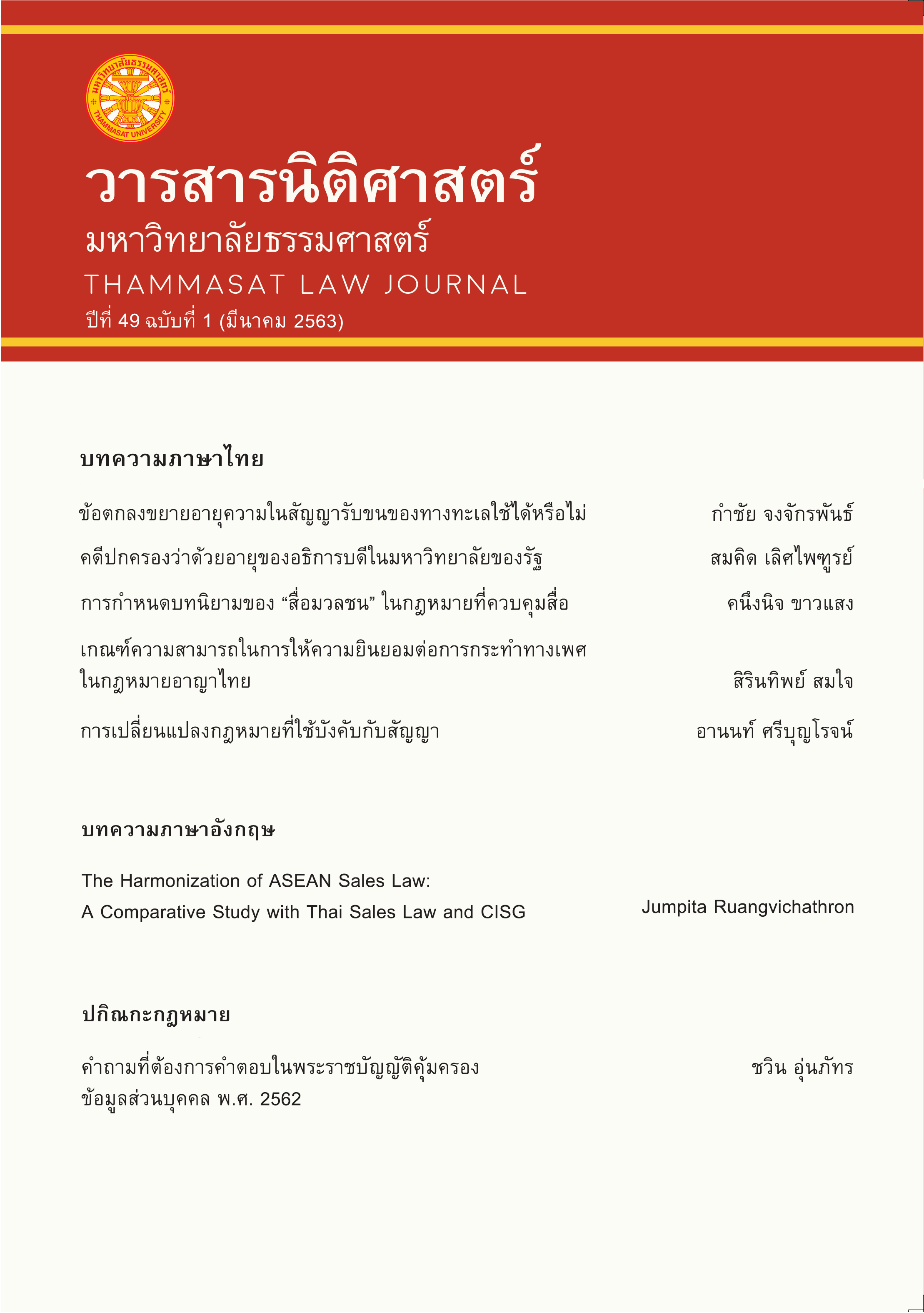
การกำหนดบทนิยามของ “สื่อมวลชน” ในกฎหมายที่ควบคุมสื่อ
คำสำคัญ:
สื่อ, สื่อมวลชน, กฎหมาย, ควบคุมสื่อบทคัดย่อ
คำนิยามของ “สื่อ” หรือ “สื่อมวลชน” ไม่มีปรากฏชัดเจนในกฎหมายว่าด้วยการควบคุมสื่อหรือในคำพิพากษาของศาล เนื่องจากแนวทางในการพิจารณาถึงหลักเกณฑ์การควบคุมสื่อในแต่ละประเภทแต่ละประเด็นนั้นมีความซับซ้อน อีกทั้งลักษณะของสื่อแต่ละประเภทมีความแตกต่างกัน การกำหนดคำนิยามของสื่ออย่างกว้าง เพื่อใช้ในการกำหนดตัวบุคคลหรือกลุ่มบุคคลผู้ถูกควบคุมโดยกฎหมายจึงอาจทำให้เกิดปัญหาในทางปฏิบัติได้ ในกลุ่มประเทศตัวอย่างที่ศึกษาอันได้แก่ สหภาพยุโรป ออสเตรเลียและแคนาดา เห็นได้ว่าวิธีการออกกฎหมายเพื่อควบคุมสื่อนั้นเป็นการออกกฎหมายควบคุมโดยเจาะจงเพียงสื่อบางประเภท และออกแบบกฎเกณฑ์ในการควบคุมให้เหมาะสมกับสื่อที่ต้องการควบคุมนั้นเป็นการเฉพาะ โดยมีการกำหนดคำนิยามของสื่อที่ต้องการควบคุม และเรื่องหรือประเด็นที่ต้องการควบคุมไว้อย่างชัดเจน ทั้งนี้หลักการพื้นฐานในการออกกฎหมายเพื่อควบคุมสื่อมวลชนนั้น คือการเคารพสิทธิขั้นพื้นฐานของสื่อและประชาชนในการแสดงออกทางความคิด หากเมื่อมีประเด็นเกี่ยวกับประโยชน์สาธารณะหรือคุณค่าทางสังคมอื่นๆ เช่น การคุ้มครองผู้รับชมสื่อซึ่งเป็นเด็ก และการคุ้มครองหรือป้องกันการนำเสนอข้อมูลข่าวสารที่นำไปสู่ความเกลียดชังต่อกลุ่มบุคคลในสังคม เสรีภาพของสื่ออาจถูกจำกัดได้ด้วยกฎหมาย กฎหมายในการควบคุมสื่อนั้นสามารถออกแบบได้หลายรูปแบบ ขึ้นอยู่กับประเภทของสื่อแต่ละประเภทซึ่งอาจเป็นการควบคุมโดยกฎหมายที่บัญญัติขึ้นโดยรัฐ การควบคุมโดยการออกกฏเกณฑ์ร่วมกันระหว่างรัฐและเอกชนผู้ประกอบการ (co-regulation) หรือการควบคุมโดยกลุ่มเอกชนผู้ประกอบการด้วยกันเอง (self-regulation) อย่างไรก็ดีผู้ออกกฎหมายควรคำนึงถึงลักษณะของสื่อแต่ละประเภทที่มีความแตกต่างกัน ผลกระทบของกฎหมายต่อสังคม ลักษณะของเทคโนโลยีที่เกี่ยวข้อง รวมถึงพฤติกรรมของผู้คนในสังคม (social norm) การควบคุมสื่อในบางเรื่องสมควรต้องพิจารณาดูว่ามีกฎหมายที่บังคับใช้ในเรื่องนั้นแล้วหรือไม่ เช่นการนำเสนอเนื้อหาข่าวสารที่ขัดต่อกฎหมายอาญา เมื่อมีประเด็นปัญหาเกิดขึ้นย่อมบังคับได้ตามกฎหมายอาญา แล้วจึงพิจารณาต่อไปว่าสื่อประเภทใดควรถูกควบคุมเป็นการเฉพาะเจาะจงและควรถูกควบคุมในเรื่องใด โดยต้องมีการกำหนดหรือบัญญัติไว้อย่างชัดเจน
ดาวน์โหลด
เผยแพร่แล้ว
ฉบับ
ประเภทบทความ
สัญญาอนุญาต
ผลงานที่ตีพิมพ์ในวารสารนิติศาสตร์เป็นลิขสิทธิ์ของวารสารนิติศาสตร์ มหาวิทยาลัยธรรมศาสตร์ และวารสารนิติศาสตร์ มหาวิทยาลัยธรรมศาสตร์ สงวนสิทธิในการเผยแพร่ผลงานที่ตีพิมพ์ในแบบรูปเล่มและทางสื่ออิเล็กทรอนิกส์อื่นใด
บทความหรือข้อความคิดเห็นใด ๆ ที่ปรากฏในวารสารนิติศาสตร์เป็นความรับผิดชอบของผู้เขียนโดยเฉพาะ คณะนิติศาสตร์ มหาวิทยาลัยธรรมศาสตร์ และบรรณาธิการไม่จําเป็นต้องเห็นด้วยหรือร่วมรับผิดชอบใด ๆ

