Public Trust in Political Leadership During COVID-19 Pandemic in Thailand
DOI:
https://doi.org/10.57260/csdj.2025.273182Keywords:
Public trust, Political leadership, COVID-19Abstract
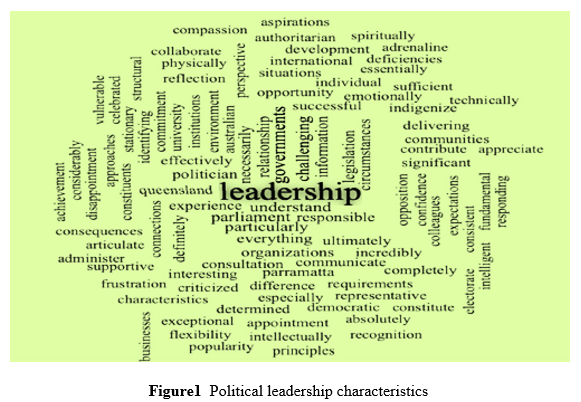
This research aims to 1) study the desirable political leadership attributes that enable effective leaders to manage COVID-19 crises in Thailand, 2) survey and identify the level of public trust in 2 Thai political leaders. The prime minister and the minister of public health. The data was collected during the COVID-19 pandemic in Thailand between march – may 2021. The qualitative data was collected via semi-structured interviews with 20 persons; including university professors, politician, official servants, and analyzed by domain analysis and taxonomy. The quantitative data was collected by the online questionnaire distributed to 200 samplings; measured by means and standard deviation analysis. The research instrument was statistical analysis consisted of percentage, mean, standard deviation, t-test, One-way anova, least significance difference test and pearson product–moment correlation coefficient. The level of significance for statistical testing was 0.05. The reliability test was cronbach’s alpha at 0.70. The research findings suggest that, to be an effective leader during a crisis, political leaders need to be: visionary; courageous; calm; inspirational; ethical; empathetic; authentic; integrity; decision maker and resilient. For aspect of levels of public trust in political leadership, the average of public trust in the prime minister (PM) was at moderate level, visionary, clam and inspirational characteristics were at the lowest level. The minister of public health was at the lowest level, political leader’s integrity and visionary were slightly low. The implication of findings led to political policy-making about the public communication of policians.
Downloads
References
Bavel, J. J. V., Baicker, K., Boggio, P. S., Capraro, V., Cichocka, A., Cikara, M., Crockett, M. J., Crum, A. J., Douglas, K. M., Druckman, J. N., Drury, J., Dube, O., Ellemers, N., Finkel, E. J., Fowler, J. H., Gelfand, M., Han, S., Haslam, S. A., Jetten, J., Kitayama, S., Mobbs, D., Napper, L. E., Packer, D. J., Pennycook, G., Peters, E., . Petty, R. E., Rand, D. G., Reicher, S. D., Schnall, S., Shariff, A., Skitka, L. J., Smith, S. S., Sunstein, C. R., Tabri, N., Tucker, J. A., Linden, S. V. D., Lange, P. V., Weeden, K. A., Wohl, M. J. A., Zaki, J., Zion, S. R., & Wille, R. (2020). Using social and behavioural science to support COVID-19 pandemic response. Nature Human Behaviour, 4, 460–471. https://doi.org/10.1038/s41562-020-0884-z
Chen, D., Rieger, M. O., Peng, D., & Wang, M. (2020), Institutional and cultural determinants of proactivity and speed of government responses during the COVID-19 pandemic. Humanities and social sciences communications, 8(1), 1-9. https://www.nature.com/articles/s41599-021-00844-4
Esaiasson, P., Sohlberg, J., Ghersetti, M., & Johansson, B. (2021). How the coronavirus crisis effects citizen trust in institutions and in unknown others: Evidence from ‘the Swedish experiment.’ European Journal of Political Research, 60(3), 748–760. https://doi.org/10.1111/1475-6765.12419
EY Americas. (2020). COVID-19 and the pandemic planning: How companies should respond. https://www.mcguinnessinstitute.org/wp-content/uploads/2020/07/EY-2020.pdf
Hawley, K. (2012). Trust: A very short introduction. Oxford University Press.
Kearns, K., Alexander, C., Duane, M., Gardner, E., Morse, E., & McShane, L. (2019). Leadership in a crisis. Journal of Public Affairs Education, 25(4), 542–557. https://doi.org/10.1080/15236803.2019.1606623
Marcy, R. T. (2020). Leadership of socio-political vanguards: A review and future directions. The Leadership Quarterly, 31(1), 101372. https://doi.org/10.1016/j.leaqua.2019.101372
OECD Coronavirus (COVID-19). (2020). Joint Actions to Win the War. https://www.oecd.org/about/secretarygeneral/Coronavirus-COVID-19-Joint-actions-to-win-the-war.pdf
Sørensen, E., & Torfing, J. (2019). Designing institutional platforms and arenas for interactive political leadership. Public Management Review, 21(10), 1443– 1463. https://doi.org/10.1080/14719037.2018.1559342
Stern, M. J., & Baird, T. D. (2015). Trust ecology and the resilience of natural resource management institutions. Ecology and Society, 20(2). http://www.jstor.org/stable/26270214
Szkudlarek, P., & Biglieri, J. (2016). Trust as an element of social capital: Evidence from a survey of Polish and Spanish students. Journal of International Studies, 9(1), 252–264. https://doi.org/10.14254/2071-8330.2016/9-1/19
VanDeth, J. W. (2017). Compliance, trust and norms of citizenship. In Zmerli, S., & van der Meer, T. W. G. (eds.), Handbook on Political Trust. Edward Elgar Publishing, chapter 13 (pp. 212–227).
WHO. (2020). Statement on the second meeting of the international health regulations (2005) emergency committee regarding the outbreak of novel coronavirus (2019-nCOV). World Health Organization: Press briefing.
Downloads
Published
How to Cite
Issue
Section
Categories
License
Copyright (c) 2025 Community and Social Development Journal

This work is licensed under a Creative Commons Attribution-NonCommercial-NoDerivatives 4.0 International License.