
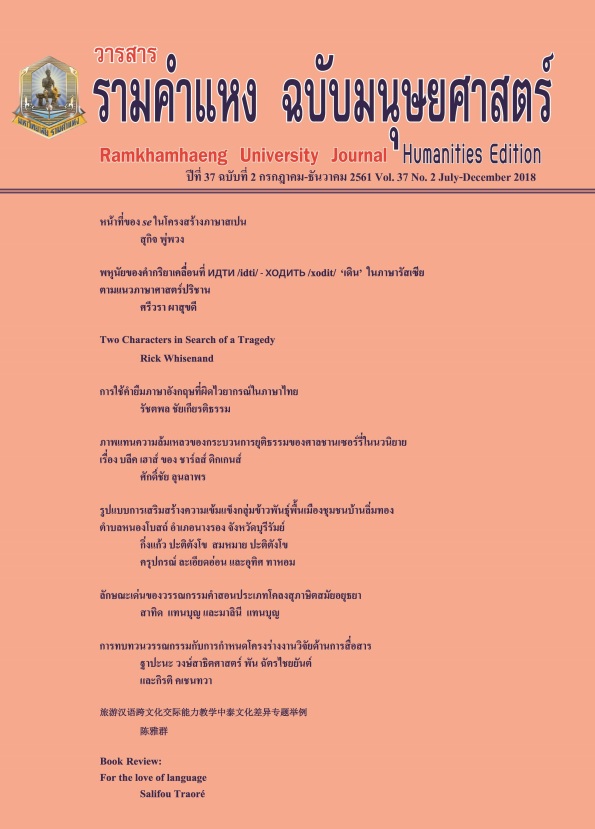
Two Characters in Search of a Tragedy
Article Sidebar
Main Article Content
Abstract
Abstract
Although Romeo and Juliet is considered one of Shakespeare’s tragedies, because the young lovers die at the end, the fact that they do not tell their parents that they are married weakens the sense of honest conflict necessary in a plot, so it cannot be a genuine tragedy, and their love has to carry the whole story (which it does beautifully). If we think that Romeo and Juliet commit suicide only because of love, that also is not tragic, yet we can find parts of their story that give their characters tragic weight, even though they do not seem to know it themselves or make it explicit in any of their speeches. This article does not, point for point, compare Romeo and Juliet with Aristotle’s description of tragedy in the Poetics; it examines “plot holes” where the conspirators could have told the world what they had done, but did not speak, and it discusses character (the “moral element”) and presents a few scenarios that could have made the play more of a tragedy.
Article Details

This work is licensed under a Creative Commons Attribution-NonCommercial-NoDerivatives 4.0 International License.
The Copyright Notice will appear in About the Journal. It should describe for readers and authors whether the copyright holder is the author, journal, or a third party. It should include additional licensing agreements (e.g. Creative Commons licenses) that grant rights to readers (see examples), and it should provide the means for securing permissions, if necessary, for the use of the journal's content.
