A Comparative Study of Achievement Learned with friend-teaches-friend and Alternatively Video of academic sample collection and analysis Courses in Industrial Hygiene
Keywords:
Video-based instructional material, Friend-teach-friend instructional materials, Industrial hygiene sampling and analysis, Learning achievementsAbstract
The aims of this research were to: 1) compare students’ learning achievements within groups before and after learning using friend-teach-friend and video-based instructional materials; 2) compare students learning achievements between groups using friend-teach-friend and video-based instructional materials; and 3) study the students’ learning satisfaction with using friend-teach-friend and video based instructional course materials for industrial hygiene sampling and analysis. The study adopted a quasi-experimental design. The sample was students in the Occupational Health and Safety program of Prince of Songkhla University, Surat Thani Campus in the academic semester 2/2022 (n=58). The research instruments were an onsite learning platform using video based and friend-teach-friend based instructional materials, with before and after learning tests, and learning satisfaction assessment form. Descriptive statistics and t-test at a 0.05 p-level for significance were used to analyze the data.
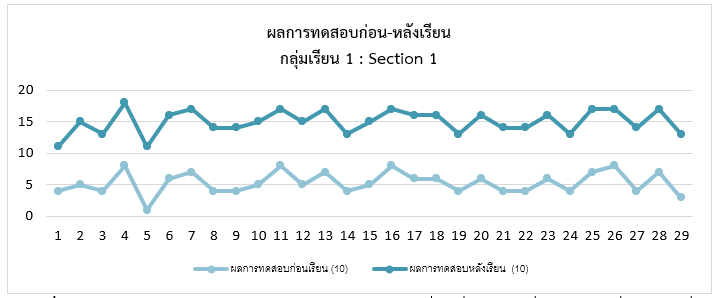
The findings were: 1) The students’ learning achievements within the groups using friend-teach-friend and video based instructional materials showed that post-learning scores were significantly higher than pre-learning scores at a statistical significance level better than p=0.05. It is shown that students achieve higher learning outcomes; 2) the learner’s achievements did not significantly differ between treatment groups; and 3) the learners’ learning satisfaction level with friend-teach-friend techniques and video media was at the highest and highest levels, respectively. This indicates a high level of satisfaction among students with both teaching methodologies, but more so with the friend-teach-friend approach. Therefore, there should be a study of academic achievement through the friend teach-friend approach in other practical subjects, to increase teaching efficiency and better meet the needs of students.
References
Almalhy, K. M. (2022). Effect of video tutorial delivery method on D/HH students’ content comprehension. Sec. Educational Psychology, 13, 1-15. doi:10.3389/fpsyg.2022.872946
Best, J. W., & Kahn, J. V. (1981). Research in education. America: Prentice Hall.
Chanudom, P., Krahomvong, R., & Kochakornjarupong, D. (2019). The Results of Instruction Model Using the Demonstration Method of Algorithm on Practice Skills and Learning Achievement of Secondary Grade 4 Students. Journal of Education Thaksin University, 19(1), 88–98. Retrieved from https://so02.tci-thaijo.org/index.php/eduthu/article/view/187286 (In Thai)
Daosri, T., Thipkonglad, P., Khemphong, P., Dubsork, S., Pengpis, S., Wisarutphaisan, W., & Phutiariyawat, J. (2021). The study of the learning management approach of school in the 21st century. Journal of Humanities and Social Sciences Nakhon Pathom Rajabhat University, 11(1), 59-74. Retrieved from https://so07.tci-thaijo.org/index.php/HUSO-J/article/view/692 (In Thai)
Donkor, F. (2010). The comparative instructional effectiveness of print-based and video-based instructional materials for teaching practical skills at a distance. International review of research in open and distributed learning, 11(1), 96-116. Retrieved from https://www.researchgate.net/publication/41847143_The_Comparative_Instructional_Effectiveness_of_Print-Based_and_Video-Based_Instructional_Materials_for_Teaching_Practical_Skills_at_a_Distance
Hamzah, N., Ahmad, F., Ariffin, A., Rubani, S. N., & Zakaria, N. (2019). EEffectiveness of Video Use in the Teaching and Learning of Electronic Practice in Vocational College. International Journal of Innovative Technology and Exploring Engineering, 9(2), 4626-4630. Retrieved from https://www.ijitee.org/portfolio-item/B9046129219
Hunyala, J. (2013). A Comparative Study of the Efficiency of Two Teaching Tools: Use of
Slideshows and Use of Videos to Instruct Students in Management and Quality
Assurance. Industrial Technology Lampang Rajabhat University Journal, 6(1 ), 1-8. Retrieved from https://li01.tci-thaijo.org/index.php/Itech/article/view/29414 (In Thai)
Ketchatturat, J. (2019). Classroom Research: The process of creating knowledge for learning development under the academic services project to strengthen classroom research of teachers in the northeastern region (In Thai). Khon Kaen: Khon Kaen University Printing (In Thai).
Plengcharoensirichai, M. (2015). A comparison of learning achievement of Mathayomsuksa 4 students between study by study by cooperative learning and blended learning with cooperative learning. Veridian E-Journal, Silpakorn University (Humanities, Social Sciences and arts), 8(2), 950-966. Retrieved from https://he02.tci-thaijo.org/index.php/Veridian-E-Journal/article/view/40282 (In Thai)
Tuntirojanawong, S. (2017). A Direction of Educational Management in the 21stCentury. Veridian EJournal, Silpakorn University (Humanities, Social Sciences and arts), 10(2), 2843-2854. Retrieved from https://he02.tci-thaijo.org/index.php/Veridian-E-Journal/article/view/109763 (In Thai)
Veeramani, R., & Bradley, S. (2008). Insights regarding undergraduate preference for lecture capture. Madison, WI: University of Wisconsin-Madison, 3.
Downloads
Published
How to Cite
Issue
Section
License
Copyright (c) 2024 Suan Sunandha Rajabhat University

This work is licensed under a Creative Commons Attribution-NonCommercial-NoDerivatives 4.0 International License.
บทความที่ได้รับการตีพิมพ์เป็นลิขสิทธิ์ของ สถาบันวิจัยและพัฒนา มหาวิทยาลัยราชภัฎสวนสุนันทา
ข้อความที่ปรากฏในบทความแต่ละเรื่องในวารสารวิชาการเล่มนี้เป็นความคิดเห็นส่วนตัวของผู้เขียนแต่ละท่านไม่เกี่ยวข้องกับมหาวิทยาลัยราชภัฎสวนสุนันทา และคณาจารย์ท่านอื่นๆในมหาวิทยาลัยฯ แต่อย่างใด ความรับผิดชอบองค์ประกอบทั้งหมดของบทความแต่ละเรื่องเป็นของผู้เขียนแต่ละท่าน หากมีความผิดพลาดใดๆ ผู้เขียนแต่ละท่านจะรับผิดชอบบทความของตนเองแต่ผู้เดียว