Concept of Dharma in Srmanical and Brahmanical Traditions
Buddhism and The Mahabharata
Keywords:
Dhrama, Bhagavadgita, Sramanism, BrahmanismAbstract
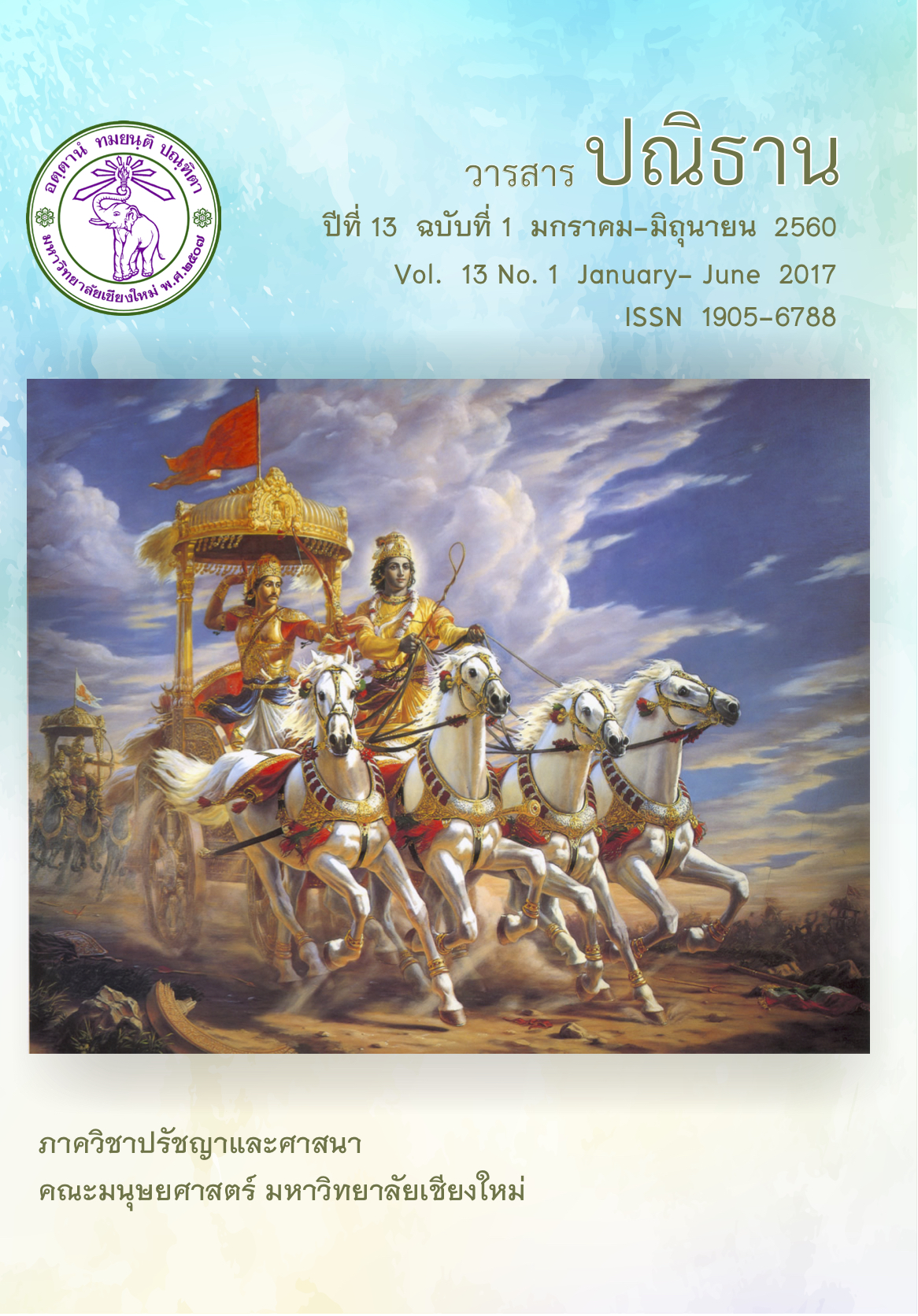
This article is an attempt to search for the concept of Dharma found in the two ancient Indian traditions, i.e., Srmanism and Brahmanism. Studied field is Bhagavadgita which is regarded as heart of Mahabharata. In conversations between Arjuna and his charioteer, Krishna, Arjuna felt disheartened when realizing that the persons whom he is going to fight with are all his relatives. Then Krishna encourages him by showing that the fight is righteous one. The word Dharma in Buddhist framework, is for liberation, i.e., Nirvana, arises from action with intention, and has nothing to do with the concept of caste. In Hinduism such concept that developed from Brahmanism, is to follow one own caste duties. For Arjuna who belongs to Kshatriya caste, it is inevitable to perform his own duties. To make this clear, the prefix sv was put in, it becomes Svdhrama which can be translated as one own duties. Its aim is to go to heaven. Therefor to follow the duty in Bhagavadgita is the Dhrama in the Hindu framework.
References
Deutsch, E. and Radhakrishanan, S.,(1960). The Bhagavadgītā.London : George Allen & Unwin .
Joshi L.M., (1973). Brahmanism, Buddhism and Hinduism : Kandy.
Pandey G.C., (1974). Studies in the Origins of Buddhism . Delhi, Motilal Banarsidass .
Downloads
Published
How to Cite
Issue
Section
License
Copyright of article published in Panidhana Journal is owned by "Panidhana" and its licensors
You may request permission to use the copyright materials on this website by writing to journalphilrecmu@gmail.com