การดำรงอัตลักษณ์ของชุมชนวุฒากาศ - คลองด่าน กรุงเทพมหานคร ในแนวคิดท้องถิ่นวัฒนา (The identity inheritance of Wutthakat–Klongdan community, Bangkok, under the concept of localization)
Article Sidebar
Main Article Content
Abstract
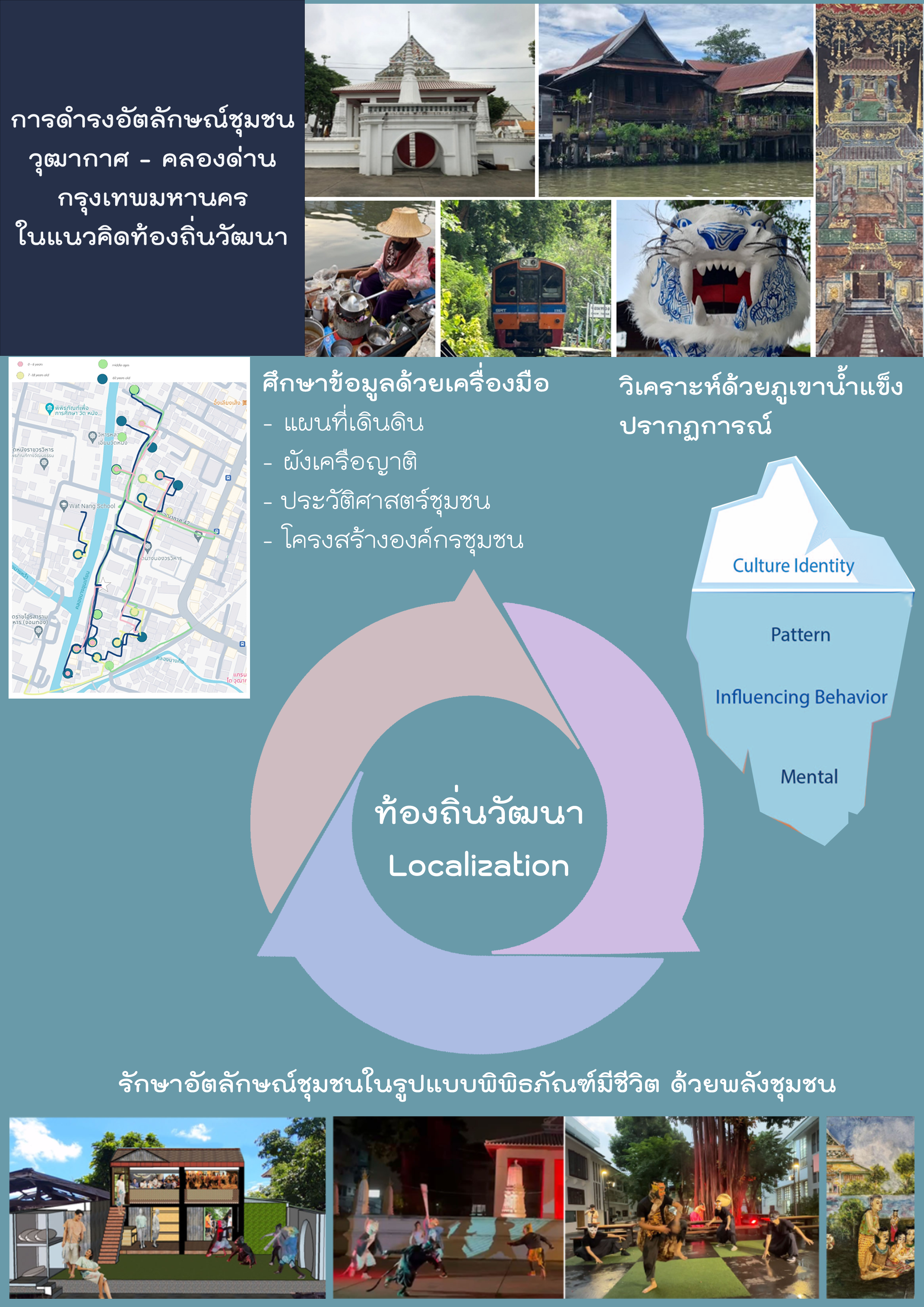
การศึกษาชุมชนวุฒากาศ-คลองด่าน ในฐานะชุมชนเมืองที่สร้างขึ้นภายใต้บริบทของวัฒนธรรมหลวง ที่ต้องวัฒนาตัวเองควบคู่กับการดิ้นรนในกระแสโลกาภิวัตน์ ทำให้เกิดข้อค้นพบตัวตนของชุมชน และทดลองออกแบบเป็นพื้นที่สร้างสรรค์กลางกรุงเทพฯ ที่สอดคล้องกับพลวัตท้องถิ่นร่วมสมัย เป็นการพัฒนาตนเองด้วยแรงขับเคลื่อนจากภายในตามแนวคิดท้องถิ่นวัฒนา ในการสำรวจพื้นที่และการสัมภาณ์เชิงลึก ผู้วิจัยประยุกต์เครื่องมือแผนที่เดินดิน ผังเครือญาติ โครงสร้างองค์กรชุมชน และประวัติศาสตร์ชุมชน มาใช้ในการลงพื้นที่ แล้ววิเคราะห์ข้อมูลทัศนธาตุด้วยปิระมิดเหตุการณ์ พบว่าชุมชนพัฒนาตามเส้นทางคมนาคมหลัก คือ รากเหง้าแบบวัฒนธรรมน้ำ กับเครือข่ายคมนาคมทางบกและราง ซึ่งเป็นการปรับตัวเข้ากับกระแสความเจริญของบ้านเมือง ภูมิทัศน์วัฒนธรรมเปลี่ยนแปลงน้อยมากท่ามกลางกระแสโลกาภิวัตน์ เนื่องจากอุดมคติในความเป็น “ย่านข้าหลวงเดิม” ทำให้ประชากรในชุมชนเป็นเครือญาติดั้งเดิมซึ่งคงอัตลักษณ์ดั้งเดิมไว้ได้อย่างเหนียวแน่น การอนุรักษ์และนำเสนออัตลักษณ์ของชุมชน เน้นหนักในวัตถุพยานทางวัฒนธรรมที่แสดงออกถึงสถาบันศาสนาและพระมหากษัตริย์ ชุมชนมีศักยภาพในการอนุรักษ์โบราณสถาน อย่างไรก็ตาม ปัญหาด้านประชากรที่เกิดน้อยลง ทำให้มีอาคารเสื่อมโทรมที่ไม่คุ้มทุนในการปรับปรุงเป็นที่อยู่อาศัยที่เหมาะสมกับครอบครัวขนาดเล็ก และอาจเกิดเป็นทัศนอุจาด ผู้วิจัยจึงร่วมกับคนรุ่นใหม่ในชุมชนทดลองออกแบบปรับปรุงเป็นพื้นที่สร้างสรรค์เชิงวัฒนธรรม เพื่อทำให้โบราณสถานและจิตวิญญานของชุมชนกลายเป็นพิพิธภัณฑ์ที่มีชีวิตที่เปิดโอกาสให้คนรุ่นใหม่ในชุมชนร่วมมือกับผู้สูงอายุผู้มีประสบการณ์ นำเสนอวิถีวัฒนธรรมชุมชนอย่างสร้างสรรค์ควบคู่กับการสร้างรายได้และความยั่งยืนด้านสิ่งแวดล้อม เศรษฐกิจ และสังคม การศึกษาวิจัยครั้งนี้จึงเป็นตัวอย่างของชุมชนที่ใช้แนวทางในการรักษาภูมิทัศน์วัฒนธรรมท้องถิ่นในรูปแบบพิพิธภัณฑ์ที่มีชีวิตด้วยพลังชุมชน
The study investigates the Wutthakat–Khlongdan community as an urban settlement shaped within the context of Thailand’s Great Tradition. While simulaneously navigating the pressures of globalization, the community has pursued self-development, leading to the rediscovery of its identity and the experimental design of a creative space in central Bangkok that aligns with contemporary local dynamics. This reflects a self-driven development model rooted in the concept of localization. Through field survey and in-depth interviews, the researcher employed tools such as geo-social mapping, kinship and organizational structure analysis, and community history, with cultural data interpreted using the Phenomenon Iceberg framework. The findings reveal that the community evolved along major transportation routes, maintaining its traditional water-based cultural roots while integrating road and rail networks. Amid globalization, the cultural landscape has remained relatively unchanged due to the enduring idea of being a "former nobility quarter,” which has preserved kinship ties and limited external migration. Efforts to preserve and present the community’s identity focus on tangible cultural heritage, particularly religious and royal institutions. However, demographic decline has led to building deterioration, rendering many structures unsuitable for renovation to accommodate smaller urban family and posing risks of visual blight. In collaboration with younger residents, the researcher initiated a pilot design to transform parts of the community into a creative cultural space conceptualized as a living museum. This model enables intergenerational cooperation between youth and elders to creatively present local cultural traditions while generating income and promoting environmental, economic, and social sustainability. The study offers a compelling example of how community-driven approaches can preserve local cultural landscapes by evolving them into living museums sustained by internal social forces.
Downloads
Article Details

This work is licensed under a Creative Commons Attribution-NonCommercial-NoDerivatives 4.0 International License.
References
Boonkaew, N., Rieng-Ngoen, P., Subvijittra, P., & Bunarat, V. (2021). The roles of culture in strengthening Thailand’s creative industries (บทบาทของวัฒนธรรมกับการส่งเสริมเศรษฐกิจสร้างสรรค์ของประเทศไทย). The National Defence College of Thailand Journal, 63(3), 108–121. https://so05.tci-thaijo.org/index.php/ratthapirak/article/view/257248
Boonpan, K., & Wongthes, S. (2018). Bang Khun Thien the area of former noble, historical canal route on the Dvaravati coast, Bangkok (ย่านข้าหลวงเดิมบางขุนเทียน : เส้นทางคลองประวัติศาสตร์ ฝั่งทะเลทวารวดี กรุงเทพฯ). Matichon.
Chuengsatiansup, K., Tengrang, K., Pinkaew, R., & Petchkong, W. (2002). Community ways, a learning guide that makes community work easy, effective, and fun (วิถีชุมชน : คู่มือการเรียนรู้ที่ทำให้งานชุมชนง่าย ได้ผล และสนุก). Health Systems Research Institute.
Thailand Policy Lab. (2022, June 22). Iceberg model for problem-solving: How to tackle the root causes. https://thailandpolicylab.com/en/iceberg-model/
Tansukanun, P. (2016). Urban conservation (การอนุรักษ์ชุมชนเมือง). Chulalongkorn University Press.
Wallipodom, S. (2011). Thai social-cultural development (พัฒนาการทางสังคม-วัฒนธรรมไทย). Muang Boran Press.
