
Evidence-Based Analysis of Mental Health Challenges Among LGBTQ+ Youths
DOI:
https://doi.org/10.57260/csdj.2025.273468Keywords:
LGBTQ+ youths, Psychological well-being, Emotional wellness, Sexual minorities, Gender diversityAbstract
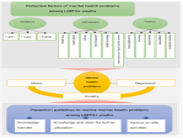
This research entitled “Evidence-Based Analysis of Mental Health Challenges Among LGBTQ+ Youths” studied the definitions of mental health problems, definitions and key components of protective factors, and prevention guidelines to resolve mental health problems among LGBTQ+ youths. This qualitative study involved focus groups with LGBTQ+ youths and expert interviews. A semi-structured interview was used as the research instrument. Data were subjected to content analysis, with data reliability assessed using triangulation. Results revealed that mental health status problems among LGBTQ+ youths included stress, anxiety, and depression. The characteristics of mental health problems among LGBTQ+ youths and heterosexuals were similar. The key components of protective factors of mental health problems among LGBTQ+ youths included resilience, self-esteem, and positive psychology. Prevention guidelines of mental health status problems among LGBTQ+ youths should consist of knowledge transfer through various attractive activities to increase skills that can be utilized in their daily lives. In conclusion, this study aims to understand mental health problems, protective factors, and guidelines for care in LGBTQ+ youths through direct research with them. Furthermore, the research shows findings have interesting implications for developing interventions for preventing mental health problems among LGBTQ+ youths with special needs.
Downloads
References
Bhowmik, D., Kumar, K. P. S., Srivastava, S., Paswan, S., & Dutta, A. S. (2012). Depression-symptoms, causes, medications and therapies. The Pharma Innovation, 1(3), 37-51. Retrieved from https://www.thepharmajournal.com/archives/?year=2012&vol=1&issue=3
Coopersmith, S. (1981). The antecedents of self-esteem. Palo Alto, CA: Consulting Psychologists Press.
Craig, S. L., Austin, A., & Alessi, E. (2013). Gay affirmative cognitive behavioral therapy for sexual minority youth: a clinical adaptation. Clinical Social Work Journal, 41, 258-266. Retrieved from https://doi.org/10.1007/s10615-012-0427-9
Davison, L. L., Grigorenko, E. L., Boivin, M. J., Rapa, E., & Stein, A. (2015). A focus on adolescence to reduce neurological, mental health and substance-use disability. Nature, 527, 161-166. Retrieved from https://doi.org/10.1038/nature16030
Department of Mental Health. (2012). Guide to relieve stress (revised version). Retrieved from https://dmh.go.th/ebook/dl.asp?id=345
Department of Mental Health. (2019). Department of Mental Health reveals Thai teenagers consult the most "stress problems" suggest techniques for managing stress. Retrieved from https://www.dmh.go.th/news-dmh/view.asp?id=30188
Grotberg, E. H. (1995). A guide to promoting resilience in children: strengthening the human spirit. Early childhood development: practice and reflections, v.8. The Hague-NO: Bernard Van Leer Foundation. Retrieved from https://bibalex.org/baifa/en/resources/document/283337
Hafeez, H., Zeshan, M., Tahir, M. A., Jahan, N., & Naveed, S. (2017). Health care disparities among lesbian, gay, bisexual, and transgender youth: A literature review. Cureus, 9(4), 1-7. Retrieved from https://doi.org/10.7759/cureus.1184
Hall, W. J. (2018). Psychosocial risk and protective factors for depression among lesbian, gay, bisexual, and queer youth: A systematic review. Journal of Homosexuality, 65(3), 263-316. Retrieved from https://doi.org/10.1080/00918369.2017.1317467
Heck, N. C., Lindquist, L. M., Machek, G. R., & Cochran, B. N. (2014). School Belonging, School Victimization, and the Mental Health of LGBT Young Adults; Implications for School Psychologists. The National Association of School Psychologists, 8(1), 28-37. Retrieved from https://epublications.marquette.edu/psych_fac/143
Ignatavicius, S. (2013). Stress in female-identified transgender youth: A review of the literature on effects and interventions. Journal of LGBT Youth, 10(4), 267-286. Retrieved from https://doi.org/10.1080/19361653.2013.825196
Jirawatkul, S. (2010). Qualitative research in health science. (2nd ed.). Bangkok: Witthayaphat.
Lazarus, R. S., & Folkman, S. (1984). Stress, appraisal, and coping. New York: Springer Publishing.
Marshal, M. P., Dermody, S. S., Cheong, J. W., Burton, C. M., Friedman, M. S., Aranda, F., & Hughes, T. (2013). Trajectories of depressive symptoms and suicidality among heterosexual and sexual minority youth. Journal of Youth and Adolescence, 42(8), 1243-1256. Retrieved from https://doi.org/10.1007/s10964-013-9970-0
Mongkhonsuebsakul, A. (2019). Promotion of LGBT human rights in Thailand. (Master’s thesis of political science, Ramkhamhaeng University). Retrieved from http://lms.nhrc.or.th/ulib/dublin.php?&f=dublin&ID=11987
Nastasi, B. K., & Schensul, S. L. (2005). Contributions of qualitative research to the validity of intervention research. Journal of School Psychology, 43(3), 177-195. Retrieved from https://doi.org/10.1016/j.jsp.2005.04.003
Pinciotti, C. M., Smith, Z., Singh, S., Wetterneck, C. T., & Williams, M. T. (2022). Call to action: Recommendations for justice-based treatment of obsessive-compulsive disorder with sexual orientation and gender themes. Behavior Therapy, 53(2), 153–169. Retrieved from https://doi.org/10.1016/j.beth.2021.11.001
Puckett, J. A., Matsuno, E., Dyar, C., Mustanski, B., & Newcomb, M. E. (2019). Mental health and resilience in transgender individuals: What type of support makes a difference? Journal of Family Psychology, 33(8), 954-964. Retrieved from https://doi.org/10.1037/fam0000561
Rungreangkulkij, S., & Kittirattanapaiboon, P. (2021). The impact of gender on mental health and concepts of gender approach mental health policy. Journal of Mental Health of Thailand, 29(3), 259-272. Retrieved from https://he02.tci-thaijo.org/index.php/HSJT/article/view/265320
Saiphanit, R., & Hiranyatheb, T. (2012). Ramathibodi Psychiatry. (4th ed.). Bangkok: Department of Psychiatry, Faculty of Medicine Ramathibodi Hospital.
Sarkhel, S., Singh, O. P., & Arora, M. (2019). Clinical Practice Guidelines for Psychoeducation in Psychiatric Disorders General Principles of Psychoeducation. Indian Journal of Psychiatry, 62(2), 319-323. Retrieved from doi: 10.4103/psychiatry.IndianJPsychiatry_780_19
Seligman, M. E. P. (2011). Flourish: A visionary new understanding of happiness and well-being. New York, NY: Atria books.
Seligman, M. E. P., & Csikszentmihalyi, M. (2000). Positive Psychology: An Introduction. American Psychologist, 55(1), 5-14. Retrieved from https://doi.org/10.1037/0003-066X.55.1.5
Smith, N. G., Hart, T. A., Kidwai, A., Vernon, J. R. G., Blais, M., & Adam, B. (2017). Results of a pilot study to ameliorate psychological and behavioral outcomes of minority stress among young gay and bisexual men. Behavior Therapy, 48(5), 664-677. Retrieved from https://doi.org/10.1016/j.beth.2017.03.005
Sukwin, K., & Soontorntanaphol, N. (2022). The Accessibility to Instructional Media for Online Leaning Effectiveness. Journal of Human Society, 12(1), 91-109. Retrieved from https://so03.tci-thaijo.org/index.php/humannstru62/article/view/259981
Tinnam, C., Omphornuwat, K., & Duaidee, R. (2020). LGBTIQN+ wellbeing strategies in Thailand 2021-2023. Bangkok: Thai Health Promotion Foundation. Retrieved from https://cmudc.library.cmu.ac.th/frontend/Info/item/dc:169183
Wang, K., & Kong, F. (2020). Linking trait mindfulness to life satisfaction in adolescents: the mediating role of resilience and self-esteem. Child Indicators Research, 13, 321-335. Retrieved from https://doi.org/10.1007/s12187-019-09698-4
Witcomb, G. L., Claes, L., Bouman, W. P., Nixon, E., Motmans, J., & Arcelus, J. (2019). Experiences and psychological wellbeing outcomes associated with bullying in treatment-seeking transgender and gender-diverse youth. LGBT Health, 6(5), 216-226. Retrieved from https://doi.org/10.1089/lgbt.2018.0179
Wonginchan, A., Tangpukdee, J., Wonginchan, S., Kearttiwongkru, S., & Khonggungong, S. (2022). Association of Online Media Use and Holistic Health Problems of School-aged Children in Thailand 4.0 Era. Songklanagarind Journal of Nursing, 42(1), 61-72. Retrieved from https://he02.tci-thaijo.org/index.php/nur-psu/article/view/254141
Woodford, M. R., Weber, G., Nicolazzo, Z., Hunt, R., Kulick, A., Coleman, T., Coulombe, S., & Renn, K. A. (2018). Depression and attempted suicide among LGBTQ college students: Fostering resilience to the effects of heterosexism and cisgenderism on compus. Journal of College Students Development, 59(4), 421-438. Retrieved from https://doi.org/10.1353/csd.2018.0040
Downloads
Published
How to Cite
Issue
Section
Categories
License
Copyright (c) 2025 Community and Social Development Journal

This work is licensed under a Creative Commons Attribution-NonCommercial-NoDerivatives 4.0 International License.