
Creating a conducive learning environment for overweight students: Department of Community Development, Faculty of Humanities and Social Sciences, Nakhon Si Thammarat Rajabhat University, Thailand
DOI:
https://doi.org/10.57260/csdj.2025.277137Keywords:
Learning environment, Overweight students, Community developmentAbstract
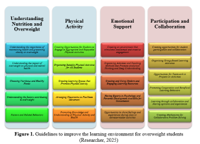
impacting their learning environment. This research investigates: 1) The level and necessity of creating a learning environment that supports overweight students, and 2) guidelines to improve the learning environment for overweight students. Using a mixed-methods approach, for quantitative research, a questionnaire-based survey was conducted on 42 overweight students. The data were analyzed to determine frequency, percentage, mean, and standard deviation. For the qualitative research, an interview form and an observation record form were used. Key informants were conducted for the 10 overweight students with the highest BMI values. The data were analyzed, summarized, and presented through a qualitative analysis. The findings of the study were as follows: 1) The level and necessity of creating a learning environment that supports overweight students in all aspects was high. 2) Guidelines to improve the learning environment for overweight students: Nutrition and weight management to improve health knowledge. Overweight conditions can lead to health issues and reduced self-confidence, making proper eating and sleeping habits crucial. Selecting nutritious foods and engaging in physical activities can enhance learning interest, efficiency, and social skills. Psychological support through Q&A sessions and cognitive development games fosters analytical thinking. Group activities and technology integration in teaching boost participation and relationship building, while expert counselors address psychological and emotional issues.
Downloads
References
Alcoba, R. C., La-ongsri, W., & La-ongsri, W. (2024). Same Same or Different?: Comparing Perceived Internationalization, Experiences and Satisfaction of Domestic and International Tertiary Students in Thailand. Community and Social Development Journal, 25(2), 49–63. Retrieved from https://doi.org/10.57260/csdj.2024.266615
Anegasukha, S. (2021). The combination of quantitative and qualitative methods to mixed methods research. e-Journal of Education Studies, Burapha University, 3(1), 1-16. Retrieved from https://so01.tci-thaijo.org/index.php/ejes/article/view/244913/166768
Biddle, S.J.H., & Asare, M. (2011). Physical activity and mental health in children and adolescents: A review of reviews. British Journal of Sports Medicine, 45(11), 886-895. Retrieved from DOI: 10.1136/bjsports-2011-090185
Bunmak, S. (2021). Research methodology in social sciences. Faculty of Humanities and Social Sciences Thaksin University.
Bureau of Nutrition. (2024). The results of the analysis under Indicator 3.10 — the percentage of children aged 6–14 years with appropriate height-for-age were reported by the Bureau of Nutrition for the 5-month period following the year 2024. Bureau of Nutrition, The Ministry of Public Health.
Cassidy, C., Marwick, H., Dwyer, C., & Lucas, E. (2024). Creating a learning environment conducive to children’s well-being through philosophy with children in a Scottish classroom. EDUCATION 3-13, 52(5), 635–647. Retrieved from https://doi.org/10.1080/03004279.2022.2125333
Ceresnova, Z., Rollova, L., & Koncekova, D. (2017). Inclusive Design of Educational Environment for Diverse People. Advances in Design for Inclusion, 587, 431-440. Retrieved from https://doi.org/10.1007/978-3-319-60597-5_41
Choosang, S., Chai-ngam, N., & Pongkiatchai, R. (2023). Instructional Design: Under the Concept of Game Based Learning for Nursing Education. Journal of Food Health and Bioenvironmental Science, 16(1), 60–70. Retrieved from https://li01.tci-thaijo.org/index.php/sdust/article/view/260656
Chotratanakamol, K., Uansa-ard, S., Longthong, N., & Yaemyuean, A. (2024). The Effect of Psychological Training on Strengthening Family Behavioral Empowerment: A Path Analysis Approach. Thammasat Review, 27(1), 126-152. Retrieved from https://doi.org/10.14456/tureview.2024.6
Chumchong, N., Runcharoen, T., Chaisawan, S., & Rattanavaraha, W. (2017). Learning Management Factors Affecting Desired Characteristics Consisting with Philosophy of Economic Sufficiency of The Students in The Learning Schools in Northeast Thailand. Journal of Education Khon Kaen University (Graduate Studies Research), 11(2), 100-110. Retrieved from https://so02.tci-thaijo.org/index.php/EDGKKUJ/article/view/113597
Committee for the Administration of the Bachelor of Arts Program in Community Development. (2022). Bachelor of Arts Program Document in Community Development (Revised Curriculum, 2022). Department of Community Development, Faculty of Humanities and Social Sciences, Nakhon Si Thammarat Rajabhat University.
Cronbach, L. J. (1990). Essentials of psychological testing. Harper Collins Publishers.
Djalalinia, S., Qorbani, M., Peykari, N., & Kelishadi, R. (2015). Health impacts of Obesity. Pakistan Journal of Medical Sciences, 31(1), 239–242. Retrieved from https://doi.org/10.12669/pjms.311.7033
Dweck, C. S. (2006). Mindset: The new psychology of success. Random House.
Hackman, J. R. (2002). Leading teams: Setting the stage for great performances. Harvard Business School Press.
Henry, H. M. (1938). Explorations in Personality. Oxford University Press.
Hodges, C., Moore, S., Lockee, B., Trust, T., & Bond, A. (2020). The difference between emergency remote teaching and online learning. EDUCAUSE Review.
Janrayaek, H., Jitjirachan, C., & Chuanchom, S. (2017). Strategies for private vocational college development to wards learning society. Journal of Educational Administration, Khon Kaen University, 13(1), 1-10. Retrieved from https://so02.tci-thaijo.org/index.php/EDMKKU/article/view/103358
Johnson, D. W., & Johnson, R. T. (2009). An educational psychology success story: Social interdependence theory and cooperative learning. Educational Researcher, 38(5), 365-379. Retrieved from https://doi.org/10.3102/0013189X09339057
Jones, S. M., & Bouffard, S. M. (2012). Social and Emotional Learning in Schools: From Programs to Strategies. Social Policy Report, 26(4), 1-33. Retrieved from https://doi.org/10.1002/j.2379-3988.2012.tb00073.x
Kaewurai, R., & Chaimin, C. (2019). Learning Space for Digital Natives in Academic Library. Journal of Education and Innovation, 21(4), 366-378. Retrieved from https://so06.tci-thaijo.org/index.php/edujournal_nu/article/view/152965
Khuneepong, A. (2017). Predicting Factors of Overweight Prevention Behaviors among Graduate Student. Journal of Safety and Health, 10(37), 58-66. Retrieved from https://he01.tci-thaijo.org/index.php/JSH/article/view/121362
Kijkuakul, S. (2018). Qualitative Research: A Distinguished Paradigm and Misconceptions. Journal of Education Naresuan University, 20(1), 272-283. Retrieved from https://so06.tci-thaijo.org/index.php/edujournal_nu/article/view/115602/89239
Kokka, I., Mourikis, I., & Bacopoulou, F. (2023). Psychiatric Disorders and Obesity in Childhood and Adolescence-A Systematic Review of Cross-Sectional Studies. Children, 10(2), 285. Retrieved from https://doi.org/10.3390/children10020285
Luangaram, S. (1976). Principles of personnel management. Phrae Pittaya
Malithong, K. (2000). Educational technology and innovation. Chulalongkorn University.
Marzano, R. J., Pickering, D. J., & Pollock, J. E. (2001). Classroom Instruction That Works: Research-Based Strategies for Increasing Student Achievement. Association for Supervision and Curriculum Development.
Maslow, A. H. (1943). A theory of human motivation. Psychological Review, 50(4), 370–396. Retrieved from https://doi.org/10.1037/h0054346
Mayer, R. E. (2009). Multimedia learning. (2nd ed.). Cambridge University Press.
National Institute of Diabetes and Digestive and Kidney Diseases. (2020). Overweight and Obesity Statistics. Retrieved from https://www.niddk.nih.gov/health-information/health-statistics/overweight-obesity
No-in, K. (2017). Overweight and Obesity among Thai School-aged Children and Adolescents. Journal of The Royal Thai Army Nurses, 18(2), 1-8. Retrieved from https://he01.tci-thaijo.org/index.php/JRTAN/article/view/101572
Office of Academic Promotion and Registration. (2024). Report on the Number of Students Enrolled, Categorized by Level and Type for Semester 2/2566. Office of Academic Promotion and Registration, Nakhon Si Thammarat Rajabhat University.
Owen, N., Healy, G. N., Matthews, C. E., & Dunstan, D. W. (2010). Too much sitting: The population health science of sedentary behavior. Exercise and Sport Sciences Reviews, 38(3), 105-113. Retrieved from https://doi.org/10.1097/JES.0b013e3181e373a2
Papert, S. (1980). Mindstorms: Children, computers, and powerful ideas. Basic Books.
Partnership for 21st Century Skills. (2007). 21st Century Skills, Education & Competitiveness: A Resource and Policy Guide. Partnership for 21st Century Skills.
Phetthong, P. (2011). Organizing the atmosphere in the classroom. Retrieved from https://www.l3nr.org/posts/509905
Phra Dhammapitaka (P.A.Payutto). (1995). Karma and hell for the new generation. Mahachulalongkornrajavidyalaya Printing House.
Phyathai Hospital. (2022). Overweight and Obesity, Factors that increase the risk of chronic disease. Retrieved from https://www.phyathai.com/th/article/
Piercy, K. L., Troiano, R. P., Ballard, R. M., Carlson, S. A., Fulton, J. E., Galuska, D. A., George, S. M., & Olson, R. D. (2018). The Physical Activity Guidelines for Americans. The Journal of the American Medical Association, 320(19), 2020-2028. Retrieved from https://doi.org/10.1001/jama.2018.14854
Ratey, J. J., & Hagerman, E. (2008). Spark: The revolutionary new science of exercise and the brain. Little, Brown Spark.
Rumberger, R. W. (2011). Dropping out: Why students drop out of high school and what can be done about it. Harvard University Press.
Saechang, O. (2024). Health System Capacities and Policy Responses to a Global Health Crisis: A Comparative Study Between Thailand and China. Thammasat Review, 27(1), 153-176. Retrieved from https://doi.org/10.14456/tureview.2024.7
Saksiri, K. (1991). Organization and human relations. Aksornwittaya.
Samahito, C. (2019). Phenomenon-Based Learning experience provision for young children. Silpakorn University e-Journal (Social Sciences, Humanities, and Arts), 39(1), 113-129. Retrieved from https://doi.org/10.14456/sujthai.2019.7
Sansanyuth, Y. (1987). Human relations: The psychology of work in organizations. Academic Promotion Center Publishing House.
Seligman, M. E. P. (2011). Flourish: A visionary new understanding of happiness and well-being. Free Press.
Setthamas, M. (2023). Knowledge, Attitudes, and Behaviors of Obesity and Overweight of Health SciencesMajor Students, Sisaket Rajabhat University. Nursing, Health, and Education Journal, 6(1), 10-20. Retrieved from https://he02.tci-thaijo.org/index.php/NHEJ/article/view/261367
Sikaow, O., Somsuay, A., Thanakwang, S., Khunthiang, P., Todkaew, N., Boonmeeprasert, N., Yanuprom, S., Nawathon, R., Phanmai, C., Kaewnanhao, J., Khamsaen, L., Prachumphan, S., & Burilert, N. (2018). Health Promoting Behaviors of Nursing Students with BMI Exceeding Standard, Huachiew Chalermprakiet University. Journal of Health Sciences and Wellness, 22(43-44), 1-12. Retrieved from https://he01.tci-thaijo.org/index.php/HCUJOURNAL/article/view/161326
Sikarin Hospital. (2024). Obesity is a dangerous condition, at risk for many diseases. Retrieved from https://www.sikarin.com/health/
Slavin, R. E. (1996). Research on cooperative learning and achievement: What we know, what we need to know. Contemporary Educational Psychology, 21(1), 43-69. Retrieved from https://doi.org/10.1006/ceps.1996.0004
Tanaree, W., & Hunnirun, P. (2021). Development of Health Literate Organizational Model about Overweight of Undergraduate Students in Upper Northern RAJABHAT Universities. Community and Social Development Journal, 22(3), 52-73. Retrieved from https://doi.org/10.14456/rcmrj.2021.249197
Thai Health Promotion Foundation. (2012). Overweight and obesity. Retrieved from https://www.thaihealth.or.th/
The Royal Institute Dictionary. (1982). Royal Institute Dictionary. Aksorn Charoentat.
Tomporowski, P. D., Davis, C. L., Miller, P. H., & Naglieri, J. A. (2008). Exercise and Children’s Intelligence, Cognition, and Academic Achievement. Educational Psychology Review, 20(2), 111–131. Retrieved from https://doi.org/10.1007/s10648-007-9057-0
Wagner, T. (2008). The Global Achievement Gap: Why Even Our Best Schools Don’t Teach the New Survival Skills Our Children Need--and What We Can Do About It. Basic Books.
Warburton, D. E. R., Nicol, C. W., & Bredin, S. S. D. (2006). Health benefits of physical activity: The evidence. CMAJ, 174(6), 801-809. Retrieved from https://doi.org/10.1503/cmaj.051351
Weimer, M. (2013). Learner-centered teaching: Five key changes to practice. John Wiley & Sons.
Wongsawat, S., & Klaimanee, S. (2023). Satisfaction With Organizing the Environment That Facilitates Learning in The Digital Era for Students of Boromarajonani College of Nursing, Nakhon Ratchasima. Journal of Social Science and Cultural, 7(1), 45-59. Retrieved from https://so06.tci-thaijo.org/index.php/JSC/article/view/261628
World Health Organization. (2018). Obesity and Overweight. Retrieved from https://www.who.int/news-room/fact-sheets/detail/obesity-and-overweight
Downloads
Published
How to Cite
Issue
Section
Categories
License
Copyright (c) 2025 Community and Social Development Journal

This work is licensed under a Creative Commons Attribution-NonCommercial-NoDerivatives 4.0 International License.