
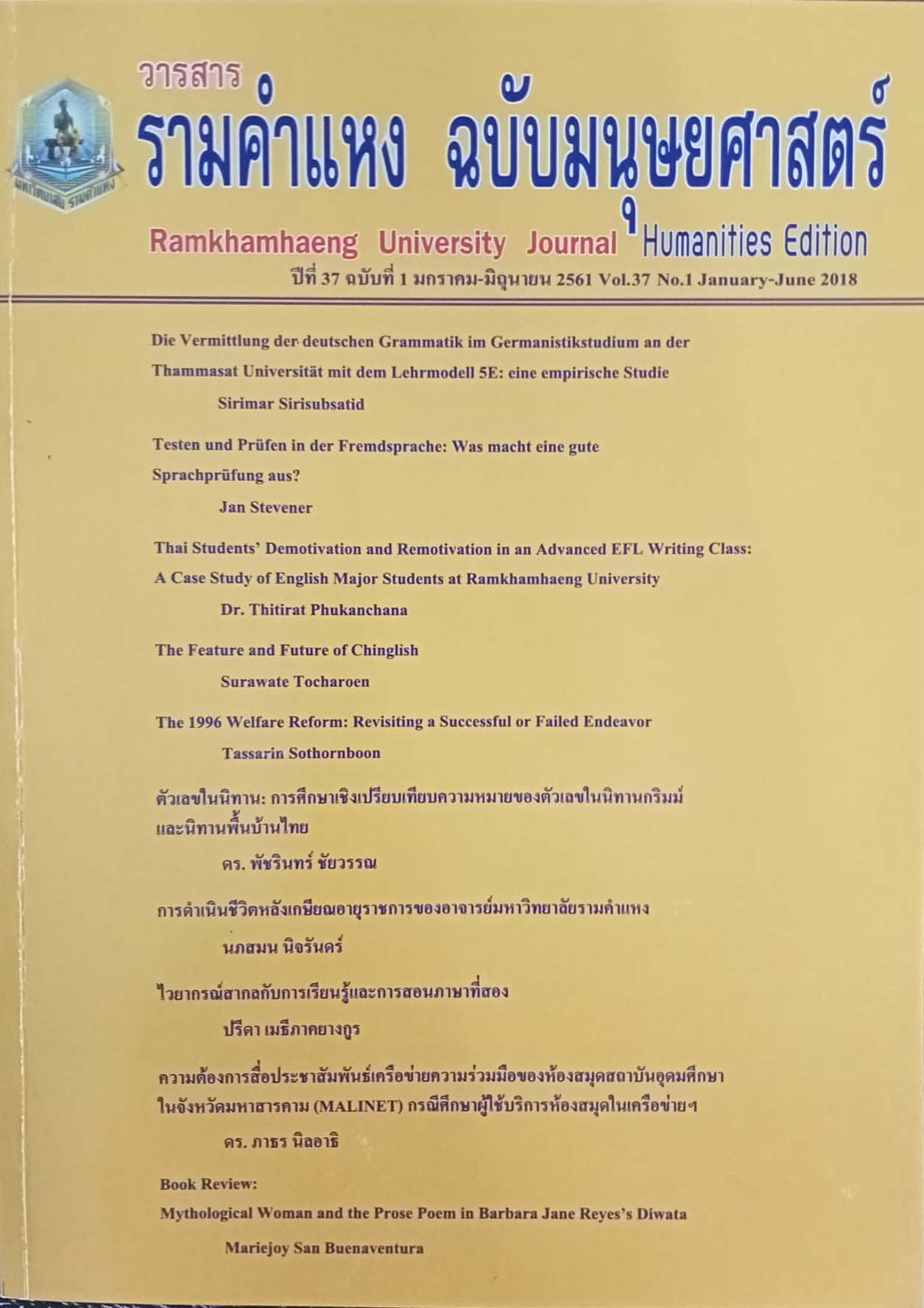
การดำเนินชีวิตหลังเกษียณอายุราชการของอาจารย์มหาวิทยาลัยรามคำแหง
Article Sidebar
Main Article Content
Abstract
Abstract
The purposes of this research were (1) to study ways of living and problems of Ramkhamhaeng University lecturers after their official retirement; (2) to study Ramkhamhaeng University lecturers’ physical, financial, social and psychological adaptations during retirement; and (3) to analyze the life’s elements of retired Ramkhamhaeng University lecturers that lead to truly happiness using qualitative research methodology.
The results revealed that the retired lecturers continue working on education but less than in the past, while enjoying their favorite activities as well as spending more time with their family. On the physical aspect, they have been trying to maintain good health during their working years and have a greater awareness of healthy living after retirement. Basically, the university lecturers get stable income and pension to substitute their loss of income after retirement, so they can live without financial difficulties. Many years after retirement, the retirees are less likely to engage in social activities. They also apply Buddha Dhamma in day-to-day life while creating new plans in retirement transition as for their psychological adjustment. In conclusion, the key elements of a happy retirement can be classified into 3 levels: individual level which is composed of good health, favorite activities, suitable preparation, balanced and well-planned living with new goals for life after retirement; family level includes tight-knit family and quality care environment; and social level consisted of social value, government policy and close-knit group of friends.
Article Details

This work is licensed under a Creative Commons Attribution-NonCommercial-NoDerivatives 4.0 International License.
The Copyright Notice will appear in About the Journal. It should describe for readers and authors whether the copyright holder is the author, journal, or a third party. It should include additional licensing agreements (e.g. Creative Commons licenses) that grant rights to readers (see examples), and it should provide the means for securing permissions, if necessary, for the use of the journal's content.
