
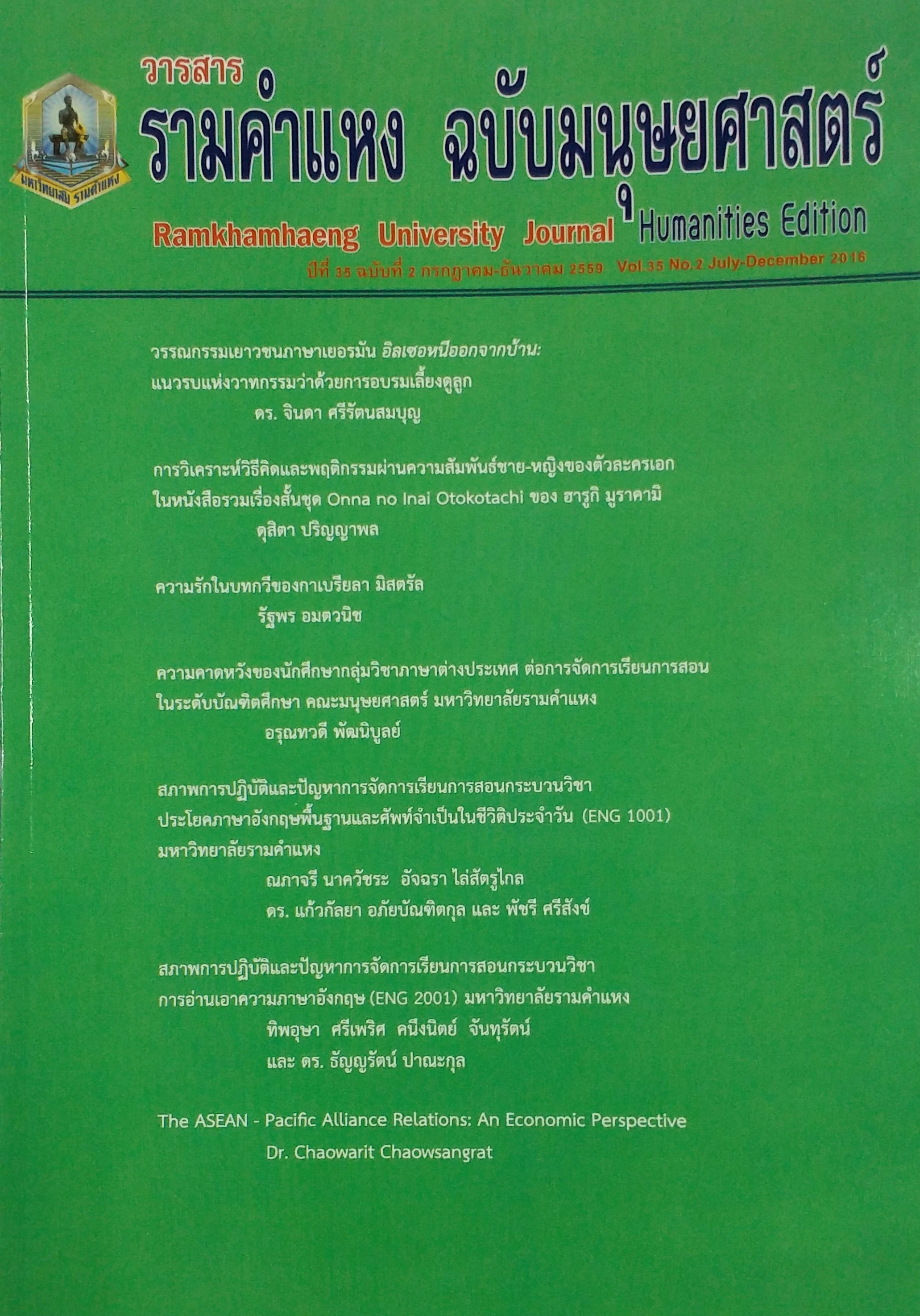
ความรักในบทกวีของกาเบรียลา มิสตรัล Love in the poems of Gabriela Mistral
Article Sidebar
Main Article Content
บทคัดย่อ
บทคัดย่อ
กาเบรียลา มิสตรัล เป็นกวีสตรีเจ้าของรางวัลโนเบล สาขาวรรณกรรม ประจำปี ค.ศ. 1945 นับเป็นชาวอเมริกาใต้คนแรกที่ได้รับรางวัลอันทรงเกียรตินี้ บทความนี้มุ่งศึกษาวิเคราะห์ความรักในบทกวีของ กาเบรียลา มิสตรัล โดยศึกษาวิเคราะห์ในแง่มุมมองต่อความรักของกวีเอกท่านนี้และกลวิธีการประพันธ์ จากการศึกษาพบว่า กาเบรียลา มิสตรัล ใช้คำที่เป็นสิ่งที่พบเห็นได้ในธรรมชาติและสิ่งแวดล้อมรอบตัวเพื่อสร้างกระบวนจินตภาพโดยใช้ภาพพจน์ชนิดต่าง ๆ ร่วมกับการเน้นเพื่อสร้างความรู้สึกสะเทือนอารมณ์ ทำให้สามารถสื่ออารมณ์อันทรงพลังออกมาจากบทกวีได้ บทกวีของ กาเบรียลา มิสตรัล มักจะแสดงภาพความรักที่มาพร้อมกับความทุกข์เสมอ แสดงมุมมองความรักแบบยึดติดถือมั่น ซึ่งทำให้เจ็บปวดและเป็นทุกข์ มีเพียงความรักในพระเจ้าเท่านั้นที่สร้างความเข้มแข็งและเอาชนะทุกข์ทั้งปวงได้
Abstract
Gabriela Mistral received the Nobel Prize for Literature in 1945. She has the honour of being the first female Latin American poet to win this prestigious award. This article aims to present a study and analysis of love in the poems of Gabriela Mistral related to the following issues: her stance on love and literary techniques. This study indicates that the poet uses words associated with nature and familiar environment to create rich imagery along with different types of figures of speech and emphasis to figure out her own feelings. In doing so, she achieves to convey powerful emotions in an aesthetically pleasing way. On the one hand, Gabriela Mistral´s poetry portrays love that comes along with suffering and shows her strong attachment to love with leads ultimately to pain and suffering. On the other hand, the divine love, also present in her poetry, is one that gives her strength to overcome any kind of suffering.
Article Details

อนุญาตภายใต้เงื่อนไข Creative Commons Attribution-NonCommercial-NoDerivatives 4.0 International License.
ประกาศลิขสิทธิ์จะปรากฏในเกี่ยวกับวารสาร ควรอธิบายสำหรับผู้อ่านและผู้เขียนว่าเจ้าของลิขสิทธิ์เป็นผู้เขียนวารสารหรือบุคคลที่สาม ควรรวมถึงข้อตกลงการอนุญาตเพิ่มเติม (เช่นใบอนุญาตครีเอทีฟคอมมอนส์) ที่ให้สิทธิ์แก่ผู้อ่าน (ดูตัวอย่าง) และควรให้วิธีการรักษาความปลอดภัยหากจำเป็นสำหรับการใช้เนื้อหาของวารสาร
