
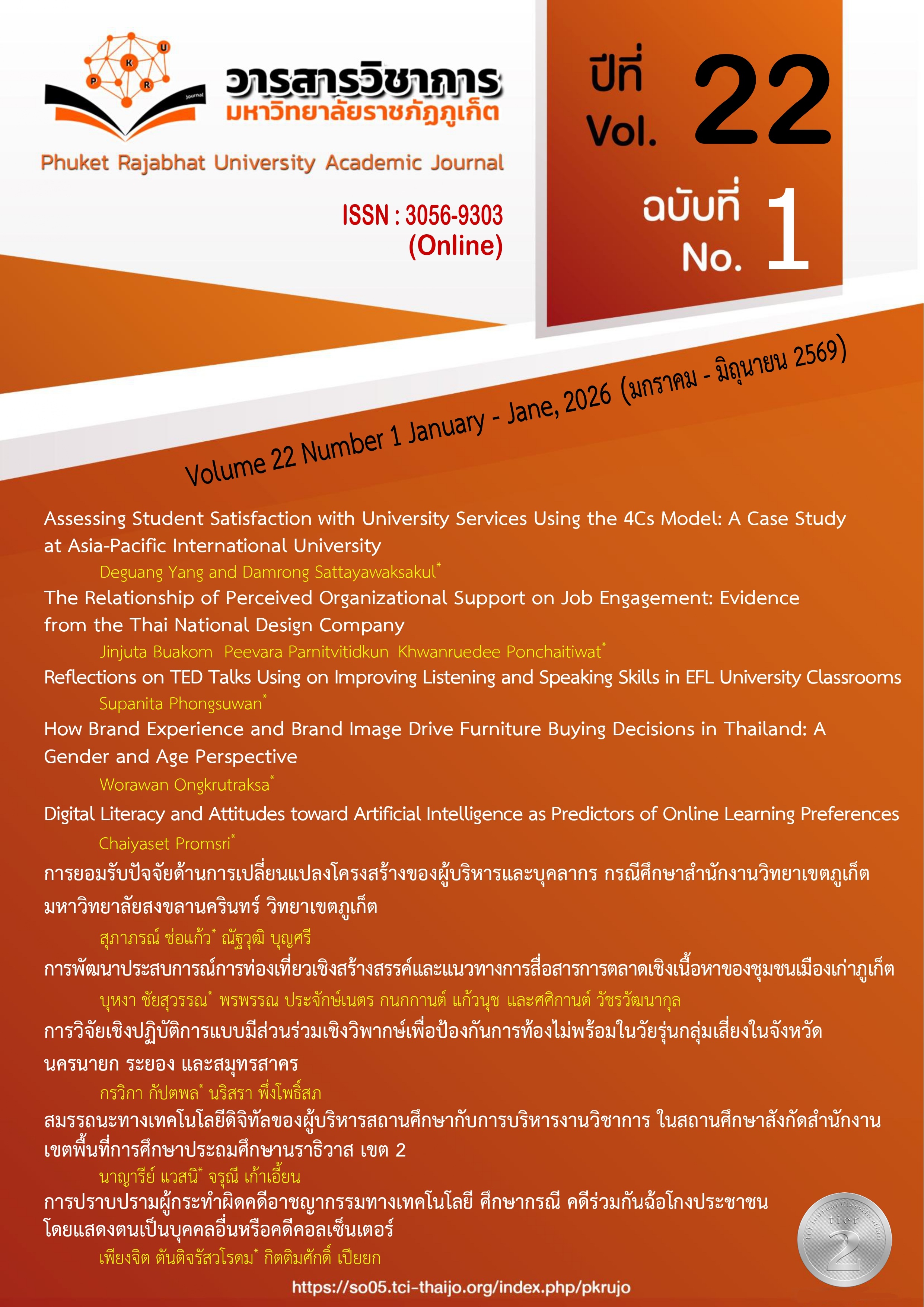
การวิจัยเชิงปฏิบัติการแบบมีส่วนร่วมเชิงวิพากษ์เพื่อป้องกันการท้องไม่พร้อม ในวัยรุ่นกลุ่มเสี่ยงในจังหวัดนครนายก ระยอง และสมุทรสาคร
Article Sidebar
Main Article Content
บทคัดย่อ
ปัญหาการตั้งครรภ์ไม่พร้อมในวัยรุ่นเป็นประเด็นสำคัญทางสาธารณสุขของประเทศไทย ซึ่งยังส่งผลกระทบต่อสุขภาวะและการพัฒนาคุณภาพประชากรในระยะยาว แม้จะมีมาตรการป้องกันอย่างต่อเนื่อง แต่อัตราการตั้งครรภ์ซ้ำและพฤติกรรมเสี่ยงทางเพศของวัยรุ่นยังคงอยู่ในระดับสูง โดยเฉพาะในพื้นที่ที่ขาดโอกาสทางการศึกษาและการเข้าถึงข้อมูลเพศวิถีศึกษาอย่างครอบคลุม จากสถานการณ์ดังกล่าว งานวิจัยนี้มีวัตถุประสงค์เพื่อเสริมสร้างความรู้ความเข้าใจ ความตระหนักและเจตคติทางบวกต่อการป้องกันตนเองจากพฤติกรรมเสี่ยงทางเพศ รวมทั้งเปลี่ยนพฤติกรรมสุขภาวะทางเพศ อนามัยเจริญพันธุ์ และทักษะการสื่อสารของวัยรุ่นกลุ่มเสี่ยงโดยใช้กระบวนการวิจัยแบบมีส่วนร่วมเชิงวิพากษ์ ดำเนินการวิจัยใน 3 พื้นที่ คือ จังหวัดนครนายก ระยองและสมุทรสาคร มีขั้นตอนดังนี้ คือ 1) การสร้างทฤษฎีของการปฏิบัติ ผู้ร่วมวิจัย ประกอบด้วย วัยรุ่นกลุ่มเสี่ยงชายและหญิง ผู้ปกครองของวัยรุ่นกลุ่มเสี่ยง ครูแนะแนว และครู กศน. วัฒนธรรมจังหวัดและสื่อมวลชน รวมทั้งสิ้น 73 คน และ 2) การวิจัยปฏิบัติการ 2 วงรอบ ประกอบด้วย กิจกรรมวางแผน ปฏิบัติและสังเกต การทบทวน การวิจัยปฏิบัติการทำใน 2 กลุ่ม ผู้ร่วมวิจัย ระยะการวิจัยปฏิบัติการประกอบด้วย แกนนำเยาวชน 135 คน กลุ่มผู้ปฏิบัติงานเพื่อการป้องกับปัญหาการตั้งครรภ์ไม่พร้อมในวัยรุ่น จำนวน 306 คน เครื่องมือที่ใช้ในการวิจัย ได้แก่ คู่มือการจัดกิจกรรมในกระบวนการ CPAR 4 เล่ม และเครื่องมือเก็บข้อมูลจำนวน 9 ชุด ผลการวิจัยระยะสร้างทฤษฎีของการปฏิบัติ พบว่า วัยรุ่นมีมีทัศนคติและความเชื่อเกี่ยวกับเพศสัมพันธ์ที่แตกต่างจากผู้ปกครองโดยมักได้รับข้อมูลจากเพื่อนและสื่อออนไลน์ และความกลัวผลกระทบจากการตั้งครรภ์เป็นปัจจัยสำคัญในการป้องกัน นอกจากนี้ ยังพบว่าผู้ปกครองและครูบางส่วนยังมีความเชื่อว่าเพศศึกษากระตุ้นให้เกิดความอยากรู้อยากลองผลการวิจัยช่วงปฏิบัติการพบว่า แกนนำวัยรุ่น มีความรู้ความเข้าใจและทักษะการผลิตสื่อเพิ่มขึ้นอย่างมีนัยสำคัญ สามารถผลิตสื่อที่มีคุณภาพจำนวน 9 ชิ้น และมีวัยรุ่นที่รับชมสื่อ เรียนรู้เพศวิถีศึกษาที่ครอบคลุม จำนวน 135 คนใน 3 จังหวัด พบว่า สื่อมีศักยภาพในการเปลี่ยนแปลงความรู้ ความคิด ความรู้สึก และพฤติกรรมในระดับดี แสดงให้เห็นว่า การใช้ CPAR ที่ให้ความสำคัญกับวัฒนธรรมเฉพาะกลุ่มและการมีส่วนร่วมของคนในชุมชน โดยเฉพาะการให้วัยรุ่นมีส่วนร่วมในการสร้างสื่อเอง ซึ่งเป็นวิธีที่สามารถส่งเสริมการเรียนรู้เรื่องเพศและเปลี่ยนแปลงพฤติกรรมเสี่ยงได้อย่างมีประสิทธิภาพ
Article Details

อนุญาตภายใต้เงื่อนไข Creative Commons Attribution-NonCommercial-NoDerivatives 4.0 International License.
เนื้อหาและข้อมูลในบทความที่ลงตีพิมพ์ในวารสารวิชาการมหาวิทยาลัยราชภัฏภูเก็ต ถือเป็นข้อคิดเห็นและความรับผิดชอบของผู้เขียนบทความโดยตรง ซึ่งกองบรรณาธิการวารสารฯ ไม่จำเป็นต้องเห็นด้วยหรือร่วมรับผิดชอบใด ๆ
บทความ ข้อมูล เนื้อหา รูปภาพ ฯลฯ ที่ได้รับการตีพิมพ์ในวารสารวิชาการมหาวิทยาลัยราชภัฏภูเก็ต ถือเป็นลิขสิทธิ์ของวารสารวิชาการมหาวิทยาลัยราชภัฏภูเก็ต หากบุคคลหรือหน่วยงานใดต้องการนำทั้งหมดหรือส่วนหนึ่งส่วนใดไปเผยแพร่ต่อหรือเพื่อกระทำการใด ๆ จะต้องได้รับอนุญาตเป็นลายลักษณ์อักษรจากวารสารวิชาการมหาวิทยาลัยราชภัฏภูเก็ตก่อนเท่านั้น
เอกสารอ้างอิง
Aloia, L. S. (2020). Interpersonal communication and relationship management. Sage Publications.
Amatakul, N. (2005). Factors leading to premarital sex among female students [Unpublished master’s thesis]. Chiang Mai University.
Bronfenbrenner, U. (1979). The ecology of human development: Experiments by nature and design. Harvard University Press.
Calavia, M. B., Blanco, T., & Casas, R. (2021). Fostering creativity as a problem-solving competence through design: Think-create-learn, a tool for teachers. Thinking Skills and Creativity, 39, 100761. https://doi.org/10.1016/j.tsc.2020.100761
Choosaerd, P. (2021). A study of preventive implementation and probing teenage pregnancy problems of District Health Board (DHB). Bureau of Reproductive Health, Department of Health.
Chirawatkul, S. (2018). An Integration of Prevention and Resolution to Teenage Pregnancy in 17 Provinces: Phase II Findings. Journal of Health Science of Thailand, 27(6), 1023–1038.
Department of Health. (2018). Annual report 2018. Bureau of Reproductive Health.
Department of Health. (2023). Statistics on adolescent births, Thailand 2023. https://rh.anamai.moph.go.th/th/adolescent-mothers-birth-statistics
Department of Health. (2024a). Teenage pregnancy surveillance, Thailand. Bureau of Reproductive Health.
Department of Health. (2024b). Report of surveillance on adolescent pregnancy 2024. Bureau of Reproductive Health, Department of Health, Ministry of Public Health.
Fine, M., & Torre, M. E. (2021). Essentials of critical participatory action research. American Psychological Association.
Gelfond, J., Dierschke, N., Lowe, D., & Plastino, K. (2016). Preventing pregnancy in high school students: Observations from a 3-year longitudinal, quasi-experimental study. American Journal of Public Health, 106(S1), S97–S102. https://doi.org/10.2105/AJPH.2016.303379
Greenwood, D. J. (2015). An analysis of the theory/concept entries in the SAGE encyclopedia of action research: What we can learn about action research in general from the encyclopedia. Action Research, 13(2), 198–213. https://doi.org/10.1177/1476750315573592
Health Promotion Center Region 6. (2024). Inspection report on adolescent reproductive health performance 2024. https://hpc6.anamai.moph.go.th
Henriksen, D., Richardson, C., & Mehta, R. (2017). Design thinking: A creative approach to educational problems of practice. Thinking Skills and Creativity, 26, 140–153. https://doi.org/10.1016/j.tsc.2017.10.001
Hfocus. (2024, December). Teenage pregnancy on the rise in Thailand amid increasing cases of sexual assault. https://www.hfocus.org/content/2024/12/32554
Intraprasert, D. (2020). Integrated behavioral research. Charansanitwong Printing.
Jessor, R. (2016). Problem behavior theory over the years. In R. Jessor (Ed.), The origins and development of problem behavior theory (pp. 22–23). Springer.
Junnual, N., Manwong, M., Suebsamran, P., & Singto, S. (2014). Factors related to sexual behavior among the lower secondary school students at a secondary school in Ubon Ratchathani Province. Public Health Burapha University Journal, 9(2), 56–65.
Kemmis, S., McTaggart, R., & Nixon, R. (2014). The action research planner: Doing critical participatory action research. Springer. https://doi.org/10.1007/978-981-4560-67-2
Kavousi, S., Miller, P. A., & Alexander, P. A. (2020). Modeling metacognition in design thinking and design making. International Journal of Technology and Design Education, 30(4), 709–735. https://doi.org/10.1007/s10798-019-09521-9
Koh, J. H. L., Chai, C. S., Wong, B., & Hong, H.-Y. (2015). Design thinking and 21st century skills. In J. H. L. Koh et al. (Eds.), Design thinking for education (pp. 33–46). Springer.
Kontha, J., Choteamnuay, P., Prasittichok, W., & Intanmas, U. (2019). Guidelines for the prevention of teenage pregnancy in Thailand: A systematic synthesis. Ganesha Journal, 15(2), 161–173.
Kotkanta, S., Pree-iam, P., & Yupas, Y. (2019). The model of student care and support system for student health and hygiene. KKU Research Journal (Graduate Studies) Humanities and Social Sciences, 7(2), 163–173.
LaChausse, R. G. (2016). A clustered randomized controlled trial of the Positive Prevention PLUS adolescent pregnancy prevention program. American Journal of Public Health, 106(S1), S91–S96. https://doi.org/10.2105/AJPH.2016.303414
Nation Thailand. (2024, March 1). Thailand halves number of teen mothers but STI cases surge. https://www.nationthailand.com/news/general/40040596
Olson, D. H., Sprenkle, D. H., & Russell, C. S. (1979). Circumplex model of marital and family systems: I. Cohesion and adaptability dimensions, family types, and clinical applications. Family Process, 18(1), 3–28. https://doi.org/10.1111/j.1545-5300.1979.00003.x
Onjoo, S. (2010). A study of factors influencing premarital sex and unsafe sex behaviors among pregnant adolescents [Unpublished master’s thesis]. Naresuan University.
Phothibutr, S., Pongteriang, P., & Lampo, W. (2021). The development of a model for preventing risk behaviors related to adolescent pregnancy using community participation. Songklanagarind Journal of Nursing, 41(2), 57–68.
Piwongkamjorn, P. (2020). The development of guidelines for prevention and resolution of adolescent pregnancy problems. Journal of Health Science, 29(4), 608–617.
Powell, E. (2008). Young people’s use of friends and family for sex and relationships information and advice. Sex Education, 8(3), 289–302.
Sanuksaen, C., Kongmeesuk, N., & Laksitanon, R. (2020). Health literacy and prevention behavior of premature pregnancy among female adolescents in Health Region 5. Health Promotion Center Region 5, Ratchaburi.
Seligman, M. E. P. (2011). Flourish: A visionary new understanding of happiness and well-being. Free Press.
Sladek, S., & Grabinger, A. (2014). Gen Z: The first generation of the 21st century has arrived. XYZ University. http://xyzuniversity.com/wp-content/uploads/2014/02/GenZ_Final.pdf
Stafford, R. E. (2010). Using SPSS for Windows and Macintosh: A guide to data analysis. Sage Publications.
Sunthornthada, A., & Laktong, A. (2012). Disabled women and access to reproductive health services. In K. Wachanasara & K. Archavanitkul (Eds.), Marginalized populations and social justice in Thai society (pp. 167–184). Mahidol University.
Suwan, P. (2006). Risk factors for unintended pregnancy among urban adolescents in Chiang Mai Province [Unpublished master’s thesis]. Chiang Mai University.
Taylor, M., Jinabhai, C., Dlamini, S., Sathiparsad, R., Eggers, S., & de Vries, H. (2014). Effects of a teenage pregnancy prevention program. Health Care for Women International, 35, 845–858.
UNESCO. (2018). Institute for Statistics. http://data.uis.unesco.org
UNICEF. (2008). The state of the world’s children 2009: Maternal and newborn health. United Nations Children’s Fund.
Walker, P. L. M., & Son, D. (2018). Longitudinal associations among parent–child relationships and adolescent behaviors. Journal of Social and Personal Relationships, 36(6), 1853–1871.
Worasuwannarak, M. (2024). Factors associated with protective behavior of teenage pregnancy. Phaholpolpayuhasena Hospital Journal, 12(2), 1–13.
