
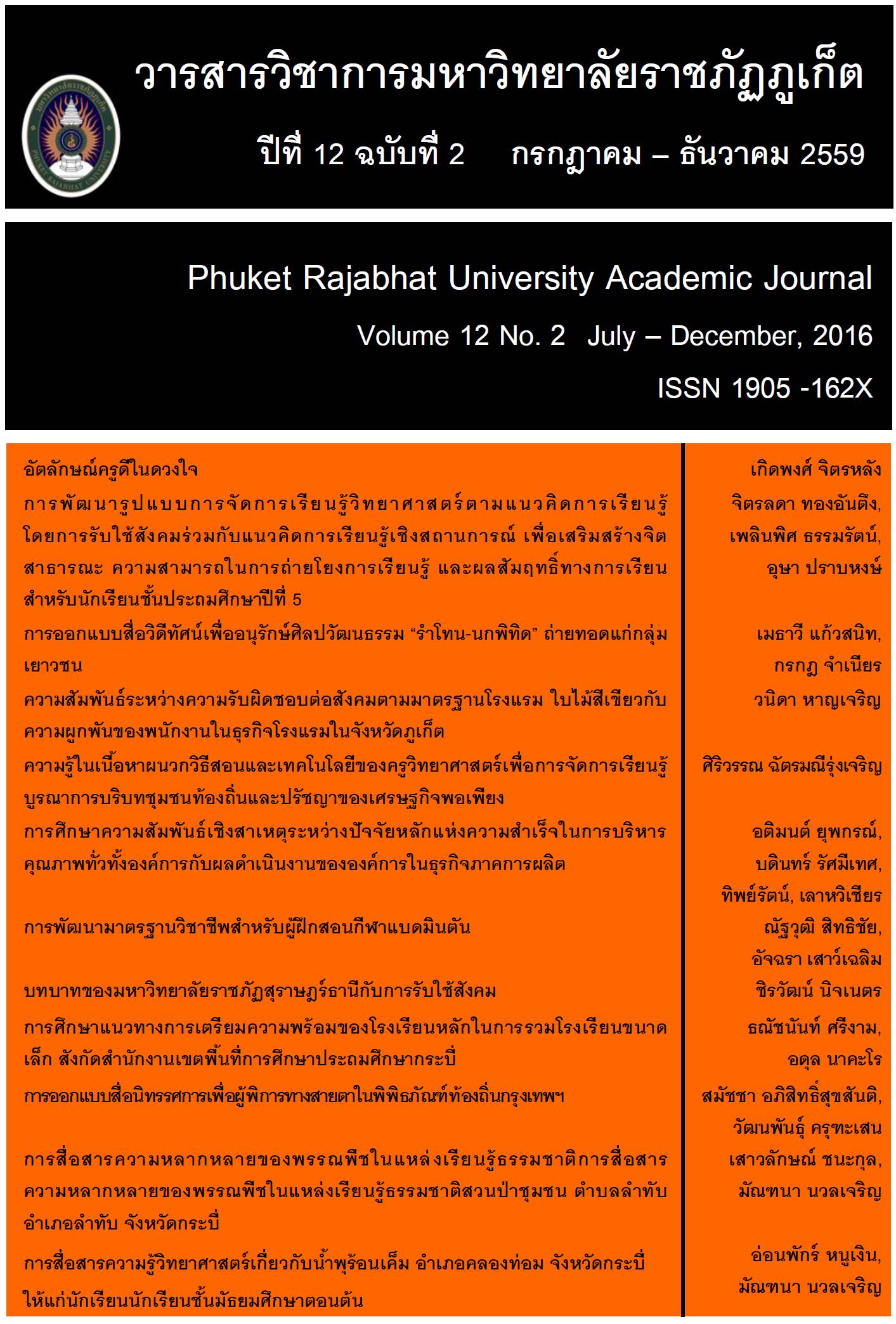
การพัฒนารูปแบบการจัดการเรียนรู้วิทยาศาสตร์ตามแนวคิดการเรียนรู้ โดยการรับใช้สังคมร่วมกับแนวคิดการเรียนรู้เชิงสถานการณ์ เพื่อเสริมสร้างจิตสาธารณะ ความสามารถในการถ่ายโยงการเรียนรู้ และผลสัมฤทธิ์ทางการเรียน สำหรับนักเรียนชั้นประถมศึกษาปีที่ 5
Article Sidebar
Main Article Content
บทคัดย่อ
การวิจัยครั้งนี้มีความมุ่งหมายเพื่อ 1) พัฒนารูปแบบการจัดการเรียนรู้วิทยาศาสตร์ตามแนวคิดการเรียนรู้โดยการรับใช้สังคมร่วมกับแนวคิดการเรียนรู้เชิงสถานการณ์เพื่อเสริมสร้างจิตสาธารณะ ความสามารถในการถ่ายโยงการเรียนรู้ และผลสัมฤทธิ์ทางการเรียน สำหรับนักเรียนชั้นประถมศึกษาปีที่ 5 2) ศึกษาผลการใช้รูปแบบการจัดการเรียนรู้ กลุ่มตัวอย่างเป็นนักเรียนชั้นประถมศึกษาปีที่ 5 โรงเรียนอนุบาลกุสุมาลย์ จำนวน 78 คน แบ่งเป็นกลุ่มทดลอง จำนวน 39 คน กลุ่มควบคุม จำนวน 38 คน เครื่องมือที่ใช้ในการทดลอง คือ แบบวัดจิตสาธารณะ แบบวัดความสามารถในการถ่ายโยงการเรียนรู้ และแบบทดสอบผลสัมฤทธิ์ทางการเรียน สถิติที่ใช้ในการวิเคราะห์ข้อมูล ได้แก่ ค่าเฉลี่ย ค่าเบี่ยงเบนมาตรฐาน การทดสอบทีแบบ 2 กลุ่มสัมพันธ์กันการทดสอบทีแบบ 2 กลุ่มอิสระต่อกัน วิเคราะห์ความแปรปรวนร่วมแบบทางเดียวและการทดสอบทีแบบกลุ่มเดียวเทียบกับเกณฑ์
ผลการวิจัยสรุปได้ดังนี้
1.รูปแบบการจัดการเรียนรู้ที่พัฒนาขึ้นมีองค์ประกอบ ดังนี้ 1) หลักการ 2) จุดมุ่งหมาย 3) เนื้อหาและกิจกรรมการเรียน 4) กระบวนการเรียนรู้ 5) บทบาทผู้เรียนและผู้สอน และ 6) การวัดผลและประเมินผล ซึ่งกระบวนการเรียนรู้ ประกอบด้วย 7 ขั้น คือ ขั้นที่ 1 สร้างความตระหนัก ขั้นที่ 2 สำรวจและค้นหา ขั้นที่ 3 ลงมือปฏิบัติ ขั้นที่ 4 สรุปความรู้ ขั้นที่ 5 ประยุกต์ใช้ความรู้ ขั้นที่ 6 เรียนรู้สังคม และขั้นที่ 7 สะท้อนผลการเรียนรู้
2.ผลการใช้รูปแบบการจัดการเรียนรู้ที่พัฒนาขึ้น มีดังนี้
2.1) จิตสาธารณะของนักเรียนกลุ่มทดลองที่ได้รับการสอนด้วยรูปแบบการจัดการเรียนรู้ที่พัฒนาขึ้นหลังเรียนสูงกว่าก่อนเรียน อย่างมีนัยสำคัญทางสถิติที่ระดับ .01
2.2) จิตสาธารณะของนักเรียนกลุ่มทดลองที่ได้รับการสอนด้วยรูปแบบการจัดการเรียนรู้ที่พัฒนาขึ้นสูงกว่านักเรียนกลุ่มควบคุมที่ได้รับการสอนแบบปกติ อย่างมีนัยสำคัญทางสถิติที่ระดับ .01
2.3) ความสามารถในการถ่ายโยงการเรียนรู้ของนักเรียนกลุ่มทดลองที่ได้รับการสอนด้วยรูปแบบการจัดการเรียนรู้ที่พัฒนาขึ้น มีค่าเฉลี่ยคะแนนหลังเรียนสูงกว่าเกณฑ์ร้อยละ 60 ของคะแนนเต็ม อย่างมีนัยสำคัญทางสถิติที่ระดับ .01
2.4) ความสามารถในการถ่ายโยงการเรียนรู้ของนักเรียนกลุ่มทดลองที่ได้รับการสอนด้วยรูปแบบการจัดการเรียนรู้ที่พัฒนาขึ้นสูงกว่านักเรียนกลุ่มควบคุมที่ได้รับการสอนแบบปกติ อย่างมีนัยสำคัญทางสถิติที่ระดับ .01
2.5) ผลสัมฤทธิ์ทางการเรียนของนักเรียนกลุ่มทดลองที่ได้รับการสอนด้วยรูปแบบการจัดการเรียนรู้ที่พัฒนาขึ้น หลังเรียนสูงกว่าก่อนเรียน อย่างมีนัยสำคัญทางสถิติที่ระดับ .01
2.6) ผลสัมฤทธิ์ทางการเรียนหลังเรียนของนักเรียนกลุ่มทดลองที่ได้รับการสอนด้วยรูปแบบการจัดการเรียนรู้ที่พัฒนาขึ้น ไม่แตกต่างกันกับนักเรียนกลุ่มควบคุมที่ได้รับการสอนแบบปกติ
Article Details
เนื้อหาและข้อมูลในบทความที่ลงตีพิมพ์ในวารสารวิชาการมหาวิทยาลัยราชภัฏภูเก็ต ถือเป็นข้อคิดเห็นและความรับผิดชอบของผู้เขียนบทความโดยตรง ซึ่งกองบรรณาธิการวารสารฯ ไม่จำเป็นต้องเห็นด้วยหรือร่วมรับผิดชอบใด ๆ
บทความ ข้อมูล เนื้อหา รูปภาพ ฯลฯ ที่ได้รับการตีพิมพ์ในวารสารวิชาการมหาวิทยาลัยราชภัฏภูเก็ต ถือเป็นลิขสิทธิ์ของวารสารวิชาการมหาวิทยาลัยราชภัฏภูเก็ต หากบุคคลหรือหน่วยงานใดต้องการนำทั้งหมดหรือส่วนหนึ่งส่วนใดไปเผยแพร่ต่อหรือเพื่อกระทำการใด ๆ จะต้องได้รับอนุญาตเป็นลายลักษณ์อักษรจากวารสารวิชาการมหาวิทยาลัยราชภัฏภูเก็ตก่อนเท่านั้น
เอกสารอ้างอิง
กีรติวิทย์ สุวรรณธรรมา. (2556). การพัฒนารูปแบบการเรียนการสอนจิตสาธารณะตามแนวคิดจิตตปัญญาศึกษาและทฤษฎีปัญญาสังคมสำหรับนักเรียนประถมศึกษา. วิทยานิพนธ์ ปรัชญาดุษฎีบัณฑิต มหาวิทยาลัยขอนแก่น.
จินตนา ศิริธัญญารัตน์. (2556). การพัฒนารูปแบบการเรียนการสอนวิทยาศาสตร์ที่บูรณาการกลยุทธ์การพัฒนาทักษะการคิดขั้นสูงเพื่อเสริมสร้างทักษะการคิดขั้นสูงในศตวรรษที่ 21และจิตวิทยาศาสตร์ของนักเรียนระดับมัธยมศึกษา. วิทยานิพนธ์ ปรัชญาดุษฎีบัณฑิต มหาวิทยาลัยศิลปากร.
ชวาลา เวชยันต์. (2544). การพัฒนาแบบการเรียนการสอนที่ใช้เทคนิคการเรียนรู้ด้วยการรับใช้สังคมเพื่อส่งเสริมความตระหนักในการรับใช้สังคม ทักษะการแก้ปัญหา และผลสัมฤทธิ์ทางการเรียนของนักเรียนมัธยมศึกษาตอนต้น. วิทยานิพนธ์ ครุศาสตรดุษฎีบัณฑิต จุฬาลงกรณ์มหาวิทยาลัย.
ณัชชากัญญ์ วิรัตนชัยวรรณ. (2555). ผลการจัดกิจกรรมการเรียนรู้โดยใช้เทคนิคการสืบเสาะหาความรู้ (5E) เพื่อพัฒนาทักษะกระบวนการทางวิทยาศาสตร์ จิตวิทยาศาสตร์ และผลสัมฤทธิ์ทางการเรียนวิทยาศาสตร์ของนักเรียนชั้นประถมศึกษาปีที่ 6. วิทยานิพนธ์ ครุศาสตรมหาบัณฑิตมหาวิทยาลัยราชภัฎเชียงราย.
ณัฐิกานต์ รักนาค. (2552). การพัฒนารูปแบบการเรียนการสอนตามแนวคิดการถ่ายโยงการเรียนรู้เพื่อเสริมสร้างทักษะและกระบวนการทางคณิตศาสตร์ด้านการแก้ปัญหาการให้เหตุผลและการเชื่อมโยง ของนักเรียนมัธยมศึกษาปีที่ 1. วิทยานิพนธ์ ครุศาสตรดุษฎีบัณฑิต จุฬาลงกรณ์มหาวิทยาลัย.
ดวงกมล ทองอยู่. (2555). การประยุกต์ทฤษฎีทางจิตวิทยาเพื่อพัฒนาจิตสาธารณะให้เด็กและเยาวชนไทย. วารสารวไลยอลงกรณ์ปริทัศน์. 2(1). 11-22.
ทิศนา แขมมณี. (2545). ศาสตร์การสอน (พิมพ์ครั้งที่ 2). กรุงเทพฯ : โรงพิมพ์แห่งจุฬาลงกรณ์มหาวิทยาลัย.
นิรมล มาลัย. (2554). จิตสาธารณะและผลสัมฤทธิ์ทางการเรียนวิทยาศาสตร์ เรื่อง สิ่งมีชีวิตกับสิ่งแวดล้อมของ นักเรียนชั้นประถมศึกษาปีที่ 6 ที่สอนโดยการเสริมกิจกรรมพัฒนาจิตสาธารณะ. วิทยานิพนธ์ ศึกษาศาสตรมหาบัณฑิต มหาวิทยาลัยเชียงใหม่.
เพลินตา พรหมบัวศรี. (2545). การพัฒนากระบวนการเรียนการสอนตามแนวคิดการเรียนรู้ เชิงสถานการณ์เพื่อเสริมสร้างความสามารถทางวิชาชีพการพยาบาลของนักศึกษาพยาบาล. วิทยานิพนธ์ ครุศาสตรดุษฎีบัณฑิต จุฬาลงกรณ์มหาวิทยาลัย.
ไพจิตร สะดวกการ. (2538). ผลของการสอนคณิตศาสตร์ตามแนวคิดของทฤษฎีคอนสตรัคติวิสต์ที่มีต่อผลสัมฤทธิ์ทางการเรียนวิชาคณิตศาสตร์และความสามารถในการถ่ายโยงการเรียนรู้ของนักเรียนระดับมัธยมศึกษาตอนต้น. วิทยานิพนธ์ ครุศาสตรดุษฎีบัณฑิต จุฬาลงกรณ์มหาวิทยาลัย.
วราภรณ์ ตระกูลสฤษดิ์. (2545). จิตวิทยาการปรับตัว (พิมพ์ครั้งที่ 3). กรุงเทพฯ: ศูนย์ส่งเสริมวิชาการ.
เวสาลี ชาติสุทธิพันธุ์. (2550). การพัฒนาระบบการเรียนรู้เชิงบริการเพื่อเสริมสร้างความรับผิดชอบสาธารณะของนักศึกษาหลักสูตรบริหารธุรกิจระดับปริญญาบัณฑิต. วิทยานิพนธ์ ครุศาสตรดุษฎีบัณฑิต จุฬาลงกรณ์มหาวิทยาลัย.
ศักดิ์ชัย นิรัญทวี. (2548). รายงานการวิจัยเอกสาร: การจัดการเรียนรู้เพื่อพัฒนาผู้เรียนให้เป็นพลเมืองดี. กรุงเทพฯ : พิมพ์ดี.
ศักดิ์ชัย นิรัญทวี และคณะ. (2544). รายงานการวิจัยเรื่อง การเรียนรู้ด้วยการรับใช้สังคม. กรุงเทพฯ: สำนักงานคณะกรรมการการศึกษาแห่งชาติ สำนักนายกรัฐมนตรี.
__________. (2550). รายงานการประเมินการจัดการเรียนรู้ที่ส่งเสริมคุณธรรมจริยธรรมของผู้เรียนในสถานศึกษา ขั้นพื้นฐาน. กรุงเทพฯ : สำนักงานเลขาธิการสภาการศึกษา.
สมศักดิ์ สินธุระเวชญ์. (2542). มุ่งสู่คุณภาพการศึกษา. กรุงเทพฯ : วัฒนาพานิช.
Joyce, B., & Weil, M. (2004). Models of Teaching 7th ed. London: Pearson.
