
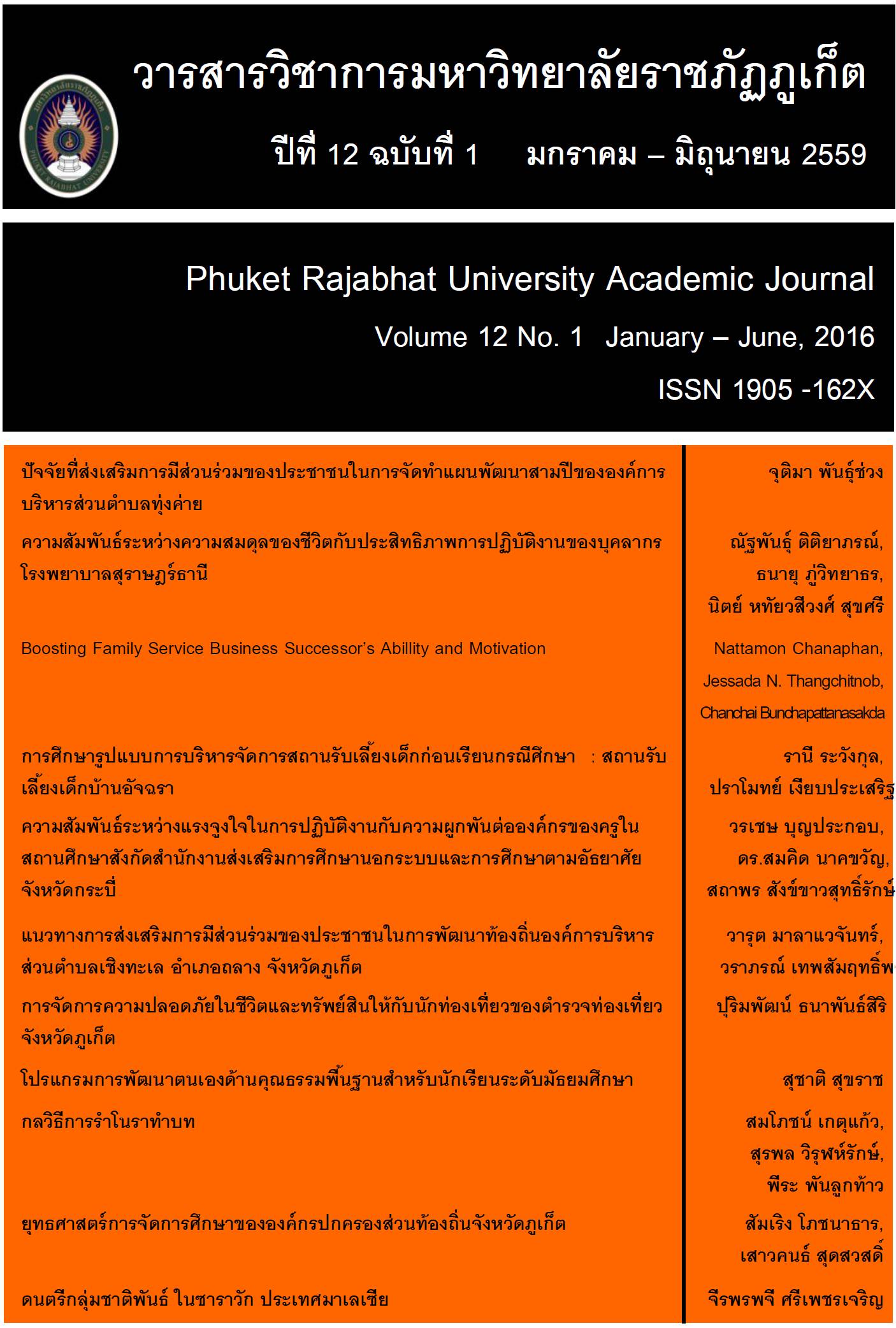
Music of ethnic groups in Sarawak, Malaysia
Article Sidebar
Main Article Content
Abstract
This research is a qualitative research. Using the survey data and qualitative research by collecting information from documents and field data, the survey, observation and interview. The objectives of the research are 2 reasons 1) to study ethnic groups in Sarawak, Malaysia music 2) to study the inheritance and development of ethnic groups in Sarawak, the music Malaysia.
The research shows that the music of ethnic groups in Sarawak, Malaysia. Instrument ethnic group in Sarawak, Malaysia. Sarawak has 3 ethnic groups of music including Iban, Bidayuh, Orungeuru. The music divided according to the principle of ethnomusicology is 4 tribes including types of percussion instruments (Idiophone), Agung, Tawak, types of leather (Membraophone), including Ketebung drum which is a drum with many sizes and string instruments (Chordophone). The Sape is shaped like a guitar string in western music but the size and shape of the larynx and body length and type of wind machines (Aerophone), including Branchi, Kroto and Nchiyo of Bidayuh there are three types is made from bamboo. As an instrument of ethnic groups in Sarawak, Malaysia. Also includes music show also discusses the life of ethnic groups in Sarawak, such as making a living, hunting nature about young. The music show featured popular in the harvest season of ethnic groups Iban such as Nagut show, Ule nugan dance, which is presented about the career of tribe of auto nutrients. Uluru by actor man will hold the wood to hold the wood on the system the dibbling which is a tool used for cultivation of the throwing Padi sub tribe of another group of all nutrients. The Uluru instrument was a sign that the role and use in their life, made from bamboo sheet name Geely Bo Boulou (Kerebo Bulo) is a virtual one is used as a musical instrument. Use to avoid confrontation with the evil. This charm can create sounds like a bird singing knocked at the mermaid. Acting and music of Bidayuh The dance will occur to a religious ritual. The uniqueness of the spirit, believe in the spirit of good and evil. They believe that the body movement rhythm and while in a trance will be able to communicate with the spirit (Leng).
Inheritance and development of ethnic groups in Sarawak, Malaysia. The importance of music across the country. By encouraging built the village culture in the various areas of cultural prosperity Sarawak is one area that is encouraged and support in policies that current social changes outside the culture in Sarawak is changing rapidly, resulting in changes of the musician. Young people interested in learning music in Sarawak, and the development of music in their ethnic groups is more at the same time, interest in music in trade more attention from the real attitude, which affects the behavior change in succession, and knowledge transfer in some parts. The knowledge from teacher to student's self-learning processes started by studying different types of modern media technology, and from the Malaysian government to force the music in Sarawak, awakened as important factors that cause a change in music in Sarawak, Malaysia.
Article Details
The content and information published in the Phuket Rajabhat University Academic Journal represent the opinions and sole responsibility of the authors. The editorial board does not necessarily endorse or share any responsibility for these view.
Articles, data, content, images, etc., published in the Phuket Rajabhat University Academic Journal are the copyright of the Phuket Rajabhat University Academic Journal. Any individual or organization wishing to reproduce or utilize all or part of this material for any purpose must obtain prior written permission from the Phuket Rajabhat University Academic Journal.
References
Iban. (2009, January). Iban. Retrieved January 2009, 30, from http://www. nikrakib blogsprot.com.
Mingkwan Chonpairot. (2008). Conservation and Revitalization and Development of Cultural Identity and Traditions of the Kula Ethnic in Isan. Doctoral Dissertation, Maha Sarakham: Mahasarakham Univesity.
Talusan, M.I. (2004). Cultural Localization and Transnational Flow: Music in Magindanaon Communities of the Philippines. Doctoral Dissertation, University of California, Los Angeles. Available from: UMI ProQuest Digital Dissertation, (UMI Order no.3218677).
Yang, Minkang. (2002). A Study If The Music Tradition and Its Contemporary Change of The Theravada Buddhist Festival Ritual Performance of Dai Ethnic Nationality in Yunnan. Hong Kong: Chinese University of Hong Kong.
Korakot Wongsuwan. (2006). Diffussion of Thai Music by Indigenous Philosophers in Bansomdejchaopraya Rajabhat University. Dissertation, Bangkok: Silpakorn University.
Somsak Sisantisuk. (2001).Study of Society and Culture: Concept, Methodology and Theory. Faculty of Humanities and Social Sciences, Prince of Songkla University.
