
Combating Technology-Related Crime: A Case Study of Joint Public Fraud by Impersonating Others or Call Center Cases
Article Sidebar
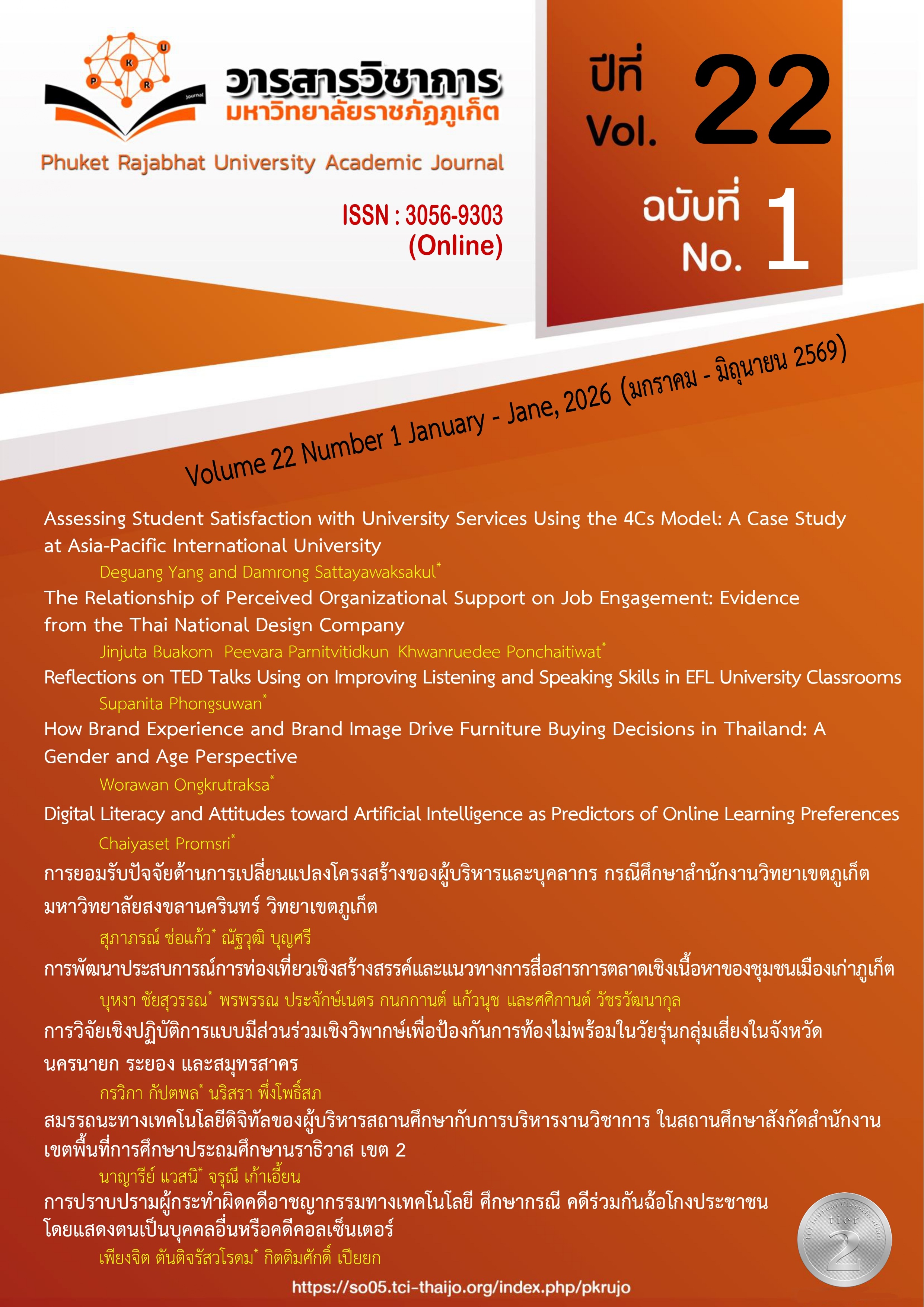
Main Article Content
Abstract
This article aims to 1) study and analyze the issues surrounding the enforcement of laws, 2) explore ways to amend and improve the law to align with existing problems, and 3) create new legal measures to combat those involved in joint public fraud by impersonating others or in call center (Call Center) cases. The study found that combating offenders involved in joint public fraud by impersonating others or call center fraud requires legal measures to increase the authority of law enforcement officers, enabling them to have more opportunities for arrests and reducing the benefits for offenders. Increasing the opportunity for arresting offenders in technology-related criminal cases can be achieved by establishing new criminal offenses for conspiracy or aiding in technology-related crimes, with penalties equal to the primary offense. Courts should also have the discretion to reduce sentences in cases where offenders provide important and valuable information in combating technology-related crimes. Moreover, authorities should be empowered to investigate using special methods such as undercover operations, special investigations, wiretapping, and surveillance of communications via applications. A central coordinating agency should be established to facilitate cooperation among all involved agencies. To reduce the financial benefits of crime, focus should be placed on seizing assets related to the crimes. Law enforcement officers involved in investigations or arrests should be given the authority to confiscate assets related to criminal activities. Measures such as civil asset forfeiture and the seizure of specific property should be applied alongside the confiscation of assets.
Article Details

This work is licensed under a Creative Commons Attribution-NonCommercial-NoDerivatives 4.0 International License.
The content and information published in the Phuket Rajabhat University Academic Journal represent the opinions and sole responsibility of the authors. The editorial board does not necessarily endorse or share any responsibility for these view.
Articles, data, content, images, etc., published in the Phuket Rajabhat University Academic Journal are the copyright of the Phuket Rajabhat University Academic Journal. Any individual or organization wishing to reproduce or utilize all or part of this material for any purpose must obtain prior written permission from the Phuket Rajabhat University Academic Journal.
References
Buacharoen, S., Wiwatwanich, C., & Wattanasin, K. (2011). Final research report: A study on the causes of human rights violations in the justice process by police officers. Office of the National Human Rights Commission of Thailand.
Na Nakorn, K. (2004). Criminal law: General part (2nd ed.). Winyuchon Publishing.
Nakfon, P. (2023). Research report: Post-crisis crime statistics survey project. Office of Justice Affairs.
Packer, H. L. (1968). The limits of the criminal sanction. Stanford University Press.
Tangkitvanich, S., Rattananarumitsorn, T., Sanguanchit, S., Tanmantong, S., Unahakate, I., & Lertthamthewee, P. (2014). TDRI report: Law and economics of the Thai criminal justice system. Thailand Development Research Institute.
Tingsaphat, J. (1982). Explanation of the Criminal Code, Part 1. The Thai Bar Association Under the Royal Patronage.
Tingsaphat, C. (2003). Commentary on the Criminal Code: Part 1 (10th ed.). Jiraratch Printing.
