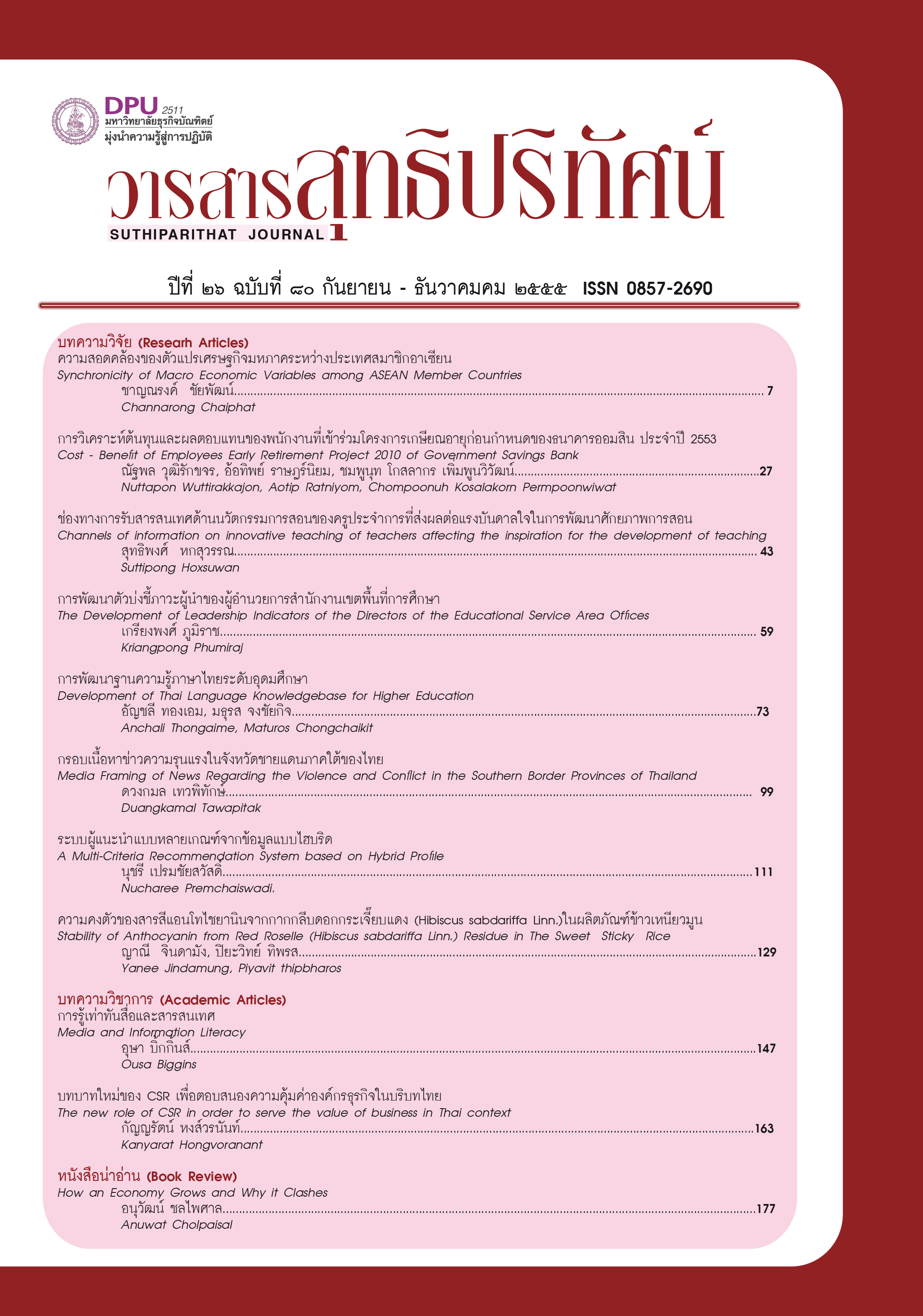
การพัฒนาตัวบ่งชี้ภาวะผู้นำของผู้อำนวยการสำนักงานเขตพื้นที่การศึกษา
คำสำคัญ:
ตัวบ่งชี้, ภาวะผู้นำ, ผู้อำนวยการสำนักงานเขตพื้นที่การศึกษาบทคัดย่อ
การวิจัยครั้งนี้มีวัตถุประสงค์ เพื่อพัฒนาตัวบ่งชี้ภาวะผู้นำของผู้อำนวยการสำนักงานเขตพื้นที่การศึกษา การดำเนินการวิจัยประกอบด้วย 3 ขั้นตอน ได้แก่ 1) ศึกษาเอกสารและสนทนากลุ่ม (Focus Group Discussion) 2) ทดสอบความสอดคล้องของโมเดลโครงสร้าง ตัวบ่งชี้ภาวะผู้นำของผู้อำนวยการสำนักงานเขตพื้นที่การศึกษากับข้อมูลเชิงประจักษ์ โดยการวิเคราะห์องค์ประกอบเชิงยืนยันอันดับสองด้วยโปรแกรมลิสเรล (LISREL 8.72) ตัวอย่างคือ ผู้อำนวยการสำนักงานเขตพื้นที่การศึกษา รองผู้อำนวยการสำนักงานเขต พื้นที่การศึกษา ผู้อำนวยการกลุ่ม/หัวหน้ากลุ่ม ผู้บริหารโรงเรียนประถมศึกษา ผู้บริหารโรงเรียนมัธยมศึกษา ประธานคณะกรรมการเขตพื้นที่การศึกษาและประธานคณะอนุกรรมการ ข้าราชการครูและบุคลากรทางการศึกษาประจำเขตพื้นที่การศึกษา จำนวน 497 คน ซึ่งกำหนดขนาดตัวอย่างโดยใช้สูตรของ ยามาเน่ (Yamane) และการสุ่มแบบหลายขั้นตอน เครื่องมือที่ใช้เป็นแบบสอบถามแบบมาตราประมาณค่า 5 ระดับ 3) ตรวจสอบความเที่ยงตรงเชิงเกณฑ์สัมพันธ์ (Criterion-related Validity) ของตัวบ่งชี้ภาวะผู้นำของผู้อำนวยการสำนักงานเขต พื้นที่การศึกษาโดยการนำตัวบ่งชี้มาสร้างเป็นแบบประเมิน และนำไปสอบถามความคิดเห็นเชิงประเมินจากตัวอย่างจำนวน 175 คน
ผลการวิจัยพบว่า
1) องค์ประกอบทั้ง 6 องค์ประกอบคือ องค์ประกอบที่ 1 ภาวะผู้นำตามบทบาทด้านการกำหนดยุทธศาสตร์การพัฒนา องค์ประกอบที่ 2 ภาวะผู้นำตามบทบาทด้านการเป็นผู้นำการเปลี่ยนแปลง องค์ประกอบที่ 3 ภาวะผู้นำตามบทบาทด้านการเป็นผู้นำทางวิชาการ องค์ประกอบที่ 4 ภาวะผู้นำตามบทบาทด้านการพัฒนาระบบบริหารงานบุคคล องค์ประกอบ ที่ 5 ภาวะผู้นำตามบทบาทด้านการเสริมสร้างวัฒนธรรมคุณภาพ และองค์ประกอบที่ 6 ภาวะผู้นำตามบทบาทด้านการกำกับติดตาม นิเทศและประเมินผลการศึกษา เป็นองค์ประกอบ สำคัญของภาวะผู้นำของผู้อำนวยการสำนักงานเขตพื้นที่การศึกษา โดยองค์ประกอบที่มีค่าน้ำหนักสูงสุดคือ องค์ประกอบที่ 3 ภาวะผู้นำตามบาทด้านการเป็นผู้นำทางวิชาการ และองค์ประกอบที่ 4 ภาวะผู้นำตามบทบาทด้านการพัฒนาระบบบริหารงานบุคคล 2) ผลการวิจัย ทำให้ได้ ตัวบ่งชี้ภาวะผู้นำของผู้อำนวยการสำนักงานเขตพื้นที่การศึกษาจำนวน 75 ตัวบ่งชี้ประกอบด้วย องค์ประกอบที่ 1 มีจำนวน 11 ตัวบ่งชี้องค์ประกอบที่ 2 มีจำนวน 14 ตัวบ่งชี้องค์ประกอบที่ 3 มีจำนวน 14 ตัวบ่งชี้องค์ประกอบที่ 4 มีจำนวน 10 ตัวบ่งชี้องค์ประกอบที่ 5 มีจำนวน 13 ตัวบ่งชี้ และองค์ประกอบที่ 6 มีจำนวน 13 ตัวบ่งชี้ 3) การตรวจสอบความเที่ยงตรงเชิงเกณฑ์สัมพันธ์ของตัวบ่งชี้ ภาวะผู้นำของผู้อำนวยการสำนักงานเขตพื้นที่การศึกษา ทั้ง 75 ตัวบ่งชี้ผลการตรวจสอบพบว่า ตัวบ่งชี้จำนวน 75 ตัวบ่งชี้มีความเที่ยงตรงเชิงเกณฑ์สัมพันธ์
Downloads
เอกสารอ้างอิง
จักรพรรดิ์ จิตมณี. 2547. สมรรถนะที่พึงประสงค์ของผู้อำนวยการสำนักงานเขตพื้นที่การศึกษาในการบริหารจัดการตามพระราชบัญญัติการศึกษาแห่งชาติ พุทธศักราช 2542. วิทยานิพนธ์ศึกษาศาสตร์มหาบัณฑิตสาขาบริหารการศึกษา บัณฑิตวิทยาลัยหาวิทยาลัยสุโขทัยธรรมาธิราช
ฉันทนา จันทร์บรรจง. 2543. รายงานการวิจัยเรื่องการศึกษาแนวทางการบริหารและการจัดการศึกษาขององค์กรปกครองส่วนท้องถิ่นในประเทศญี่ปุ่น.กรุงเทพมหานคร: อัมรินทร์พริ้นติ้งแอนด์ พับบลิชชิ่ง จำกัด
ชัยเสฏฐ์ พรหมศรี. 2549. ภาวะผู้นำองค์กรยุคใหม่ (Organizational Leadership). กรุงเทพฯ :ธรรมกมลการพิมพ์
นิติมา เทียนทอง. 2548. ภาวะผู้นำของผู้อำนวยการสำนักงานเขตพื้นที่การศึกษาในทศวรรษหน้า. วิทยานิพนธ์การศึกษามหาบัณฑิต บัณฑิตวิทยาลัย มหาวิทยาลัยศรีนครินทร์วิโรฒ
เพลินใจ พฤกษาชาติรัตน์. 2549. การพัฒนารูปแบบการพัฒนาภาวะผู้นำของผู้อำนวยการสำนักงานเขตพื้นที่การศึกษา วิทยานิพนธ์คุรุศาสตร์ดุษฎีบัณฑิตสาขาวิชาบริหารการศึกษา บัณฑิตวิทยาลัย จุฬาลงกรณ์มหาวิทยาลัย
สมาน อัศวภูมิ. 2543. การศึกษาแนวทางการบริหารและการจัดการศึกษาของเขตพื้นที่การศึกษาในประเทศสหรัฐอเมริกาและอังกฤษ. กรุงเทพฯ : สำนักงานคณะกรรมการการศึกษาแห่งชาติ
สัมพันธ์ พันธ์พฤกษ์. 2549. การบริหารงานในสำนักงานเขตพื้นที่การศึกษา [ระบบออนไลน์] แหล่งที่มา http://school.obec.go.th/sup_br3/ms_2.htm (12 มีนาคม 2553)
สำนักงานเลขาธิการสภาการศึกษา. 2552. สรุปผลการดำเนินงาน 9 ปีของการปฏิรูปการศึกษา พ.ศ. 2542 – พ.ศ.2551. กรุงเทพฯ : วีทีซีคอมมิวนิเคชั่น
สำนักงานเลขาธิการสภาการศึกษา. 2549. รายงานการวิจัยประเมินผลการกระจายอำนาจการบริหารและการจัดการศึกษาให้เขตพื้นที่การศึกษา(ฉบับสมบูรณ์). กรุงเทพฯ :พริกหวาน กราฟฟิก
_______.2550. การศึกษาผลกระทบโลกาภิวัฒน์ต่อการจัดการศึกษาไทยใน5ปีข้างหน้า. กรุงเทพฯ : ออฟเซตเพรสจำกัด สำนักงานเลขาธิการคุรุสภา. 2548. มาตรฐานวิชาชีพทางการศึกษา. กรุงเทพฯ : โรงพิมพ์คุรุสภาลาดพร้าว
ศึกษาธิการ, กระทรวง. 2546. พระราชบัญญัติการศึกษาแห่งชาติ พ.ศ. 2542 และที่แก้ไขเพิ่มเติม (ฉบับที่ 2)พ.ศ. 2545. กรุงเทพฯ : กระทรวงศึกษาธิการ
______.2549. คู่มือการปฏิบัติงานสำนักงานเขตพื้นที่การศึกษา.กรุงเทพมหานคร : โรงพิมพ์องค์การรับส่งสินค้าและพัสดุภัณฑ์ (ร.ส.พ.)
_____.2552. ข้อเสนอปฏิรูปการศึกษาในทศวรรษที่สอง (พ.ศ.2552.-2559). กรุงเทพมหานคร : พริกหวาน กราฟฟิก
Bunill, C,W, and Ledolter,J. 1999. Establishing a Culture of Quality. New York:John Wiley and sons
Caldwell,B.J. 2000. Local Management and Learning Outcome. London:Taylor and Francis Printer
DuFour, R. . 2002. “Learning-centered principal” Educational Leadership 59(8) Freed, JE.,and Klugman, MR. .1998. Quality principles and practices in higher education. Phoenix, AZ: American Council on Education and The Ory.
John R. Hoyle, Lars G. Björk, Virginia Collier, Thomas Glass .2004. The superintendent as CEO: standards-based performance. C.A : Corwin Press.
Lunenburg, F.C. and Ornstein, A.C. 1991. Educational Administration : Concepts and Practices. New York : Wadsworth Publishing Company.
Whitaker, B. 1997. “Instructional leadership and principal visibility”. The Clearinghouse,70(3)
Whetten. D.A.and Cameron. 2002. Developing Management Skills. 5th ed. New Jersey : Prentice Hall
ดาวน์โหลด
เผยแพร่แล้ว
รูปแบบการอ้างอิง
ฉบับ
ประเภทบทความ
สัญญาอนุญาต
เนื้อหาและข้อมูลในบทความที่ลงตีพิมพ์ในวารสารสุทธิปริทัศน์ ถือเป็นข้อคิดเห็นและความรับผิดชอบของผู้เขียนบทความโดยตรงซึ่งกองบรรณาธิการวารสาร ไม่จำเป็นต้องเห็นด้วย หรือร่วมรับผิดชอบใด ๆ
บทความ ข้อมูล เนื้อหา รูปภาพ ฯลฯ ที่ได้รับการตีพิมพ์ในวารสารสุทธิปริทัศน์ ถือเป็นลิขสิทธิ์ของวารสารสุทธิปริทัศน์หากบุคคลหรือหน่วยงานใดต้องการนำทั้งหมดหรือส่วนหนึ่งส่วนใดไปเผยแพร่ต่อหรือเพื่อกระทำการใด ๆ จะต้องได้รับอนุญาตเป็นลายลักษณ์อักษรจากวารสารสุทธิปริทัศน์ก่อนเท่านั้น