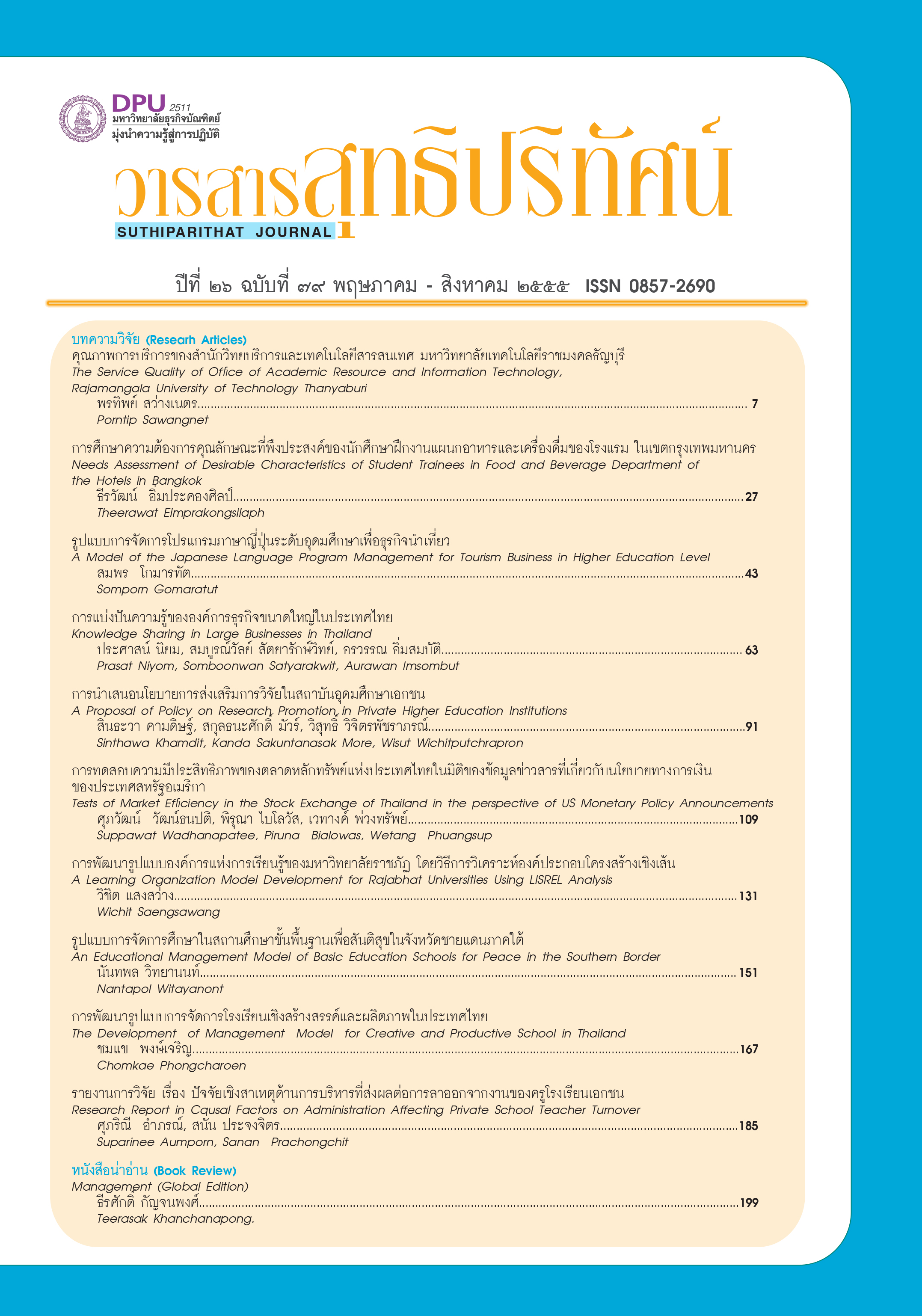
การพัฒนารูปแบบการจัดการโรงเรียนเชิงสร้างสรรค์และผลิตภาพในประเทศไทย
คำสำคัญ:
การจัดการ, โรงเรียนเชิงสร้างสรรค์และผลิตภาพในประเทศไทยบทคัดย่อ
การวิจัยเรื่องการพัฒนารูปแบบการจัดการโรงเรียนเชิงสร้างสรรค์และผลิตภาพในประเทศไทย มีวัตถุประสงค์เพื่อ 1) พัฒนารูปแบบการจัดการโรงเรียนเชิงสร้างสรรค์และผลิตภาพในประเทศไทย 2) ประเมินรูปแบบการจัดการโรงเรียนเชิงสร้างสรรค์และผลิตภาพในประเทศไทย การดำเนินการวิจัยประกอบด้วย 3 ขั้นตอน ได้แก่ 1) ศึกษาสภาพการจัดการโรงเรียนเชิงสร้างสรรค์และผลิตภาพในประเทศไทยโดย สัมภาษณ์ผู้บริหารโรงเรียนกรณีศึกษา 4 แห่ง 2) พัฒนารูปแบบโดยการสัมภาษณ์ผู้ทรงคุณวุฒิจำนวน 11 คน และสอบถามคิดเห็นของผู้อำนวยการ รองผู้อำนวยการและครูในสถานศึกษาขั้นพื้นฐาน จำนวน 440 คน 3) ประเมินความเหมาะสมและความเป็นไปได้โดยผู้ทรงคุณวุฒิ โดยการสนทนากล่มุ (Focus Group) สถิติการวิเคราะห์ ข้อมูลได้แก่ การวิเคราะห์เนื้อหา สรุปสาระสำคัญ แจกแจงความถี่ หาค่าร้อยละ ค่าเฉลี่ย (Mean) ค่าความเบี่ยงเบนมาตรฐาน (Standard Deviation) ผลการวิจัยสรุปได้ดังนี้
1. สภาพการจัดการโรงเรียนเชิงสร้างสรรค์และผลิตภาพในประเทศไทย พบว่าส่วนใหญ่มีสภาพปัญหาบุคลากร ความพร้อมของผู้บริหารและครู ความไม่เข้าใจของประชาชน และผู้ปกครองในการจัดการเรียนรู้แนวใหม่ ในด้านปรัชญาและหลักการ ควรพัฒนาผู้เรียนให้เป็นคนกล้าคิด กล้าทำกล้าแสดงออก สามารถพัฒนาตนเองได้ ด้านหลักการจัดองค์กร ไม่มีโครงสร้างแน่นอน แต่ละองค์กรจัดการตนเอง ด้านการ จัดหลักสูตรควรจัดหลักสูตรให้มีความยืดหยุ่นให้ผู้เรียนมีส่วนร่วมเรียนโดยปฏิบัติจริง ด้านการจัดการเรียนรู้ มีการออกแบบการเรียนรู้ที่สอดคล้องกับธรรมชาติ การเรียนรู้ผ่านการปฏิบัติจากการทำโครงงาน จัดการเรียนรู้เป็นหน่วยบูรณาการด้านบริหารจัดการ โรงเรียนจะต้องสื่อสารให้สาธารณชนและบุคลากรเข้าใจแนวคิดของโรงเรียน ด้านการมีส่วนร่วมในการจัดการศึกษาผู้ปกครองมีส่วนร่วมกับทางโรงเรียนโดยการทำกิจกรรมร่วมกัน มีหลักสูตรสำหรับผู้ปกครอง
2. รูปแบบโรงเรียนเชิงสร้างสรรค์และผลิตภาพในประเทศไทยที่ได้จากการ พัฒนาในการวิจัยครั้งนี้ พบว่าเป็นโรงเรียนคุณภาพที่เชื่อว่าการสร้างคนต้องมีความยืดหย่นมีกระบวนการเรียนการสอนให้นักเรียนคิดเป็น คิดเอง ทำเอง ครูมีบทบาทเป็นพี่เลี้ยง ชี้แนะตามศักยภาพเด็ก มีปรัชญาและหลักการเน้นการศึกษาตลอดชีวิต แนวทางการจัดองค์กรจัดโครงสร้างเองเป็นอิสระ หลักการจัดหลักสูตรมีหลักสูตรเชิงสร้างสรรค์ให้คิดทุกวิชา เน้นทำกิจกรรมเป็นหลักสูตรที่เทียบเคียงนานาชาติได้ แนวทางการจัดการเรียนรู้ จัดการเรียนรู้เป็นหน่วยบูรณาการ ผู้เรียนมีโอกาสเป็นผู้เลือกเรียนรู้ ผ่านการปฏิบัติจากการทำโครงงาน แนวทางการบริหารจัดการเป็นแบบสมัยใหม่ ครูและบุคลากรเข้าใจแนวคิดของโรงเรียน แนวทางการมีส่วนร่วมจัดการศึกษา ผู้บริหาร ครู ผู้ปกครอง มีส่วนร่วมในการจัดการศึกษาในฐานะผู้สนับสนุนทรัพยากรและเป็นแหล่งเรียนรู้
3. การประเมินผลความเหมาะสมและความเป็นไปได้ พบว่ารูปแบบการจัดการโรงเรียนเชิงสร้างสรรค์และผลิตภาพในประเทศไทยในด้านที่มาของรูปแบบและ องค์ประกอบของรูปแบบมีความเหมาะสมและมีความเป็นไปได้อยู่ในระดับมาก (ค่าเฉลี่ยเท่ากับ 4.00, 3.83 และ 3.67, 3.82 ตามลำดับ) ส่วนเงื่อนไขและการนำรูปแบบไปใช้มีความเหมาะสมและมีความเป็นไปได้อยู่ในระดับปานกลาง (ค่าเฉลี่ยเท่ากับ 3.50 และ 3.20 ตามลำดับ)
Downloads
เอกสารอ้างอิง
ถวัลย์ มาสจรัส.(2553).การจัดการศึกษาและแห่งการเรียนรู้สร้างสรรค์.กรุงเทพฯ : ธารอักษร
พิษณุ ฟองสี. (2550).วิจัยทางการศึกษา.กรุงเทพฯ : เทียมฝ่าการพิมพ์.
ไพฑูรย์ สินลารัตน์.(2549).การศึกษาเชิงสร้างสรรคและผลิตภาพ. กรุงเทพฯ : จุฬาลงกรณ์มหาวิทยาลัย.
ไพฑูรย์ สินลารัตน์และคณะ. (2550). โครงการวิจัยการพัฒนารูปแบบการจัดการเรียนการสอน CRP. กรุงเทพฯ : โรงพิมพ์แห่งจุฬาลงกรณ์มหาวิทยาลัย.
______________.(2553). ผู้นำเชิงสร้างสรรค์และผลิตภาพ:กระบวนทัศน์ใหม่และผู้นำใหม่ทางการศึกษา.กรุงเทพฯ : จุฬาลงกรณ์มหาวิทยาลัย.
รุ่ง แก้วแดง. (2541). ปฏิวัติการศึกษาไทย. กรุงเทพมหานคร : มติชน.
สุภางค์ จันทวานิช. (2537). การวิเคราะห์ข้อมูลในการวิจัยเชิงคุณภาพ. กรุงเทพมหานคร : จุฬาลงกรณ์มหาวิทยาลัย.
อรรณพ จีนะวัฒน์. (2551). ประมวลสาระชุดวิชาการจัดการสถานศึกษา หน่วยที่1-7. นนทบุรี :สำนักพิมพ์ มหาวิทยาลัยสุโขทัยธรรมาธิราช.
อุทัย บุญประเสริฐ. (กรกฎาคม-สิงหาคม 2526) ระบบข้อมูลและสารสนเทศเพื่อการวางแผนและการตัดสินใจทางการศึกษาในระดับจังหวัด. จันทร์เกษม. 17,3.
Eisner, E (1976). “Education connoisseurship and criticism : Their form and Junctions in educational evaluation” Journal of Aesthetic Education
Gage. Charls Quineey. (June 2006) “The meaning and measure of school mindfulness : An exploratory analysis.” ProQuest Digital Dissertations
Keeves, Peter J. (1985) Model and Model Build ing. Educational Research. Methodology and Measurement : An international Handbook. Oxford :Pergamon Press
Sinder. Jame.E.(2004). Hoy. W.K. and Sweetland. S.R. “Enabling School Stracture :Prineipal Leadership and Organizational Commitment of teacher” Journal of School Leadership
Yamane,(1967). T. Elementary sampling theory. Englewood, N.J. : Prentice – Hall
ดาวน์โหลด
เผยแพร่แล้ว
รูปแบบการอ้างอิง
ฉบับ
ประเภทบทความ
สัญญาอนุญาต
เนื้อหาและข้อมูลในบทความที่ลงตีพิมพ์ในวารสารสุทธิปริทัศน์ ถือเป็นข้อคิดเห็นและความรับผิดชอบของผู้เขียนบทความโดยตรงซึ่งกองบรรณาธิการวารสาร ไม่จำเป็นต้องเห็นด้วย หรือร่วมรับผิดชอบใด ๆ
บทความ ข้อมูล เนื้อหา รูปภาพ ฯลฯ ที่ได้รับการตีพิมพ์ในวารสารสุทธิปริทัศน์ ถือเป็นลิขสิทธิ์ของวารสารสุทธิปริทัศน์หากบุคคลหรือหน่วยงานใดต้องการนำทั้งหมดหรือส่วนหนึ่งส่วนใดไปเผยแพร่ต่อหรือเพื่อกระทำการใด ๆ จะต้องได้รับอนุญาตเป็นลายลักษณ์อักษรจากวารสารสุทธิปริทัศน์ก่อนเท่านั้น