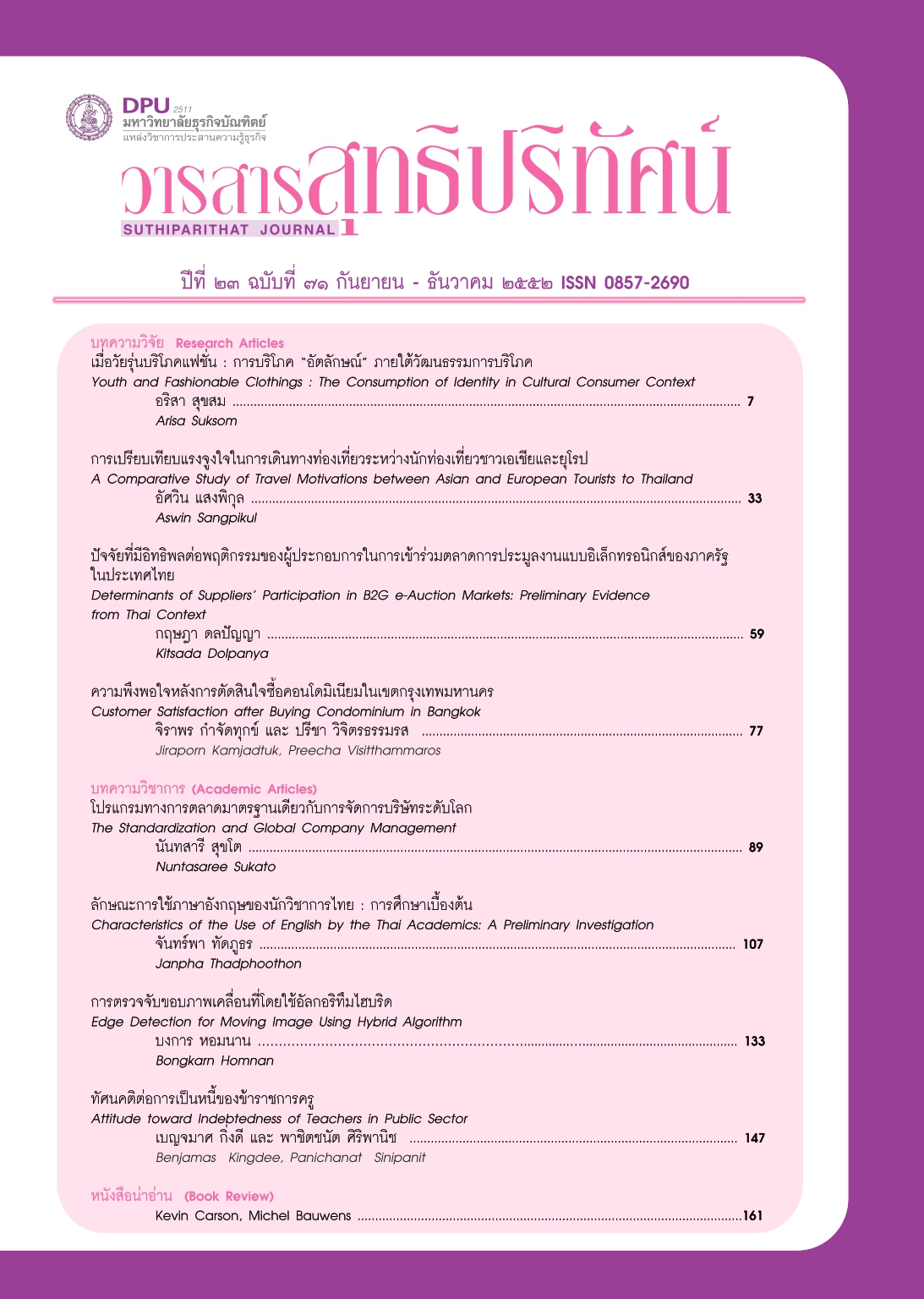
เมื่อวัยรุ่นบริโภคแฟชั่น : การบริโภค “อัตลักษณ์” ภายใต้วัฒนธรรมการบริโภค
คำสำคัญ:
การสร้างอัตลักษณ์, การแต่งกายแฟชั่น, การบริโภคทางวัฒนธรรม, สยามสแควร์บทคัดย่อ
บทความวิจัยเรื่อง “เมื่อวัยรุ่นบริโภคแฟชั่น : การบริโภค “อัตลักษณ์” ภายใต้วัฒนธรรมการบริโภค”1 มีวัตถุประสงค์เพื่อศึกษาการบริโภคแฟชั่นของวัยรุ่นในพื้นที่สยามสแควร์เพื่อสร้างอัตลักษณ์ โดยเริ่มต้นหาเงื่อนไขที่มีอิทธิพลสร้างแรงจูงใจ วิถีทางในการแสดงออก ตลอดจนวิเคราะห์การนิยามและตีความหมายจากการ แต่งกายแฟชั่นของวัยรุ่น ศึกษาและวิเคราะห์ความสัมพันธ์ระหว่างการแต่งกายแฟชั่นที่มีต่อการสร้างอัตลักษณ์ของวัยรุ่น ตลอดจนศึกษาอัตลักษณ์ใหม่ที่ถูกสร้างขึ้นจากการแต่งกายแฟชั่นผ่านการศึกษาแฟชั่นฮิพฮอพ ผลการศึกษาพบว่า การสร้างอัตลักษณ์วัยรุ่นจากแฟชั่นเป็นปรากฏการณ์ทางสังคมที่เกิดขึ้นในเชิงกระบวนการเริ่มต้นจากเงื่อนไขสร้างแรงจูงใจแก่วัยรุ่นให้แต่งกายแฟชั่น คือแรงขับตามธรรมชาติของวัยและบริบททางเศรษฐกิจสังคมวัฒนธรรมที่แวดล้อม ได้แก่ ครอบครัว กลุ่มเพื่อน สื่อมวลชน ตลอดจนการใช้เวลายามว่างในชีวิตประจำวัน จากนั้นวัยรุ่นมีการแสดงออกโดยการซื้อสินค้าแฟชั่นและบริโภคแฟชั่นผ่านกระบวนการสร้างความแตกต่างและกระบวนการลอกเลียนแบบภายใต้การแสดงออกวัยรุ่นได้นิยามความหมายแฟชั่นในเชิงสัญลักษณ์ที่สื่อถึงรสนิยม รูปแบบการดำเนินชีวิต ชนชั้น ความสัมพันธ์เชิงอำนาจต่อสังคมรอบตัว เป็นเทคนิคของการสร้างความทันสมัยให้แก่ร่างกายอย่างหนึ่ง ตลอดจนสื่อความสัมพันธ์ที่มีร่วมกับกลุ่ม ดังนั้น ความหมายเชิงสัญลักษณ์จากแฟชั่น จึงเป็นส่วนหนึ่งของการสร้างสำนึกอัตลักษณ์บุคคลและอัตลักษณ์ร่วมทางสังคมตามการบริโภคแฟชั่นของวัยรุ่น
การพิจารณาความหมายของแฟชั่นภายใต้วัฒนธรรมการบริโภค ซึ่งถูกสร้างในฐานเป็นวาทกรรมอย่างต่อเนื่อง กอรปกับเมื่อถูกบริโภคจากวัยรุ่นซึ่งกำลังอยู่ในช่วงแห่งการเปลี่ยนผ่านของวัย ทำให้กระบวนการสร้างอัตลักษณ์แฟชั่นวัยรุ่นมีความยืดหยุ่นและลื่นไหลตามปฏิสัมพันธ์ภายใต้มิติพื้นที่และเวลา อัตลักษณ์แฟชั่นของวัยรุ่นจึงมีทั้งที่อยู่ระหว่างกระบวนการสร้าง ขณะที่บางคนสร้างได้และอัตลักษณ์มีแนวโน้มจะดำรงอยู่ตลอดช่วงการเป็นวัยรุ่นหรืออาจติดตัวไปเรื่อยๆ อย่างไรก็ดีการสร้างอัตลักษณ์วัยรุ่นบนพื้นฐานการบริโภคแฟชั่นเป็นสิ่งที่ถูกสร้างจากกระบวนการทางสังคมที่ไม่ตายตัว ให้ภาพอัตลักษณ์ที่มีลักษณะชั่วคราวและบ่งบอกความเป็นตัวตนของวัยรุ่นได้ส่วนหนึ่งในช่วงเวลาหนึ่งเท่านั้น อัตลักษณ์แฟชั่นของวัยรุ่นที่สร้างและปรากฏในปัจจุบันจึงเป็นสิ่งไม่แน่นอน และสามารถเปลี่ยนแปลงได้ในอนาคต
Downloads
เอกสารอ้างอิง
กาญจนา แก้วเทพ (2541) การศึกษาสื่อมวลชนด้วยทฤษฏีวิพากษ์ : แนวคิดและตัวอย่างงานวิจัย กรุงเทพฯ : โรงพิมพ์ภาพพิมพ์.
นันทขว้าง สิรสุนทร (2545) เปลือยป๊อบคัลเจอร์ กรุงเทพฯ : เนชั่นมัลติมิเดีย กรุ๊ป
นิธิ เอียวศรีวงศ์ (2545,10-16 มิถุนายน) “แฟชั่น” มติชนสุดสัปดาห์, หน้า 47
พัฒนา กิติอาษา (บก.)(2546) คนพันธุ์ป๊อป ตัวตนคนไทยในวัฒนธรรมสมัยนิยมกรุงเทพฯ : ศูนย์มานุษยวิทยาสิรินธร (องค์กรมหาชน)
สมเกียรติ เอี่ยมกาญจนาลัย (2547,มิถุนายน) “แนวคิดของความเก๋ระดับโลก (Global chic) คืออะไร” 4 P Magazine,1. หน้า 126-127.
อภิญญา เฟื่องฟูสกุล (2543,มีนาคม) “แนวความคิดหลักทางสังคมวิทยาเรื่องอัตลักษณ์” เอกสารประกอบการประชุมทางวิชาการระดับชาติสาขาสังคมวิทยา ครั้งที่ 1, หน้า 81-193.
ภาษาอังกฤษ
Baudrillard, J. (1999) The Consumer Society: Myth & Structures. London: SAGE.
Bennett, A. (2005) Culture and Everyday Life. London: SAGE.
Brown, D. (2004) Social Blueprints: Conceptual Foundations of Sociology. New York: Oxford University Press.
Craig, J. (1994) The Face of Fashion: Cultural Studies in Fashion. London: Routledge.
Featherstone, M.(1992) Consumer Culture & Postmodernism. London: SAGE.
Freedman, J. (2000) Cultural Identity and Global Process. 3 rd ed. London: SAGE.
Gidden, A. (1991) Modernity and Self-Identity. Stanford, A Stanford University Press.
Jenkins, R. (2004) Social Identity. 2 nd.ed. New York: Routledge.
McCracken, G. (1988) Cultural & Consumption. Bloomington: Indiana University Press.
Rice, P. (1996) The Adolescent : Development, Relationships, and Culture. 5 th ed. Boston : Allyn and Bacon.
Thompson, J. and Dianna, H. (1997, June) “Speaking of Fashion: Consumers’ Uses of Fashion Discourses and the Appropriation of Countervailing Cultural Meanings.” Journal of Consumer Research,24 . pp. 15-42.
Wikipedia “Hip Hop Culture” (Online). Available : http:// enwikipedia.org/wiki/Hip_hop_culture (August 17,2006)
Woodward, K.,ed. (2000) Question Identity: Gender, Class, Nation. London: Routledge.
ดาวน์โหลด
เผยแพร่แล้ว
รูปแบบการอ้างอิง
ฉบับ
ประเภทบทความ
สัญญาอนุญาต
เนื้อหาและข้อมูลในบทความที่ลงตีพิมพ์ในวารสารสุทธิปริทัศน์ ถือเป็นข้อคิดเห็นและความรับผิดชอบของผู้เขียนบทความโดยตรงซึ่งกองบรรณาธิการวารสาร ไม่จำเป็นต้องเห็นด้วย หรือร่วมรับผิดชอบใด ๆ
บทความ ข้อมูล เนื้อหา รูปภาพ ฯลฯ ที่ได้รับการตีพิมพ์ในวารสารสุทธิปริทัศน์ ถือเป็นลิขสิทธิ์ของวารสารสุทธิปริทัศน์หากบุคคลหรือหน่วยงานใดต้องการนำทั้งหมดหรือส่วนหนึ่งส่วนใดไปเผยแพร่ต่อหรือเพื่อกระทำการใด ๆ จะต้องได้รับอนุญาตเป็นลายลักษณ์อักษรจากวารสารสุทธิปริทัศน์ก่อนเท่านั้น