
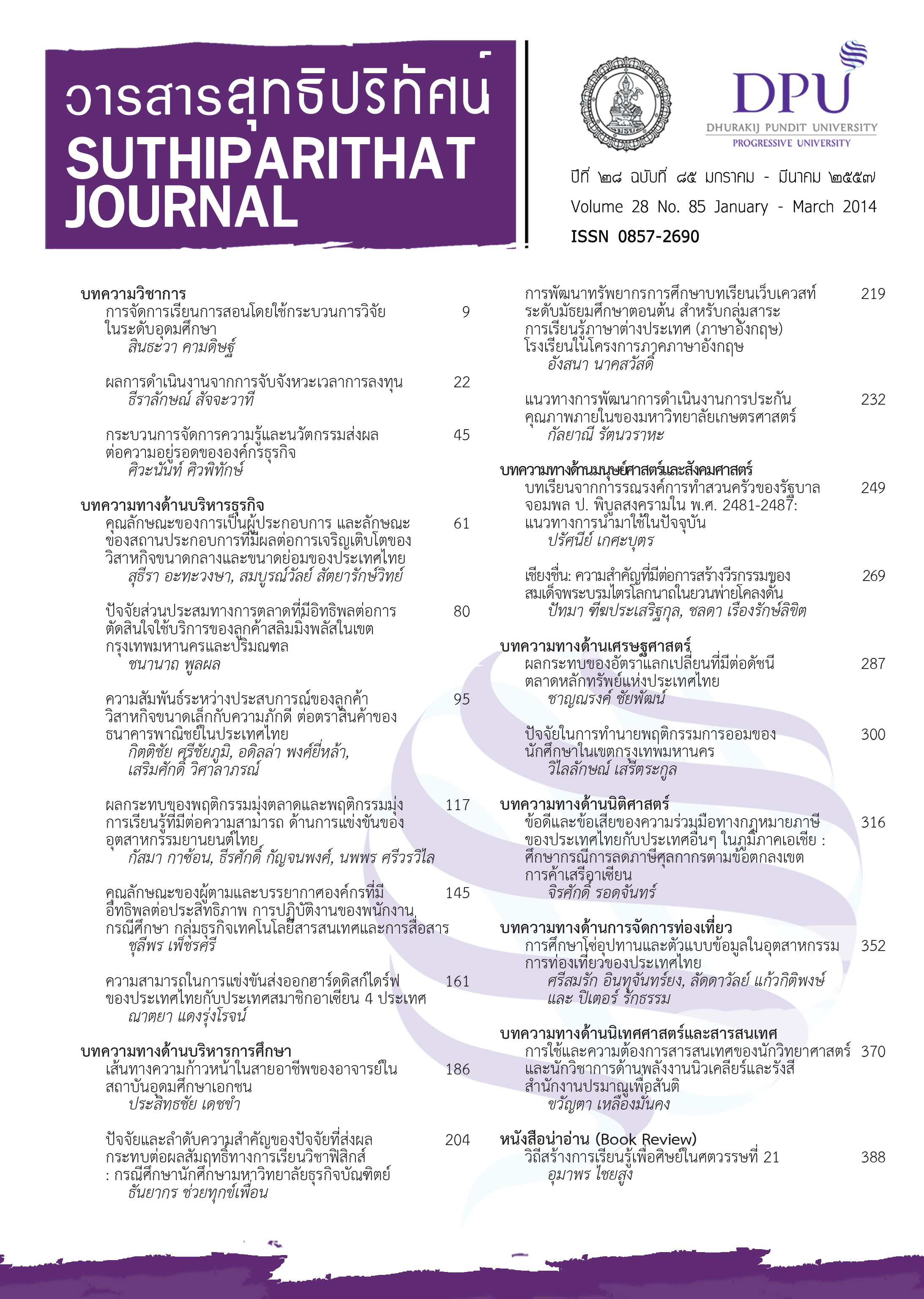
THE ADVANTAGES AND DISADVANTAGES OF TAX LAW CO-ORDINATION BETWEEN THAILAND AND OTHER COUNTRIES IN ASIA REGION: THE CASE STUDY OF REDUCTION IN TARIFFS UNDER AGREEMENT ON ASEAN FREE TRADE AREA
Keywords:
import-tariff rate reduction, ASEAN Free Trade Agreement (AFTA), positive and negative effects, customs duties/tariff law, international trade, international trade barriers, Explanatory Memoranda, Consolidation, principle of taxation, subordinate tariff lawsAbstract
The import-tariff rate reduction under AFTA has the following important positive effects: reduction in importers’ incentive to avoid and evade customs duties and to commit customs offences, reduction in tax distortion in people’s decisions on the purchase of goods imported from ASEAN region, having no cause for the pushing of tax incidence levied on imported goods back to export countries, reduction in the influence on people’s decisions on investment choice within ASEAN region, helping customs duties/tariff law to keep pace with the world’s economic situation and trade, reduction in the officials’ corruption in Customs Department, and decrease in international trade barriers.
The above positive effects encourage Thailand to further negotiate and enter into Free Trade Agreements (FTA) with other countries. To encourage Thailand’s negotiation and entering of further FTAs, the researcher has suggestions that the reduction of import-tariff rates should be set at the optimal level by taking the negative effects of reduction in import-tariff rates into consideration as a partially fundamental factor in adjusting the rate reduction together with other factors; additionally, in order to help FTA partner countries to comply with the rules in the agreement strictly and completely, they should jointly produce Explanatory Memoranda to explain rules in the agreement.
The import-tariff rate reduction under AFTA has the following important negative effects on the contracting parties in addition to positive effects: decrease in government revenue from customs duties levied on imports, not promoting the undertaking of fiscal policy pertaining to the government’s public debt that requires people to have savings, not promoting the vertical equity of taxation and the principle of equity of income redistribution, not help solving the price-inflation problem that requires the reduction of people’s purchasing power, not having been used as a tool for controlling imports for the protection of domestic industries, degrading the role and duty of Customs Department, not conforming with the principle of efficiency of taxation due to the fact that abundant rules in many notifications of Ministry of Finance and Director-General of Customs Department being made in accordance with AFTA increase the complexity of tariff law and make such law hard to comply, and not conforming with the idea of a good tax system requiring tax law to be legislated by Parliament and to be regarded as Parent Act; however, notifications of Ministry of Finance and Director-General of Customs Department being made in accordance with AFTA are regarded as subordinate legislation being made by administrative bodies concerning the reduction of tax rate that is regarded as a substantial part of tax structure which should be subject to the legislative process of Parliament.
The researcher has following suggestions for the improvement of law on tariff to diminish the above negative effects.
In order to reduce the complexity, confusion and difficulty in understanding for complying with many subordinate tariff laws concerning the reduction of import-tariff rates under AFTA and international agreements with which importers must comply, rules, regulations, criteria and procedures dealing with the reduction of import-tariff rates under AFTA and international agreements with which importers must comply, which appear in many subordinate tariff laws, should be consolidated into one Parent Act under the system of Consolidation in the form of Act of Parliament. In addition, at the time of the consolidation of many relevant subordinate tariff laws into one Parent Act, the governmental agency who is responsible for making and consolidating the law should simultaneously produce Explanatory Memoranda to explain the provisions of such Parent Act.
Downloads
References
กรมศุลกากร. (2556). online: www.customs.go.th
กรมเจรจาการค้าระหว่างประเทศ กระทรวงพาณิชย์. (2552). ประชาคมเศรษฐกิจอาเซียน: ASEAN Economic Community: AEC. นนทบุรี: มปท.
กรมเจรจาการค้าระหว่างประเทศ กระทรวงพาณิชย์. (2555). AEC FACT BOOK: One Vision, One Identity, One Community. (พิมพ์ครั้งที่ 4). นนทบุรี: ศูนย์บริการข้อมูลประชาคมเศรษฐกิจอาเซียน.
กรมเจรจาการค้าระหว่างประเทศ กระทรวงพาณิชย์. ASEAN Trade in Goods Agreement: ATIGA. นนทบุรี: ไม่ปรากฏสำนักพิมพ์และปีที่พิมพ์.
กรมเจรจาการค้าระหว่างประเทศ กระทรวงพาณิชย์. FTA Fact Book: เขตการค้าเสรี. นนทบุรี: ไม่ปรากฏสำนักพิมพ์และปีที่พิมพ์.
กรมเจรจาการค้าระหว่างประเทศ กระทรวงพาณิชย์. AEC News Alerts. ข่าวประจำวันที่ 14 กุมภาพันธ์ 2556.
กรมเจรจาการค้าระหว่างประเทศ กระทรวงพาณิชย์. Press Release. วันที่ 1 กุมภาพันธ์ 2556.
กรมเจรจาการค้าระหว่างประเทศ กระทรวงพาณิชย์. Press Release. วันที่ 5 กุมภาพันธ์ 2556.
จิรศักดิ์ รอดจันทร์. (2555). ภาษีเงินได้บุคคลธรรมดา: หลักการและบทวิเคราะห์. กรุงเทพมหานคร: สำนักพิมพ์แห่งจุฬาลงกรณ์มหาวิทยาลัย.
ชูชาติ อัศวโรจน์. (2544). ปัญหากฎหมายศุลกากรและข้อวิเคราะห์. กรุงเทพมหานคร: โรงพิมพ์ เดือนตุลาคม.
ชูศักดิ์ จรูญสวัสดิ์. (2548). ระบบเศรษฐกิจและพัฒนาการเศรษฐกิจไทย. (พิมพ์ครั้งที่ 3). กรุงเทพมหานคร: ส.เสริมมิตรการพิมพ์.
นวลน้อย ตรีรัตน์, บรรณาธิการ. (2543). คอร์รัปชันกับการค้าระหว่างประเทศ. กรุงเทพมหานคร: เอดิสันเพรสโปรดักส์.
บุญธรรม ราชรักษ์. (2551). เศรษฐศาสตร์ภาษีอากรไทย. กรุงเทพมหานคร: ห้างหุ้นส่วนจำกัด ทีพีเอ็นเพลส.
ปรีดา นาคเนาวทิม. (2526). เศรษฐศาสตร์การภาษีอากร 1. (พิมพ์ครั้งที่ 4). กรุงเทพมหานคร: มหาวิทยาลัยรามคำแหง.
พัชรา โพธิ์กลาง. (2555). เราคืออาเซียน ประชาคมอาเซียน. (พิมพ์ครั้งที่ 3). กรุงเทพมหานคร: อมรินทร์คอมมิกส์ อมรินทร์พริ้นติ้งแอนด์พับลิชชิ่ง.
ไพฑูรย์ วิบูลชุติกุล. (2555). การค้าระหว่างประเทศ ทฤษฎี นโยบาย และการวิจัยเชิงประจักษ์. กรุงเทพมหานคร: คณะเศรษฐศาสตร์ จุฬาลงกรณ์มหาวิทยาลัย.
ม.ร.ว.สฤษดิคุณ กิติยากร. (2546). คำอธิบายประมวลศัพท์ธุรกิจที่ใช้ทั่วไปในภาษาอังกฤษ. (พิมพ์ครั้งที่ 5). กรุงเทพมหานคร: สำนักพิมพ์แห่งจุฬาลงกรณ์มหาวิทยาลัย.
มาโนช รอดสม. (2555). ความรู้ทั่วไปเกี่ยวกับกฎหมายศุลกากรและกฎหมายว่าด้วยพิกัดอัตราศุลกากร. (พิมพ์ครั้งที่ 4). กรุงเทพมหานคร: บริษัท จี-อาร์ต จำกัด.
ไม่ปรากฏนามผู้เขียน. การเงินธนาคาร. ฉบับที่ 303 กรกฎาคม 2007
ไม่ปรากฏนามผู้เขียน. หนังสือพิมพ์กรุงเทพธุรกิจ. ฉบับวันที่ 12 กรกฎาคม 2556
ไม่ปรากฏนามผู้เขียน. หนังสือพิมพ์โพสต์ทูเดย์. ฉบับวันที่ 8 เมษายน 2556
ไม่ปรากฏนามผู้เขียน. หนังสือพิมพ์ไทยรัฐ. ฉบับวันที่ 14 พฤศจิกายน 2555
รัตนา สายคณิต. (2537). หลักเศรษฐศาสตร์เบื้องต้น: มหเศรษฐศาสตร์. กรุงเทพมหานคร: เยียร์บุ๊คพับลิชเชอร์.
วันรักษ์ มิ่งมณีนาคิน, บรรณาธิการ. (2542). พจนานุกรมศัพท์เศรษฐศาสตร์. (พิมพ์ครั้งที่ 6). กรุงเทพมหานคร: สำนักพิมพ์มหาวิทยาลัยธรรมศาสตร์.
วิชัย มากวัฒนสุข. (2551). e-Customs กฎหมายภาษีและพิธีการศุลกากร. กรุงเทพมหานคร: สำนักพิมพ์ อินฟอร์มีเดีย บุ๊คส์.
วิทยากร เชียงกูล. (2547). อธิบายศัพท์เศรษฐศาสตร์สมัยใหม่. กรุงเทพมหานคร: สายธาร.
สถาบันระหว่างประเทศเพื่อการค้าและการพัฒนา. (2554). การประเมินผลกระทบจาก FTA. กรุงเทพมหานคร: บริษัท บียักก้าจำกัด.
สมนึก แตงเจริญ. (2538). ทฤษฎีและนโยบายการค้าระหว่างประเทศ. กรุงเทพมหานคร: โครงการส่งเสริมเอกสารวิชาการ สถาบันบัณฑิตพัฒนบริหารศาสตร์.
สมพงษ์ เฟื่องอารมย์. (2549). ความรู้ทั่วไปเกี่ยวกับข้อตกลงการค้าเสรี. กรุงเทพมหานคร: จามจุรีโปรดักท์.
สมพงษ์ เฟื่องอารมย์. (2552). ความรู้ทั่วไปเกี่ยวกับการค้าระหว่างประเทศ. กรุงเทพมหานคร: จามจุรีโปรดักท์.
สุภาภรณ์ ชาญณรงค์ จิราวิไล ธารณปกรณ์. (2533). เขตการค้าเสรีอาเซียนกับอุตสาหกรรมปิโตร-เคมี และพลาสติก. กรุงเทพมหานคร: ฝ่ายวิจัยบรรษัทเงินทุนอุตสาหกรรมแห่งประเทศไทย.
สุเมธ ศิริคุณโชติ. (2550). กฎหมายภาษีอากรระหว่างประเทศ. (พิมพ์ครั้งที่ 2). กรุงเทพมหานคร: โครงการตำราและเอกสารประกอบการสอน คณะนิติศาสตร์ มหาวิทยาลัยธรรมศาสตร์.
อรพิน ผลสุวรรณ์ สบายรูป. (2551). กฎหมายการคลัง. กรุงเทพมหานคร: โครงการตำราและเอกสารประกอบการสอน คณะนิติศาสตร์ มหาวิทยาลัยธรรมศาสตร์.
Arnold, Roger A. (2003). Economics. 6th ed. Thomson: South-Western.
Dalton, Hugh. (1966). Principles of Public Finance. 4th ed. London: Routledge & Kegan Paul.
Eckstein, Otto. (1967). Public Finance. 2nd ed. New Jersey: Prentice-Hall.
Lagerberg, Francesca. “Ten Tax Tenets”. Taxation. 28 October 1999.
James, Simon. (1998). A Dictionary of Taxation. Cheltenham: Edward Elgar.
James, Simon and Christopher Nobes. (2000). The Economics of Taxation. 7th ed. Essex: Pearson Education.
Martin, Elizabeth A. ed. (1997). Oxford Dictionary of Law. 4th ed. Oxford: Oxford University Press.
Morse, Geoffrey and David Williams. (2004). Davies: Principles of Tax Law. 5th ed. London: Sweet & Maxwell.
Nightingale, Kath. (2000). Taxation Theory and Practice. 3rd ed. Essex: Pearson Education.
OECD. (1977).The Treatment of Family Units in OECD Member Countries under Tax and Transfer Systems. Paris: OECD.
Sandford, Cedric. (2000). Why Tax Systems Differ. Bath: Fiscal Publication.
Schnitzer, Martin. (1974). Income Distribution: A Comparative Study of the United States, Sweden, West Germany, East Germany, the United Kingdom, and Japan. New York: Praeger Publisher.
Silverman, H.A. (1931). Taxation its Incidence and Effects. London: Macmillan.
Smith, Adam. (2000). The Wealth of Nations. New York: The Modern Library.
The Commission on Taxation and Citizenship. (2000). Paying for Progress. London, Fabian Society.
Wall, Nancy. (2003). Complete A-Z Economics Handbook. 2nd ed. London: Hodder & Stoughton.
Downloads
Published
How to Cite
Issue
Section
License
Content and information of the article published at Suthiparithat Journal are based on the sole opinions and responsibility of author(s) only. Neither the editorial board involve in......



