การใช้วจีจริยาในสมบัติของผู้ดี
คำสำคัญ:
ผู้ดี, วจีจริยา, มโนจริยาบทคัดย่อ
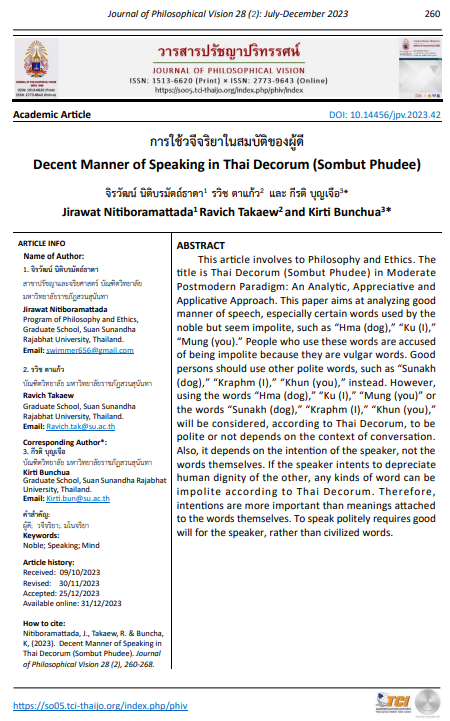
บทความวิชาการนี้เกี่ยวข้องกับปรัชญาและจริยศาสตร์ เรื่องสมบัติผู้ดีกรอบการดำเนินชีวิตตามกระบวนทรรศน์ปรัชญาหลังนวยุคสายกลาง: การศึกษาเชิงวิเคราะห์ วิจักษ์ และวิธาน ซึ่งมีวัตถุประสงค์ที่จะกล่าวถึงเรื่องการใช้วจีจริยาหรือการใช้คำบางคำของผู้ที่มีคุณสมบัติของผู้ดีเช่นคำว่า “หมา” “กู” “มึง” อันเป็นคำที่คนหลายคนมีทรรศนะว่าเป็นคำที่ไม่สุภาพหรือเป็นคำหยาบคาย โดยหลีกเลี่ยงที่จะไม่ใช้คำว่า “หมา” “กู” “มึง” และใช้คำว่า “สุนัข” แทนคำว่า “หมา”หรือใช้คำว่า “คุณ” แทนคำว่า “มึง” หรือใช้คำว่า “กระผม” แทนคำว่า “กู” เป็นต้น
การจะใช้คำว่า “หมา” “กู” “มึง” หรือคำว่า “สุนัข” “คุณ” “กระผม” ในการสนทนาแต่ละครั้งจะเป็นการถูกต้องตามหลักการที่เขียนไว้ในหนังสือสมบัติของผู้ดีหรือไม่อยู่ที่การพูดในครั้งนั้น ๆ ว่าการใช้คำว่า “หมา” “กู” “มึง” หรือคำว่า “สุนัข” “คุณ” “กระผม” ใช้ในบริบทใด และผู้ที่พูดมีความคิดที่อยู่ในใจประสงค์จะให้คำว่า “หมา” “กู” “มึง” หรือคำว่า “สุนัข” “คุณ” “กระผม” เป็นการลดทอนศักดิ์ศรีในคุณค่าของความเป็นมนุษย์ของผู้ที่ฟังหรือผู้ที่ถูดพูดถึงหรือไม่ ซึ่งถ้าการพูดด้วยคำทั้งสองนี้เป็นการลดทอนศักดิ์ศรีคุณค่าของความเป็นคนของผู้ที่ฟัง หรือผู้ที่ถูกพูดถึง ผู้ที่พูดก็ไม่มีคุณสมบัติของความเป็นผู้ดีหรือไม่ใช่ผู้ดี
Downloads
เอกสารอ้างอิง
กีรติ บุญเจือ. (2546). ชุดปรัชญาและศาสนาเซนต์จอห์น เล่มหก ปรัชญาอรรถปริวรรตของมนุษยชาติ (ช่วงพหุนิยม). กรุงเทพฯ: มหาวิทยาลัยเซนจอห์น.
คมชักลึกออนไลน์. (2560). เจาะประเด็นร้อน เปิด 16 คำด่ารุนแรง...ต้องห้าม!!!. สืบค้นเมื่อ ตุลาคม 11, 2565, จาก https://www.komchadluek.net/scoop/287099.
ชนกพร พัวพัฒนกุล. (2561). เรื่องเหี้ย ๆ ปรากฏการณ์ทางภาษาของคำว่า “เหี้ย” คำด่ายอดนิยมตลอดการของคนไทย. สืบค้นเมื่อ ตุลาคม 11, 2565, จาก https://readthecloud.co/scoop-12meaningsofhia/.
ถนัด ยันต์ทอง. (2018). ทำไมคนสุพรรณ จึงเรียกว่า ไอ้หมา อีหมา พ่อก็หมาแม่ก็หมา. สืบค้นเมื่อ ตุลาคม 11, 2565, จาก http://www.teeyaipakin.com/2018/05/25/ทำไมคนสุพรรณ-จึงเรียกว่/.
ทวี บุญยเกตุ. (2541). พ่อสอนลูก. กรุงเทพฯ: องค์การคุรุสภาลาดพร้าว.
ราชบัณฑิตยสถาน. (2556). พจนานุกรม ฉบับราชบัณฑิตยสภา พ.ศ.2554. กรุงเทพฯ: ราชบัณฑิตยสถาน.
วิกิพีเดีย สารานุกรมเสรี. (2546). สุนัข. สืบค้นเมื่อ กันยายน 22, 2565, จาก https://th.wikipedia.org/wiki/สุนัข.
____________. (2546). ชาติหมา. สืบค้นเมื่อ กันยายน 22, 2565, จาก https://th.wiktionary.org/wiki/เก๋าเจ๊ง.
วิกิพีเดีย สารานุกรมเสรu.(2546). คำอุทาน. สืบค้นเมื่อ ตุลาคม 15, 2565, จาก https://th.wikipedia.org/
wiki/คำอุทาน.
วิทย์ วิศทเวศย์. (2564). ปรัชญาทั่วไป. กรุงเทพฯ: โครงการเผยแพผลงานวิชาการ คณะอักษรศาสตร์ จุฬาลงกรณ์มหาวิทยาลัย.
สำนักงานคณะกรรมการกฤษฎีกา. (2565). ประมวลกฎหมายอาญา. สืบค้นเมื่อ ตุลาคม 16, 2565, จาก https://www.krisdika.go.th/librarian/get?sysid=443287&ext=pdf.
Longdo dict. (2003.) ควาย. สืบค้นเมื่อ ตุลาคม 11, 2565, จาก https://dict.longdo.com/ search/ควาย.
ดาวน์โหลด
เผยแพร่แล้ว
รูปแบบการอ้างอิง
ฉบับ
ประเภทบทความ
สัญญาอนุญาต
ลิขสิทธิ์ (c) 2023 Journal of Philosophical Vision

อนุญาตภายใต้เงื่อนไข Creative Commons Attribution-NonCommercial-NoDerivatives 4.0 International License.
บทความวิชาการและบทความวิจัย ในวารสารฉบับนี้ ถือเป็นความรับผิดชอบของผู้เขียนเท่านั้น
สงวนลิขสิทธิ์ตามพระราชบัญญัติลิขสิทธิ์



