Analytical Study of Stupa in Ratanakosin Period According to Aesthetics
Abstract
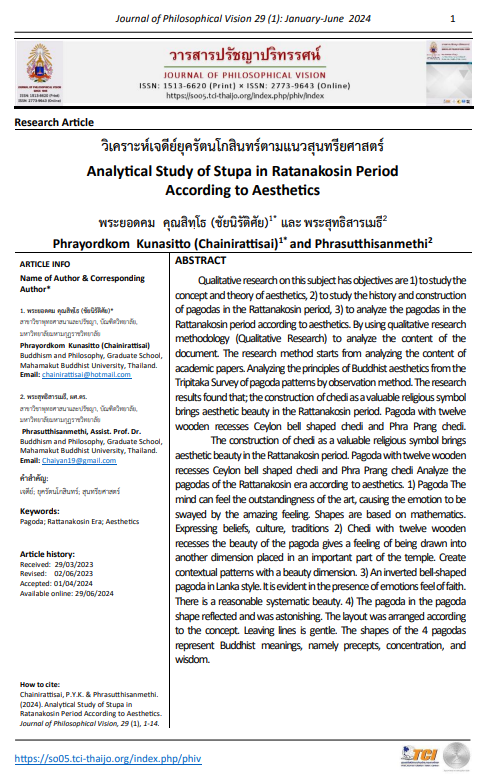
Qualitative research on this subject has objectives are 1) to study the concept and theory of aesthetics, 2) to study the history and construction of pagodas in the Rattanakosin period, 3) to analyze the pagodas in the Rattanakosin period according to aesthetics. By using qualitative research methodology (Qualitative Research) to analyze the content of the document. The research method starts from analyzing the content of academic papers. Analyzing the principles of Buddhist aesthetics from the Tripitaka Survey of pagoda patterns by observation method. The research results found that; the construction of chedi as a valuable religious symbol brings aesthetic beauty in the Rattanakosin period. Pagoda with twelve wooden recesses Ceylon bell shaped chedi and Phra Prang chedi. The construction of chedi as a valuable religious symbol brings aesthetic beauty in the Rattanakosin period. Pagoda with twelve wooden recesses Ceylon bell shaped chedi and Phra Prang chedi Analyze the pagodas of the Rattanakosin era according to aesthetics. 1) Pagoda The mind can feel the outstandingness of the art, causing the emotion to be swayed by the amazing feeling. Shapes are based on mathematics. Expressing beliefs, culture, traditions 2) Chedi with twelve wooden recesses the beauty of the pagoda gives a feeling of being drawn into another dimension placed in an important part of the temple. Create contextual patterns with a beauty dimension. 3) An inverted bell-shaped pagoda in Lanka style. It is evident in the presence of emotions feel of faith. There is a reasonable systematic beauty. 4) The pagoda in the pagoda shape reflected and was astonishing. The layout was arranged according to the concept. Leaving lines is gentle. The shapes of the 4 pagodas represent Buddhist meanings, namely precepts, concentration, and wisdom.
Downloads
References
โกสุม สายใจ และคณะ. (2542). สุนทรีภาพของชีวิต/สถาบันราชภัฏสวนดุสิต. (พิมพ์ครั้งที่ 9). กรุงเทพมหานคร : บริษัท เธิร์ดเวฟ เอ็ดดูเคชั่น จำกัด.
จอห์น เลน. (2550). ความงามข้ามกาลเวลา : สุนทรียธรรมในศิลปะและชีวิตประจำวัน. (พิมพ์ครั้งที่ 3). กรุงเทพมหานคร : มูลนิธิ
บุญยัง หมั่นดี. (2531). มนุษย์กับการรับรู้ศิลปะ. ครุปริทัศน์. ปีที่ 13 เดือนสิงหาคม.
พระมหารังสันต์ กิตฺติปญฺโ (ใจหาญ). (2553). การศึกษาวิเคราะห์สุนทรียศาสตร์ในพุทธปรัชญาเถรวาท. วิทยานิพนธ์พุทธศาสตร์มหาบัณฑิต, บัณฑิตวิทยาลัย, มหาวิทยาลัยมหาจุฬาลงกรณราชวิทยาลัย.
พระมหาอุดม ปญฺาโภ. (2547). การศึกษาวิเคราะห์พุทธศิลป์เชิงสุนทรียศาสตร์: ศึกษากรณีเฉพาะพระพุทธรูปสมัยอยุธยา. วิทยานิพนธ์พุทธศาสตรมหาบัณฑิต สาขาวิชาปรัชญา, บัณฑิตวิทยาลัย, มหาจุฬาลงกรณราชวิทยาลัย.
สำนักงานศิลปวัฒนธรรมร่วมสมัย. (2551). พระราชบัญญัติส่งเสริมศิลปะร่วมสมัย. เล่ม 125 ตอนที่ 44 ก. กระทรวงวัฒนธรรม. นนทบุรี: วิชั่น พรีเพรส จำกัด.
วศิน อินทสระ. (2545). การพึ่งตน. (พิมพ์ครั้งที่ 1). กรุงเทพมหานคร : เรือนธรรม.
ศุภรัตน์ อินทนิเวศ และคณะ. (2560). แบบเรียนรายวิชา GEN1135 สุนทรียสร้างสรรค์. (พิมพ์ครั้งที่ 1). กรุงเทพมหานคร : สูตรไพศาลบิวเดอร์.
สมเด็จพระเจ้าบรมวงศ์เธอ กรมพระยาดำรงราชานุภาพ. (2518). ตำนานพระพุทธเจดีย์. กรุงเทพมหานคร : โรงพิมพ์คุรุสภา.
สุพจน์ จิตสุทธิญาณ. (2557). ความเข้าใจสุนทรียะในงานสถาปัตยกรรม. คณะสถาปัตยกรรมศาสตร์ มหาวิทยาลัยศิลปากร.
Downloads
Published
How to Cite
Issue
Section
License
Copyright (c) 2024 Journal of Philosophical Vision

This work is licensed under a Creative Commons Attribution-NonCommercial-NoDerivatives 4.0 International License.
บทความวิชาการและบทความวิจัย ในวารสารฉบับนี้ ถือเป็นความรับผิดชอบของผู้เขียนเท่านั้น
สงวนลิขสิทธิ์ตามพระราชบัญญัติลิขสิทธิ์



