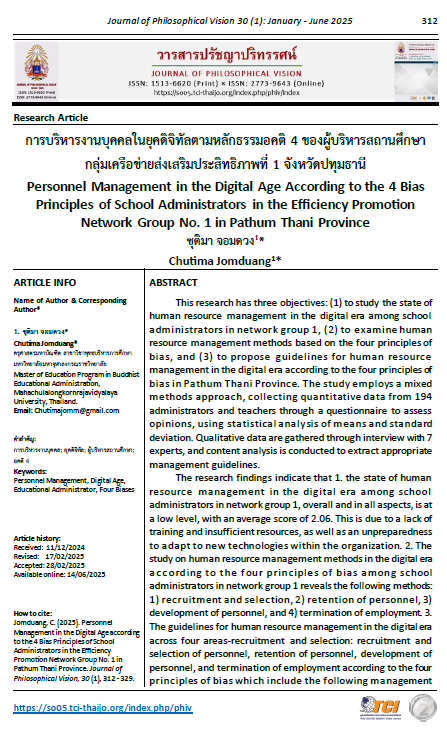
การบริหารงานบุคคลในยุคดิจิทัลตามหลักธรรมอคติ 4 ของผู้บริหารสถานศึกษากลุ่มเครือข่ายส่งเสริมประสิทธิภาพที่ 1 จังหวัดปทุมธานี
คำสำคัญ:
การบริหารงานบุคคล, ยุคดิจิทัล, ผู้บริหารสถานศึกษา, อคติ 4บทคัดย่อ
การวิจัยนี้มีวัตถุประสงค์ 3 ประการ ได้แก่ (1) ศึกษาสภาพการบริหารงานบุคคลในยุคดิจิทัลของผู้บริหารสถานศึกษากลุ่มเครือข่ายส่งเสริมประสิทธิภาพที่ 1 (2) ศึกษาวิธีการบริหารงานบุคคลตามหลักธรรมอคติ 4 และ (3) เสนอแนวทางการบริหารงานบุคคลในยุคดิจิทัลตามหลักธรรมอคติ 4 ในจังหวัดปทุมธานี โดยใช้วิจัยแบบผสานวิธี โดยเก็บข้อมูลเชิงปริมาณจากผู้บริหารและครู จำนวน 194 คน ผ่านแบบสอบถามความคิดเห็น ใช้สถิติวิเคราะห์ค่าเฉลี่ย ส่วนเบี่ยงเบนมาตรฐาน และข้อมูลเชิงคุณภาพได้จากการสัมภาษณ์ผู้ทรงคุณวุฒิ 7 คน ด้วยการวิเคราะห์เนื้อหาเพื่อสกัดหาแนวทางการบริหารที่เหมาะสม
ผลการวิจัยพบว่า 1. สภาพการบริหารงานบุคคลในยุคดิจิทัลของผู้บริหารสถานศึกษากลุ่มเครือข่ายส่งเสริมประสิทธิภาพที่ 1 โดยภาพรวม และทุกด้านอยู่ในระดับน้อย มีค่าเฉลี่ยเท่ากับ 2.06 เพราะขาดการฝึกอบรมและทรัพยากรที่เพียงพอ และไม่พร้อมในการปรับตัวต่อเทคโนโลยีสมัยใหม่ในองค์กร 2. ผลการศึกษาวิธีการบริหารงานบุคคลในยุคดิจิทัลตามหลักธรรมอคติ 4 ของผู้บริหารสถานศึกษากลุ่มเครือข่ายส่งเสริมประสิทธิภาพที่ 1 มีวิธีการ ดังนี้ 1) การสรรหาและคัดเลือก 2) การธำรงรักษาบุคลากร 3) การพัฒนาบุคลากร และ 4) การให้พ้นจากงาน 3. แนวทางการบริหารงานบุคคลในยุคดิจิทัลทั้ง 4 ด้าน ได้แก่ ด้านการสรรหาและคัดเลือกบุคลากร ด้านการธำรงรักษาบุคลากร ด้านการพัฒนาบุคลากร ด้านการให้บุคลากรพ้นจากงาน ตามหลักธรรมอคติ 4 มีแนวทางการบริหารบุคคล คือ 1) ฉันทาคติ ควรใช้ข้อมูลเทคโนโลยีในการตัดสินใจเพื่อคัดเลือกด้วยความโปร่งใส 2) โทสาคติ ควรส่งเสริมการสื่อสารที่สร้างสรรค์ 3) โมหาคติ ควรจัดโปรแกรมฝึกอบรมการคิดวิเคราะห์และ 4) ภยาคติ ควรสร้างสภาพแวดล้อมที่ปลอดภัย
Downloads
เอกสารอ้างอิง
ชาญยุทธ ลือนาม. (2556). ความคิดเห็นของครูที่มีต่อการบริหารงานบุคคลในโรงเรียนศูนย์เครือข่ายเพื่อพัฒนาคุณภาพการศึกษาที่ 19 สังกัดสำนักงานเขตพื้นที่การศึกษาประถมศึกษาอุบลราชธานี เขต 2. สารนิพนธ์ปริญญาการศึกษามหาบัณฑิต มหาวิทยาลัยนอร์ทกรุงเทพ.
ณัฐพร ภูทองเงิน. (2555). การบริหารงานบุคลากรของผู้บริหารสถานศึกษาตามหลักอคติ 4 ในกลุ่มสถานศึกษาเขตพื้นที่ 1 ถึง 4 สังกัดสำนักงานเขตพื้นที่การศึกษาประถมศึกษา ขอนแก่น เขต 1. วิทยานิพนธ์ปริญญาพุทธศาสตรมหาบัณฑิต มหาวิทยาลัยมหาจุฬาลงกรณราชวิทยาลัย.
ปทุมพร กาญจนอัตถ์. (2561). แนวทางการบริหารงานบุคคลที่มีประสิทธิภาพในสถานศึกษาขั้นพื้นฐาน. วิทยานิพนธ์ปริญญาการศึกษามหาบัณฑิต มหาวิทยาลัยศรีนครินทรวิโรฒ.
ประภาพร ประวัติวิไล. (2566). แนวทางการบริหารงานบุคคลในยุคดิจิทัลตามหลักอคติ 4 ของสำนักงานส่งเสริมการเรียนรู้จังหวัดอ่างทอง. วิทยานิพนธ์ปริญญาครุศาสตรมหาบัณฑิต มหาวิทยาลัยมหาจุฬาลงกรณราชวิทยาลัย.
พระพรหมคุณาภรณ์ (ป.อ. ปยุตฺโต). (2554). พจนานุกรมพุทธศาสตร์ ฉบับประมวลศัพท์, พิมพ์ครั้งที่ 17, กรุงเทพฯ: โรงพิมพ์พระพุทธศาสนาธรรมสภา.
พระมหาถาวร กลฺยาณเมธี (บุญสอน). (2557). การบริหารทรัพยากรมนุษย์ของบุคลากรโรงเรียนพระปริยัติธรรมแผนกสามัญศึกษา ในเขตกรุงเทพมหานคร. วิทยานิพนธ์พุทธศาสตรมหาบัณฑิต มหาวิทยาลัยมหาจุฬาลงกรณราชวิทยาลัย.
มหามกุฏราชวิทยาลัย. (2557). พระไตรปิฎกและอรรถกถาแปล เล่ม 35, พิมพ์ครั้งที่ 9. นครปฐม: โรงพิมพ์มหามกุฏราชวิทยาลัย.
มาราณี สัสดีวงศ์. (2554). ปัญหาการบริหารงานบุคคลของผู้บริหารสถานศึกษาขั้นพื้นฐาน สำนักงานเขตพื้นที่การศึกษาประถมศึกษายะลาเขต 1. การค้นคว้าอิสระปริญญาครุศาสตรมหาบัณฑิต มหาวิทยาลัยราชภัฏยะลา.
เลขาธิการสภาการศึกษา. (2551). สำนักงานแผนการศึกษาแห่งชาติ (พ.ศ.2545-2559.) ฉบับสรุป, พิมพ์ครั้งที่ 9. กรุงเทพฯ: พริกหวานกราฟฟิค.
วิไล ตั้งจิตสมคิด. (2544). การศึกษาและความเป็นครูไทย. กรุงเทพฯ: โอ.เอส.พริ้นติ้งเฮ้าส์.
สิรินภา อมรไพศาลเลิศ. (2555). สภาพและปัญหาการบริหารงานบุคคลของกลุ่มโรงเรียนสาธิตลอออุทิศ.วิทยานิพนธ์ปริญญาครุศาสตรมหาบัณฑิต จุฬาลงกรณ์มหาวิทยาลัย.
ดาวน์โหลด
เผยแพร่แล้ว
รูปแบบการอ้างอิง
ฉบับ
ประเภทบทความ
สัญญาอนุญาต
ลิขสิทธิ์ (c) 2025 Journal of Philosophical Vision

อนุญาตภายใต้เงื่อนไข Creative Commons Attribution-NonCommercial-NoDerivatives 4.0 International License.
บทความวิชาการและบทความวิจัย ในวารสารฉบับนี้ ถือเป็นความรับผิดชอบของผู้เขียนเท่านั้น
สงวนลิขสิทธิ์ตามพระราชบัญญัติลิขสิทธิ์



