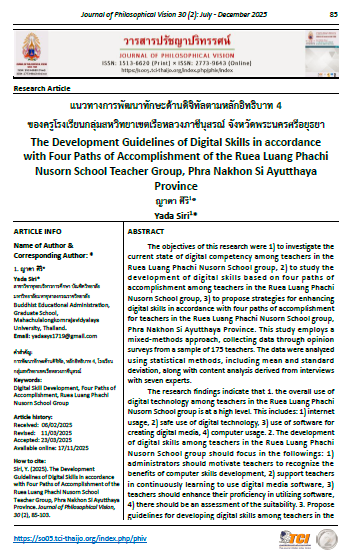
แนวทางการพัฒนาทักษะด้านดิจิทัลตามหลักอิทธิบาท 4 ของครูโรงเรียนกลุ่มสหวิทยาเขตเรือหลวงภาชีนุสรณ์ จังหวัดพระนครศรีอยุธยา
คำสำคัญ:
การพัฒนาทักษะด้านดิจิทัล, หลักอิทธิบาท 4, โรงเรียนกลุ่มสหวิทยาเขตเรือหลวงภาชีนุสรณ์บทคัดย่อ
การวิจัยนี้มีวัตถุประสงค์ 1) เพื่อศึกษาสภาพด้านดิจิทัลของครูโรงเรียนกลุ่มสหวิทยาเขตเรือหลวงภาชีนุสรณ์ 2) เพื่อศึกษาการพัฒนาทักษะด้านดิจิทัลตามหลักอิทธิบาท 4 ของครูโรงเรียนกลุ่มสหวิทยาเขตเรือหลวงภาชีนุสรณ์ และ 3) เพื่อเสนอแนวทางการพัฒนาทักษะด้านดิจิทัลตามหลักอิทธิบาท 4 ของครูโรงเรียนกลุ่มสหวิทยาเขตเรือหลวงภาชีนุสรณ์ จังหวัดพระนครศรีอยุธยา เป็นวิจัยแบบผสานวิธี เก็บข้อมูลแบบสอบถามความคิดเห็นจากกลุ่มตัวอย่างครู จำนวน 175 คน ใช้สถิติวิเคราะห์ค่าเฉลี่ย ส่วนเบี่ยงเบนมาตรฐาน และวิเคราะห์เนื้อหาจากการสัมภาษณ์ผู้ทรงคุณวุฒิ 7 รูป/คน
ผลการวิจัยพบว่า 1. สภาพการใช้เทคโนโลยีดิจิทัลของครูโรงเรียนกลุ่มสหวิทยาเขตเรือหลวงภาชีนุสรณ์ โดยภาพรวม อยู่ในระดับมาก ได้แก่ 1) ด้านการใช้งานอินเทอร์เน็ต 2) ด้านการใช้งานเทคโนโลยีดิจิทัลอย่างปลอดภัย 3) ด้านการใช้โปรแกรมสร้างสื่อดิจิทัล 4) ด้านการใช้งานคอมพิวเตอร์ 2. การพัฒนาทักษะด้านดิจิทัลของครูโรงเรียนกลุ่มสหวิทยาเขตเรือหลวงภาชีนุสรณ์ จังหวัดพระนครศรีอยุธยา 1) ผู้บริหารควรสร้างแรงจูงใจให้ครูเห็นถึงประโยชน์ของการพัฒนาทักษะคอมพิวเตอร์ 2) สนับสนุนให้ครูเรียนรู้การใช้โปรแกรมสื่อดิจิทัลอย่างต่อเนื่อง 3) ครูควรพัฒนาซอฟต์แวร์ในการใช้งาน 4) ควรมีการประเมินความเหมาะสม 3. เสนอแนวทางการพัฒนาทักษะด้านดิจิทัลตามหลักอิทธิบาท 4 ของครูโรงเรียนกลุ่มสหวิทยาเขตเรือหลวงภาชีนุสรณ์ 1) ผู้บริหารควรตั้งเป้าหมายในการพัฒนาทักษะดิจิทัลให้กับครู 2) ควรมีนโยบายและส่งเสริมให้ครูได้ฝึกฝนทักษะการใช้โปรแกรมพัฒนาสื่อการเรียนรู้ด้วยระบบดิจิทัล 3) ผู้บริหารยอมรับการเปลี่ยนแปลง 4) ควรมีการประเมินและปรับปรุงพัฒนาทักษะดิจิทัลอย่างต่อเนื่อง
Downloads
เอกสารอ้างอิง
ณัฐธินี ชงโค. (2566). การศึกษาปัจจัยที่มีความสัมพันธ์ต่อความฉลาดทางดิจิทัลของนิสิตปริญญาตรี มหาวิทยาลัยมหาจุฬาลงกรณราชวิทยาลัย. วิทยานิพนธ์ปริญญาการศึกษามหาบัณฑิต มหาวิทยาลัยมหาสารคาม.
ธาริณี ใจสะอาด. (2567). ภาวะผู้นำเชิงเทคโนโลยีที่ส่งผลต่อความเป็นพลเมืองดิจิทัลของครูสังกัดนักงาน เขตพื้นที่การศึกษาประถมศึกษาจันทบุรี เขต 2. วิทยานิพนธ์ปริญญาครุศาสตรมหาบัณฑิต มหาวิทยาลัยราชภัฏรำไพพรรณี.
พระราชบัญญัติการศึกษาแห่งชาติ (ฉบับที่ 3) พ.ศ. 2553. (22 กรกฎาคม 2553). ราชกิจจานุเบกษา เล่ม 127 ตอนที่ 45 ก. หน้า 1-3.
มนธิรา จันทร์เชื้อ. (2566). แนวทางการพัฒนาภาวะผู้นำดิจิทัลของครูสังกัดสำนักงานเขตพื้นที่การศึกษาประถมศึกษาพิจิตร เขต 1. วิทยานิพนธ์ปริญญาการศึกษามหาบัณฑิต มหาวิทยาลัยนเรศวร.
มหาจุฬาลงกรณราชวิทยาลัย. (2539). พระไตรปิฎกภาษาไทย ฉบับมหาจุฬาลงกรณราชวิทยาลัย เล่ม 11 กรุงเทพฯ: โรงพิมพ์มหาจุฬาลงกรณราชวิทยาลัย.
รสสุคนธ์ ท้วมอุปถัมภ์. (2562). แนวทางการพัฒนาคุณลักษณะผู้นำทางเทคโนโลยีของครู โรงเรียนสามโคก สังกัดองค์การบริหารส่วนจังหวัดปทุมธานี. วิทยานิพนธ์ปริญญาศึกษาศาสตรมหาบัณฑิต มหาวิทยาลัยรังสิต.
สำนักงานสภาพัฒนาการเศรษฐกิจและสังคมแห่งชาติ สำนักนายกรัฐมนตรี. (2565). แผนพัฒนาเศรษฐกิจและสังคมแห่งชาติ (ฉบับที่ 13) พ.ศ. 2566-2570. กรุงเทพฯ: สำนักนายกรัฐมนตรี.
อมรรัตน์ ดอนพิลา. (2566). ความต้องการจำเป็นและแนวทางพัฒนาทักษะดิจิทัลของครูในศตวรรษที่ 21 สังกัดสำนักงานเขตพื้นที่การศึกษามัธยมศึกษามุกดาหาร. วิทยานิพนธ์ปริญญาครุศาสตรมหาบัณฑิต มหาวิทยาลัยราชภัฏสกลนคร.
ดาวน์โหลด
เผยแพร่แล้ว
รูปแบบการอ้างอิง
ฉบับ
ประเภทบทความ
สัญญาอนุญาต
ลิขสิทธิ์ (c) 2025 วารสารปรัชญาปริทรรศน์

อนุญาตภายใต้เงื่อนไข Creative Commons Attribution-NonCommercial-NoDerivatives 4.0 International License.
บทความวิชาการและบทความวิจัย ในวารสารฉบับนี้ ถือเป็นความรับผิดชอบของผู้เขียนเท่านั้น
สงวนลิขสิทธิ์ตามพระราชบัญญัติลิขสิทธิ์



