
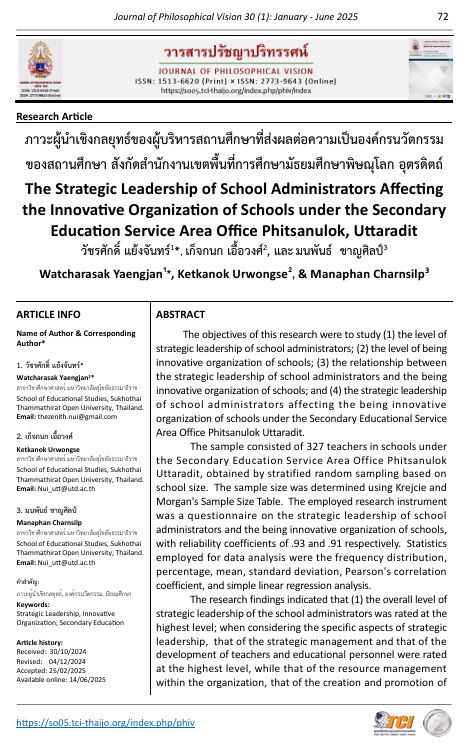
ภาวะผู้นำเชิงกลยุทธ์ของผู้บริหารสถานศึกษาที่ส่งผลต่อความเป็นองค์กรนวัตกรรม ของสถานศึกษา สังกัดสำนักงานเขตพื้นที่การศึกษามัธยมศึกษาพิษณุโลก อุตรดิตถ์
คำสำคัญ:
ภาวะผู้นำเชิงกลยุทธ์, องค์กรนวัตกรรม, มัธยมศึกษาบทคัดย่อ
การวิจัยครั้งนี้มีวัตถุประสงค์เพื่อศึกษา 1) ระดับภาวะผู้นำเชิงกลยุทธ์ของผู้บริหารสถานศึกษา 2) ระดับความเป็นองค์กรนวัตกรรมของสถานศึกษา 3) ความสัมพันธ์ระหว่างภาวะผู้นำเชิงกลยุทธ์ของผู้บริหารสถานศึกษากับความเป็นองค์กรนวัตกรรมของสถานศึกษา และ 4) ภาวะผู้นำเชิงกลยุทธ์ของผู้บริหารสถานศึกษาที่ส่งผลต่อความเป็นองค์กรนวัตกรรมของสถานศึกษา สังกัดสำนักงานเขตพื้นที่การศึกษามัธยมศึกษาพิษณุโลก อุตรดิตถ์ กลุ่มตัวอย่าง ได้แก่ ครูในสถานศึกษา สังกัดสำนักงานเขตพื้นที่การศึกษามัธยมศึกษาพิษณุโลก อุตรดิตถ์ จำนวน 327 คน กำหนดขนาดกลุ่มตัวอย่างโดยใช้ตารางของของเครจซี่และมอร์แกน จากนั้นทำการสุ่มตัวอย่างแบบแบ่งชั้นตามขนาดของสถานศึกษา เครื่องมือที่ใช้ในการวิจัยเป็นแบบสอบถามเกี่ยวกับภาวะผู้นำเชิงกลยุทธ์ของผู้บริหารสถานศึกษาและความเป็นองค์กรนวัตกรรมของสถานศึกษา มีค่าความเที่ยงเท่ากับ 0.93 และ 0.91 ตามลำดับ สถิติที่ใช้ในการวิเคราะห์ข้อมูล ได้แก่ความถี่ ร้อยละ ค่าเฉลี่ย ส่วนเบี่ยงเบนมาตรฐาน สัมประสิทธิ์สหสัมพันธ์ของเพียร์สัน และการวิเคราะห์การถดถอยเชิงเส้นอย่างง่าย
ผลการวิจัยพบว่า 1) ภาวะผู้นำเชิงกลยุทธ์ของผู้บริหารสถานศึกษา โดยภาพรวมอยู่ในระดับมากที่สุด เมื่อพิจารณาเป็นรายด้านพบว่า ด้านการบริหารเชิงกลยุทธ์ ด้านความคิดความเข้าใจในระดับสูง ด้านการพัฒนาครูและบุคลากรในองค์กร อยู่ในระดับมากที่สุด 2) ความเป็นองค์กรนวัตกรรมของสถานศึกษา โดยภาพรวมทุกด้านอยู่ในระดับมาก 3) ภาวะผู้นำเชิงกลยุทธ์ของผู้บริหารสถานศึกษา มีความสัมพันธ์เชิงบวก ในระดับสูงมาก กับความเป็นองค์กรนวัตกรรมของสถานศึกษา อย่างมีนัยสำคัญทางสถิติที่ระดับ 0.01 และ 4) ภาวะผู้นำเชิงกลยุทธ์ของผู้บริหารสถานศึกษาส่งผลต่อความเป็นองค์กรนวัตกรรมของสถานศึกษา อย่างมีนัยสำคัญทางสถิติที่ระดับ 0.01 โดยมีอำนาจพยากรณ์ได้ร้อยละ 84.20
Downloads
เอกสารอ้างอิง
จุรีรัตน์ ม่วงนา. (2563). ภาวะผู้นำเชิงกลยุทธ์ของผู้บริหารกับประสิทธิผลของโรงเรียน สังกัดสำนักงานเขตพื้นที่การศึกษามัธยมศึกษา เขต 8. วิทยานิพนธ์ศึกษาศาสตรมหาบัณฑิต มหาวิทยาลัยศิลปากร.
ณปภาพร จันทร์ดวง. (2566). การบริหารสถานศึกษาสู่การเป็นสถานศึกษาแห่งนวัตกรรม. วารสารบริหารการศึกษา มศว. 20 (39), 144-150.
ธีรพล วินิจวัฒนโกมล และสุวรรณี แสงมหาชัย. (2566). ปัจจัยที่มีอิทธิพลต่อประสิทธิผลของการจัดการนวัตกรรม ในองค์การภาครัฐไทย. วารสารสหวิทยาการวิจัย ฉบับบัณฑิตศึกษา. 12 (1), 1-18.
ธีระ รุญเจริญ. (2557). ความเป็นมืออาชีพในการจัดและบริหารการศึกษายุคปฏิรูปการศึกษา (ฉบับปรับปรุง) เพื่อปฏิรูปรอบ 2 และประเมินกายนอกรอบ 3, พิมพ์ครั้งที่ 8. กรุงเทพฯ: ข้าวฟ้าง.
ภูรีรัตน์ สุกใส. (2565). ความสัมพันธ์ระหว่างภาวะผู้นำดิจิทัลของผู้บริหารสถานศึกษากับความเป็นองค์กรแห่งนวัตกรรมของสถานศึกษาระดับมัธยมศึกษาในจังหวัดอุตรดิตถ์. สารนิพนธ์การศึกษามหาบัณฑิต มหาวิทยาลัยนเรศวร.
รัญชนา เขื่อนขันธ์. (2565). ความสัมพันธ์ระหว่างภาวะผู้นำเชิงกลยุทธ์ในศตวรรษที่ 21 ของผู้บริหารสถานศึกษากับประสิทธิผลของสถานศึกษา สังกัดสำนักงานเขตพื้นที่การศึกษาประถมศึกษาเชียงราย เขต 4. วารสารบัณฑิตศึกษา มหาวิทยาลัยราชภัฏเชียงราย. 15 (2), 29-41.
วรวรรษ เทียมสุวรรณ และคณะ. (2562). ภาวะผู้นำชิงกลยุทธ์ในศตวรรษที่ 21. วารสารวิชาการบัณฑิตวิทยาลัยสวนดุสิต. 15 (2), 219-231.
สำนักงานเขตพื้นที่การศึกษามัธยมศึกษา พิษณุโลก อุตรดิตถ์. (2566). งานข้อมูลสารสนเทศ กลุ่มนโยบายและแผนสารสนเทศทางการศึกษา ปีการศึกษา 2566. พิษณุโลก: สำนักงานเขตพื้นที่การศึกษามัธยมศึกษาพิษณุโลก อุตรดิตถ์.
สุภัทรพงศ์ รวงผึ้งรุ่งโรจน์ และคณะ. (2566). นวัตกรรมเชิงสร้างสรรค์ของผู้บริหารสถานศึกษาในยุคดิซรัพชัน. วารสารคุณภาพชีวิตกับกฎหมาย. 19 (1), 192-204.
อนุธิดา ประเสริฐศักดิ์. (2563). โมเดลความสัมพันธ์ระหว่างภาวะผู้นำเชิงกลยุทธ์ การจัดการนวัตกรรมกับผลการดำเนินงานของมหาวิทยาลัยเอกชนในประเทศไทย. วิทยานิพนธ์ปรัชญาดุษฎีบัณฑิต มหาวิทยาลัยคริสเตียน.
Adams, R., et al. (2006). Innovation Management Measurement. A Review. International Journal of Management Review. 8 (1), 21-47.
Cronbach, L. J. (1970). Essentials of Psychological Testing, 3rd ed. New York: Harper and Row.
Krejcie, R. V. and Morgan, D. W. (1970). Determining Sample Size for Research Activities. Educational and Psychological Measurement. 30 (3), 607-610.
Maziti, L., et al. (2018). The Relationship between Strategic Leadership, Innovation Performance and Competitive Advantage amongst a Sample of Small Businesses in South Africa. Journal of Contemporary Management. 15 (1), 368-394.
ดาวน์โหลด
เผยแพร่แล้ว
รูปแบบการอ้างอิง
ฉบับ
ประเภทบทความ
สัญญาอนุญาต
ลิขสิทธิ์ (c) 2025 Journal of Philosophical Vision

อนุญาตภายใต้เงื่อนไข Creative Commons Attribution-NonCommercial-NoDerivatives 4.0 International License.
บทความวิชาการและบทความวิจัย ในวารสารฉบับนี้ ถือเป็นความรับผิดชอบของผู้เขียนเท่านั้น
สงวนลิขสิทธิ์ตามพระราชบัญญัติลิขสิทธิ์



