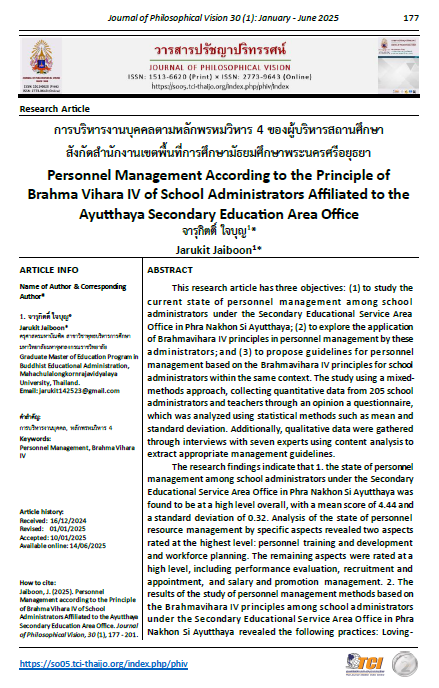
การบริหารงานบุคคลตามหลักพรหมวิหาร 4 ของผู้บริหารสถานศึกษา สังกัดสำนักงานเขตพื้นที่การศึกษามัธยมศึกษาพระนครศรีอยุธยา
คำสำคัญ:
การบริหารงานบุคคล, หลักพรหมวิหาร 4บทคัดย่อ
การวิจัยนี้มีวัตถุประสงค์ 3 ประการ ได้แก่ (1) เพื่อศึกษาสภาพการบริหารงานบุคคล ของผู้บริหารสถานศึกษา สังกัดสำนักงานเขตพื้นที่การศึกษามัธยมศึกษาพระนครศรีอยุธยา (2) เพื่อศึกษาวิธีการการบริหารงานบุคคลตามหลักพรหมวิหาร 4 ของผู้บริหารสถานศึกษา สังกัดสำนักงานเขตพื้นที่การศึกษามัธยมศึกษาพระนครศรีอยุธยา และ(3) เพื่อเสนอแนวทางการบริหารงานบุคคลตามหลักพรหมวิหาร 4 ของผู้บริหารสถานศึกษา สังกัดสำนักงานเขตพื้นที่การศึกษามัธยมศึกษาพระนครศรีอยุธยาโดยใช้วิจัยแบบผสานวิธี โดยเก็บข้อมูลเชิงปริมาณจากผู้บริหารและครู จำนวน 205 คน ผ่านแบบสอบถามความคิดเห็น ใช้สถิติวิเคราะห์ค่าเฉลี่ย ส่วนเบี่ยงเบนมาตรฐาน และข้อมูลเชิงคุณภาพได้จากการสัมภาษณ์ผู้ทรงคุณวุฒิ 7 ท่าน ด้วยการวิเคราะห์เนื้อหาเพื่อสกัดหาแนวทางการบริหารที่เหมาะสม
ผลการวิจัยพบว่า 1. สภาพการบริหารงานบุคคล ของผู้บริหารสถานศึกษา สังกัดสำนักงานเขตพื้นที่การศึกษามัธยมศึกษาพระนครศรีอยุธยา โดยภาพรวม อยู่ในระดับมาก มีค่าเฉลี่ยเท่ากับ 4.44 ส่วนเบี่ยงเบนมาตรฐานเท่ากับ 0.34 การวิเคราะห์สภาพการบริหารงานบุคคล ตามลำดับรายด้านมี 2 ด้านที่มีความคิดเห็นอยู่ในระดับมากที่สุด ได้แก่ ด้านการอบรมพัฒนาบุคลากร กับด้านการวางแผนอัตรากำลัง และด้านที่เหลือมีความคิดเห็นอยู่ในระดับมาก ได้แก่ ด้านการประเมินผลการปฏิบัติงาน ด้านการสรรหาและการบรรจุแต่งตั้ง และด้านเงินเดือนและเลื่อนขั้นเงินเดือน 2. ผลการศึกษาวิธีการบริหารงานบุคคลตามหลักพรหมวิหาร 4 ของผู้บริหารสถานศึกษา สังกัดสำนักงานเขตพื้นที่การศึกษามัธยมศึกษาพระนครศรีอยุธยา มีวิธีการดังนี้ 1) เมตตา การบริหารงานบุคคลมีการฟังและดูแลบุคลากรอย่างใส่ใจ 2) กรุณา การบริหารงานบุคคลมีการดูแลบุคลากรอย่างเอื้อเฟื้อ ช่วยเหลือและสนับสนุนการพัฒนาของบุคลากร 3) มุทิตา การบริหารงานบุคคลมุ่งเน้นการสนับสนุนความสำเร็จของบุคลากร ทั้งในด้านการทำงานและการพัฒนาตนเอง 4) อุเบกขา การบริหารงานบุคคลมุ่งเน้นการประเมินผลอย่างเป็นกลางและยุติธรรม 4. แนวทางการบริหารงานบุคคลตามหลักพรหมวิหาร 4 ทั้ง 5 ด้าน ได้แก่ ด้านการวางแผนอัตรากำลัง ด้านการสรรหาและการบรรจุแต่งตั้ง ด้านเงินเดือนและการเลื่อนขั้นเงินเดือน ด้านการประเมินผลการปฏิบัติงาน ด้านการประเมินผลการปฏิบัติงาน ด้านการอบรมพัฒนาบุคลากร ตามหลักพรหมวิหาร 4 ของผู้บริหารสถานศึกษา สังกัดสำนักงานเขตพื้นที่การศึกษามัธยมศึกษาพระนครศรีอยุธยา มีแนวทางการบริหารบุคคล คือ 1) เมตตา 2) กรุณา 3) มุทิตา 4) อุเบกขา
Downloads
เอกสารอ้างอิง
ชาญยุทธ ลือนาม. (2556). ความคิดเห็นของครูที่มีต่อการบริหารงานบุคคลในโรงเรียนศูนย์เครือข่ายเพื่อพัฒนาคุณภาพการศึกษาที่ 19 สังกัดสำนักงานเขตพื้นที่การศึกษาประถมศึกษาอุบลราชธานี เขต 2. สารนิพนธ์ ปริญญาการศึกษามหาบัณฑิต มหาวิทยาลัยนอร์ทกรุงเทพ.
ปทุมพร กาญจนอัตถ์. (2561). แนวทางการบริหารงานบุคคลที่มีประสิทธิภาพในสถานศึกษาขั้นพื้นฐาน. วิทยานิพนธ์ปริญญาการศึกษามหาบัณฑิต มหาวิทยาลัยศรีนครินทรวิโรฒ.
พระณัฐวุฒิ สุชาโต (คลังเงิน) และคณะ. (2563). การบริหารงานบุคคลโรงเรียนพระปริยัติธรรมแผนกสามัญศึกษาตามหลักพรหมวิหาร 4 สังกัดสำนักงานพระพุทธศาสนาแห่งชาติ จังหวัดขอนแก่น. วารสารบัณฑิตศึกษามหาจุฬาขอนแก่น. 7 (2), 300-313.
พระมหาชัยวัฒน์ จตฺตมโล (พรหมสนธิ). (2560). กระบวนการและหลักการบริหารงานบุคคลที่เหมาะสมตามหลักพรหมวิหารสี่. วารสารธาตุพนมปริทรรศน์. 1 (1), 79-90.
พระมหาอิสรกานต์ ิตปุญฺโ. (2558). การบริหารงานบุคคลในองค์กรสมัยใหม่. พุทธจักร. 69 (5), 17-28.
พระสุวรรณภูมิ ธมฺมรโต (อินทร์รัมย์). (2561). ระบบการบริหารงานบุคคลตามหลักพุทธบริหารการศึกษาของผู้บริหารสถานศึกษาสังกัดสำนักงานเขตพื้นที่การศึกษามัธยมศึกษา. ดุษฎีนิพนธ์ปริญญาพุทธศาสตรดุษฎีบัณฑิต มหาวิทยาลัยมหาจุฬาลงกรณ์ราชวิทยาลัย.
พิพัฒน์พงษ์ พงกะพันธ์. (2564). การบริหารงานบุคคลของผู้บริหารสถานศึกษา. วารสารบริหารการศึกษาบัวบัณฑิต. 21 (2), 51-57.
พิมพ์ใจ โนนธิง และคณะ. (2558). การบริหารสถานศึกษาตามหลักพรหมวิหาร 4 ในโรงเรียนขยายโอกาสทางการศึกษา สังกัดสำนักงานเขตพื้นที่การศึกษาประถมศึกษาของแก่น เขต 4. วารสารธรรมทรรศน์. 15 (1), 135-142.
ยุทธศาสตร์ชาติ พ.ศ. 2561–2580. (2561) ราชกิจจานุเบกษา เล่ม 135 ตอนที่ 82 ก. หน้า 1.
ลัดดาวัลย์ เพชรโรจน์ และคณะ (2555). สถิติสำหรับการวิจัยและเทคนิคการใช้ SPSS, ฉบับปรับปรุงครั้งที่ 2. กรุงเทพฯ: เจริญดีมั่นคงการพิมพ์.
วิชัย โถสุวรรณจินดา. (2556). การบริหารทรัพยากรมนุษย์, พิมพ์ครั้งที่ 5, กรุงเทพฯ: ก้าวใหม่.
สำนักงานเขตพื้นที่การศึกษามัธยมศึกษาพระนครศรีอยุธยา. (ม.ป.ป.). ข้อมูลทั่วไป. สืบค้นเมื่อ 20 สิงหาคม 2567, จาก https://www.spmay.go.th
สำนักงานเลขาธิการสภาการศึกษา. (2560) แผนการศึกษาแห่งชาติ พ.ศ. 2560–2579. กรุงเทพฯ: พริกหวานกราฟฟิค.
สืบสกุล นรินทรางกูร ณ อยุธยา. (2564). การบริหารทรัพยากรมนุษย์ทางการศึกษาแนวใหม่. กรุงเทพฯ: จุฬาลงกรณ์มหาวิทยาลัย.
สุภาวดี ขุนทองจันทร์. (2559). การบริหารทรัพยากรมนุษย์อย่างบูรณาการ. กรุงเทพฯ: ซีเอ็ดยูเคชั่น.
อุษณีย์ จิตตะปาโล. (2555). การบริหารงานบุคคล. กรุงเทพฯ: ศูนย์ส่งเสริมวิชาการ.
ดาวน์โหลด
เผยแพร่แล้ว
รูปแบบการอ้างอิง
ฉบับ
ประเภทบทความ
สัญญาอนุญาต
ลิขสิทธิ์ (c) 2025 Journal of Philosophical Vision

อนุญาตภายใต้เงื่อนไข Creative Commons Attribution-NonCommercial-NoDerivatives 4.0 International License.
บทความวิชาการและบทความวิจัย ในวารสารฉบับนี้ ถือเป็นความรับผิดชอบของผู้เขียนเท่านั้น
สงวนลิขสิทธิ์ตามพระราชบัญญัติลิขสิทธิ์



