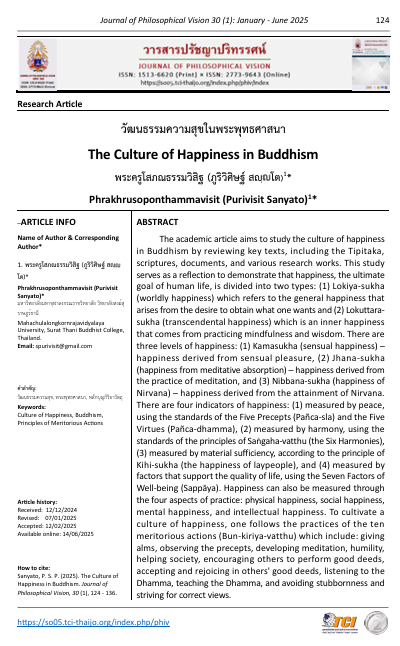
วัฒนธรรมความสุขในพระพุทธศาสนา
คำสำคัญ:
วัฒนธรรมความสุข, พระพุทธศาสนา, หลักบุญกิริยาวัตถุบทคัดย่อ
บทความวิชาการนี้มีวัตถุประสงค์เพื่อศึกษาวัฒนธรรมความสุขในพระพุทธศาสนา โดยการศึกษาเอกสารหลัก ได้แก่ พระไตรปิฎก หนังสือเอกสารและงานวิจัยต่าง ๆ เพื่อเป็นภาพสะท้อนให้เห็นว่า ความสุขอันเป็นเป้าหมายสูงสุดของชีวิตมนุษย์ซึ่งแบ่งเป็น 2 ประเภท ได้แก่ (1) โลกียสุข คือ ความสุขแบบชาวโลกทั่วไป อันประกอบด้วยความอยากที่จะให้ได้มาในสิ่งที่ต้องการ และ (2) โลกุตตรสุข คือ ความสุขเหนือชาวโลก อันเป็นเรื่องภายในจิตใจที่เกิดจากการปฏิบัติด้วยสติปัญญา ซึ่งมีระดับความสุข 3 ระดับ ได้แก่ (1) กามสุข สุขเนื่องด้วยกาม (2) ฌานสุข สุขเนื่องด้วยฌาน และ (3) นิพพานสุข สุขเนื่องด้วยนิพพาน โดยมีดัชนีชี้วัดความสุข 4 ประการ ได้แก่ (1) วัดจากสันติภาพ โดยใช้มาตรฐานของหลักเบญจศีลเบญจธรรม (2) วัดจากความสมานฉันท์ โดยใช้มาตรฐานของหลักสาราณียธรรม (3) วัดจากความพอเพียงทางวัตถุที่เสพ ตามหลักการว่า คิหิสุขหรือความสุขของชาวบ้าน และ (4) วัดจากปัจจัยสนับสนุนคุณภาพของชีวิตตามหลักสัปปายะ 7 ประการ และการวัดความสุขตามหลักภาวนา 4 ได้แก่ ความสุขทางกาย ความสุขทางสังคม ความสุขทางจิตใจ และความสุขทางปัญญา โดยการสร้างวัฒนธรรมความสุข มีวิธีการสร้างความสุขตามหลักบุญกิริยาวัตถุ 10 ประการ ได้แก่ การให้ทาน การรักษาศีล การเจริญภาวนา การอ่อนน้อมถ่อมตน การช่วยเหลือสังคม การชักชวนคนอื่นมาทำบุญกับเรา การยอมรับและยินดีกับความดีคนอื่น การฟังธรรม การแสดงธรรม และการไม่ถือทิฐิทำความเห็นให้ถูกต้อง
Downloads
เอกสารอ้างอิง
เกสร มุ้ยจีน. (2559). การสร้างความสุขด้วยจิตวิทยาเชิงบวก. วารสารวิทยาศาสตร์และเทคโนโลยี. 24 (4), 673-681.
โกวิทย์ พวงงาม. (2549). ความสุขมวลรวมประชาติ (GNH). สยามรัฐสัปดาห์วิจารณ์. 53 (8), 25.
จักรพงษ์ ทิพสูงเนิน และคณะ. (2566). วิธีการสร้างความสุขตามหลักพุทธปรัชญา. วารสารรัฐศาสตร์ มหาวิทยาลัยราชภัฏสวนสุนันทา. 6 (1), 74–84.
ดุษฎี อายุวัฒน์. (2562). ความสุขในชีวิตของผู้สูงอายุ ภาคตะวันออกเฉียงเหนือ. วารสารภาษา ศาสนาและวัฒนธรรม. 8 (1), 136-155.
ธีรโชติ เกิดแก้ว. (2549). ดัชนีชี้วัดความสุข ตามทัศนะของพระพุทธศาสนา. วารสารพุทธศาสน์ศึกษา จุฬาลงกรณ์มหาวิทยาลัย. 13 (2), 88–100.
พระพรหมคุณาภรณ์ (ป.อ. ปยุตฺโต). (2559). พจนานุกรมพุทธศาสตร์ ฉบับประมวลธรรม, พิมพ์ครั้งที่ 27 (ชำระเพิ่มเติม ช่วงที่ 1). กรุงเทพฯ: โรงพิมพ์มหาจุฬาลงกรณราชวิทยาลัย.
พระมหาสุทิตย์ อาภากโร (อบอุ่น). (2558). การสร้างและพัฒนาตัวชี้วัดความสุขของประชาชนตามหลักคำสอนของพระพุทธศาสนา. รายงานการวิจัย. สถาบันวิจัยพุทธศาสตร์ มหาวิทยาลัยมหาจุฬาลงกรณราชวิทยาลัย.
มหาจุฬาลงกรณราชวิทยาลัย. (2539). พระไตรปิฎกภาษาไทย ฉบับมหาจุฬาลงกรณราชวิทยาลัย เล่ม 11, 12, 20, 21, 22, 25. กรุงเทพฯ: โรงพิมพ์มหาจุฬาลงกรณราชวิทยาลัย.
ริการ์ มาติเยอ. (2551). คู่มือพัฒนาทักษะชีวิตที่สำคัญที่สุด. กรุงเทพฯ: สวนเงินมีมา.
อัจฉราวรรณ กันจินะ. (2561). ความสุขในพระพุทธศาสนา. วารสารพุทธศิลปกรรม. 1 (11), 64–80.
Adiwatthanasit, C. (2004). Religion, Life and Society. Bangkok: Mental Health Press.
Bunchua, K. (2003). Philosophy in Simple Language. Bangkok: St. John University.
Khamnoi, S. and Ayuwat, D. (2021). Transformation of Thai Women Whose Husbands Migrate to Work Abroad. Asian and Pacific Migration Journal. 30 (2), 319–329.
Layard, R. (2005). Happiness: Lessions from a New Science. Counseling Psychology. 6, 302-303.
Manion, J. (2003). Joy at Work: Creating a Positive Workplace. Journal of Nursing Administration. 33, 652-655.
Martin, S. (2000). Positive Psychology: An Introduction. American Psychologist. 55, 5-14.
Phra Brahmagunabhorn (P.A. Payutto). (2008). Thinking Method according to Buddhist Principles. Bangkok: Siam Publishing.
Phramaha Suthit Apakaro (Ob-on), et. al. (2013). Happy to Gain Dhamma. Nonthaburi: Design Delight.
ดาวน์โหลด
เผยแพร่แล้ว
รูปแบบการอ้างอิง
ฉบับ
ประเภทบทความ
สัญญาอนุญาต
ลิขสิทธิ์ (c) 2025 Journal of Philosophical Vision

อนุญาตภายใต้เงื่อนไข Creative Commons Attribution-NonCommercial-NoDerivatives 4.0 International License.
บทความวิชาการและบทความวิจัย ในวารสารฉบับนี้ ถือเป็นความรับผิดชอบของผู้เขียนเท่านั้น
สงวนลิขสิทธิ์ตามพระราชบัญญัติลิขสิทธิ์



